
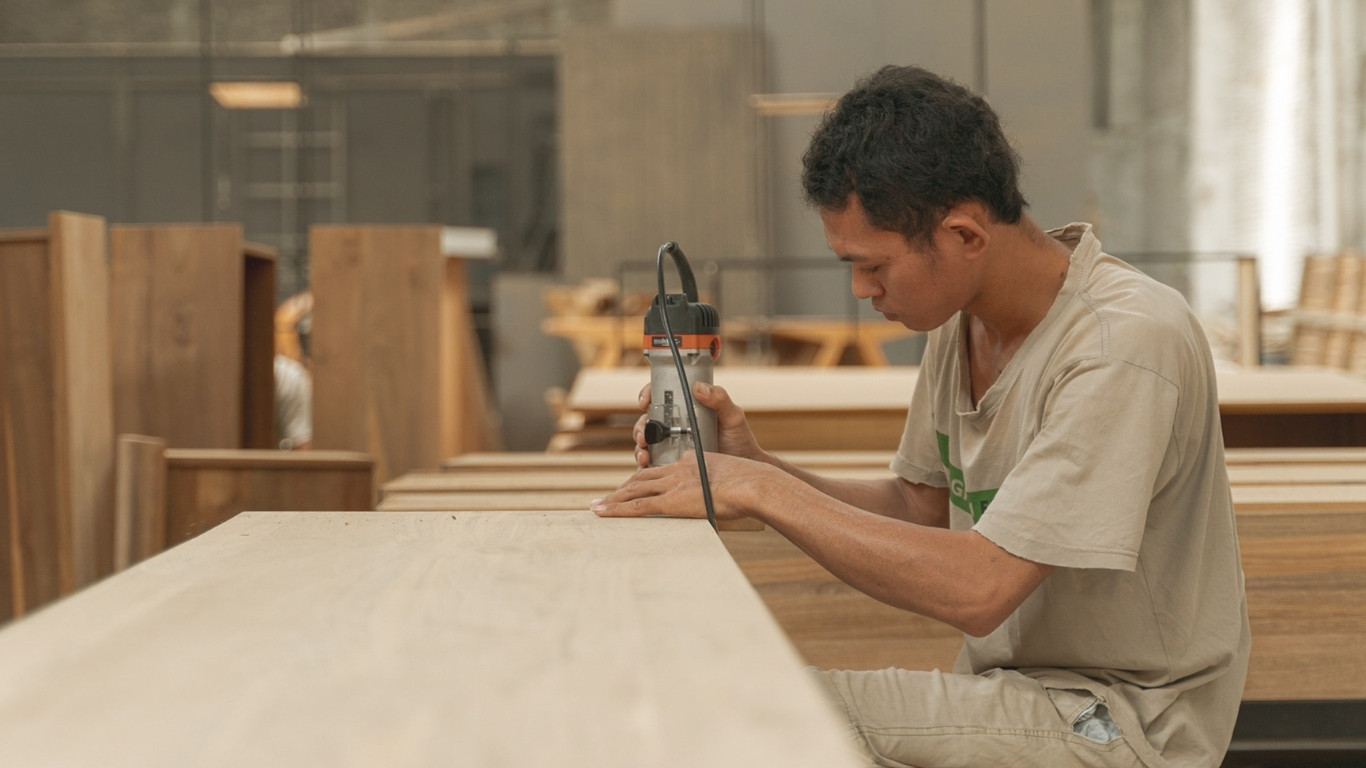
A practical guide to material performance, sourcing, finishing, maintenance and design application in Jakarta and other tropical environments.
Direct answer
Teak can be a strong interior material when it is properly sourced, dried, specified, detailed, finished and maintained. The species name alone does not prove quality, durability or sustainability. Performance varies by origin, heartwood content, moisture condition, manufacturing and exposure, while responsible sourcing requires traceable documentation.
Why Teak Still Matters in Interior Design
Interior trends change quickly, but the practical demands placed on furniture and joinery remain consistent. A dining table must tolerate repeated use. A wardrobe door must continue to align. A kitchen detail must cope with moisture, cleaning and movement. Teak remains relevant because selected teak can combine visual warmth with useful material properties, including relatively low shrinkage and natural durability. Those properties are documented in technical references, but they are not identical in every board or every source. Plantation-grown teak, younger timber and sapwood-rich material can perform differently from mature heartwood.
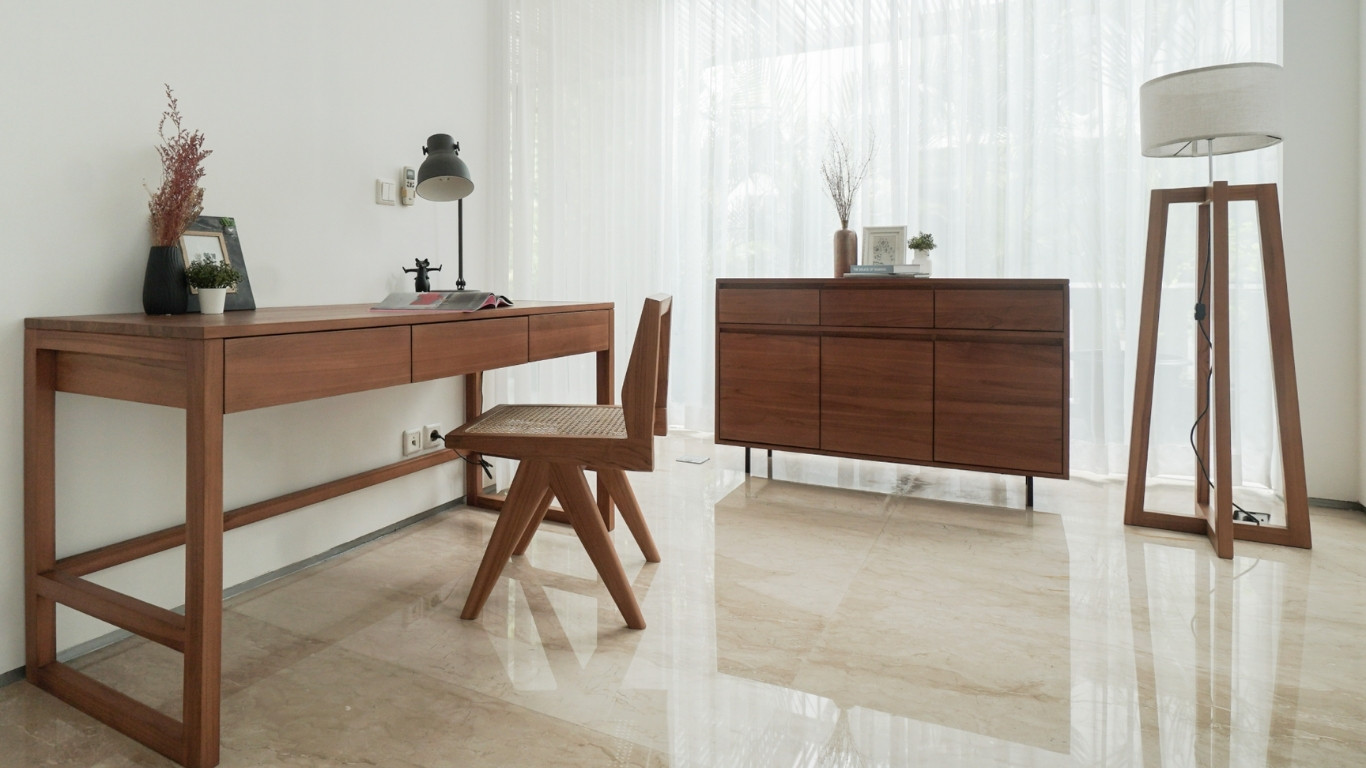
At Noble Design Asia, material selection is treated as part of the whole project system. We consider the user, the climate, the function, the construction method, the finish, the maintenance plan, the source documentation and the client’s long-term goal. This guide explains where teak can add real value, where another material may be more practical, and what evidence to request before accepting sustainability or performance claims.
What Is Teak Wood?
Teak, or Tectona grandis, is a tropical hardwood used for furniture, joinery, architectural elements, flooring, marine applications and selected construction purposes. The CIRAD Tropix technical sheet for teak records teak as a medium-density timber with low total shrinkage and strong natural durability in mature heartwood. It also cautions that plantation-grown teak can vary significantly. This is why the species name alone cannot establish material performance.
This distinction matters. A product described simply as “teak” may contain mature heartwood, younger heartwood, sapwood, laminated components or mixed grades. Its performance depends on what was selected, how it was dried, how the joints were made, which finish was applied and where the finished element will be used.
Why Teak Can Perform Well in Jakarta’s Climate
Jakarta’s humidity, heat, rainfall and frequent movement between outdoor air and air-conditioned interiors can affect timber. Wood is hygroscopic, which means it exchanges moisture with the surrounding air. The USDA Wood Handbook on moisture relations explains that changes in moisture content can cause wood to expand or contract. Drying, storage, installation conditions and detailing therefore remain critical, even when a naturally durable species is selected.
Moisture and dimensional movement
Teak is often selected for joinery because its shrinkage values are relatively low compared with many timbers. According to the CIRAD teak technical sheet, this characteristic can support more stable doors, drawers, panels and furniture. The USDA Wood Handbook also explains why timber still needs an appropriate moisture condition and sufficient allowance for normal movement.
This does not make teak waterproof. Standing water, poorly sealed end grain, trapped moisture, unsuitable adhesives and inadequate ventilation can still cause staining, movement, coating failure or biological damage.
Natural durability and insect resistance
Mature teak heartwood is widely recognised for natural resistance to decay organisms and some insects. However, the level of resistance is not uniform. The CIRAD teak technical sheet notes that plantation-grown teak can vary greatly, while younger or sapwood-rich material may not provide the performance buyers expect.
Natural resistance should never replace building-level pest management. Existing termite activity, soil conditions, hidden moisture, storage and untreated adjacent materials must still be assessed.
Repairability
Solid timber surfaces can often be sanded, patched or refinished when the damage is limited and sufficient material remains. Repairability can extend service life, but the result depends on the construction, finish, thickness and nature of the damage. It should be considered together with maintenance and eventual reuse as part of a life-cycle approach, not treated as a guarantee that every teak product will last indefinitely.
The Material Name Is Not a Quality Guarantee
A strong timber can still fail when it is wet, poorly stored, incorrectly joined or finished with an unsuitable system. Before selecting teak, ask for evidence that answers the following questions:
- What proportion is heartwood and what proportion is sapwood?
- What is the timber’s source, age range and plantation or forest origin, where known?
- How was the wood dried and what moisture condition is expected at fabrication and installation?
- What visible defects, checks, knots or colour variation are accepted?
- Which joinery method, substrate, adhesive and hardware will be used?
- Which finish is specified for the actual exposure and cleaning routine?
- What maintenance, repair and warranty information will be provided?
- Which documents support legality, traceability or certification claims?
Material specification principle
Good design depends on the complete system: timber selection, moisture control, construction, finish, installation, use and maintenance. The word “teak” is only the beginning of the specification.
How to Assess Teak Quality: Beyond A, B and C Labels
Many suppliers use Grade A, B and C labels, but the criteria behind those labels can vary. As explained in the USDA Wood Handbook chapter on commercial lumber grading, different grading practices coexist across products and markets. A letter grade should therefore be treated as a starting point rather than a complete technical specification.
Instead of relying only on a label, compare measurable and visible criteria. For local plantation context, an ITTO technical report on community teak plantations in Java and eastern Indonesia also documents differences in log size, heartwood proportion, processing and material quality.
| Check | Why it matters | What to request |
| Heartwood vs sapwood | Heartwood generally carries more of the natural durability associated with teak. | An explanation of the selected cut and visible unfinished sample. |
| Moisture condition | Incorrect moisture content can contribute to movement, cracking or joint problems. | Moisture readings and the fabricator’s acceptable range for the application. |
| Age and origin | Plantation age and growing conditions can influence density, heartwood formation and durability. | Supplier information and traceability documents where available. |
| Defects and selection | Knots, checks, grain deviation and sapwood affect appearance and performance. | A written acceptance standard or sample board. |
| Construction | Good joinery and hardware are essential even when the timber is strong. | Shop drawings, joinery detail and hardware specification. |
| Finish | The finish affects appearance, moisture response, cleaning and future repair. | Product data, application system and maintenance instructions. |
Is Teak a Responsible Material Choice?
Teak can be specified responsibly, but the species name by itself is not a sustainability claim. A credible decision should consider legality, traceability, forest management, manufacturing, transport, finishes, service life, repair, reuse and end-of-life. The US EPA sustainable materials management framework supports this life-cycle approach rather than judging a material through one attribute alone.
Verify legality and traceability
For timber supplied in Indonesia, ask how the supplier demonstrates legal origin and traceability. Indonesia’s official SVLK information portal explains the national system used to verify timber legality and traceability against applicable requirements.
Legal origin is an essential baseline, but it should not be presented as proof that every environmental impact has been optimised. Where a project requires a broader responsible-forestry claim, request the exact certificate scope and chain-of-custody evidence rather than relying on a logo or verbal assurance.
Understand certification claims
The FSC Chain of Custody framework is designed to track eligible certified and reclaimed forest-based materials through processing and distribution. If FSC is specified, verify that the supplier’s certificate is valid, that the relevant product falls within its scope and that the invoice or claim wording matches the certified transaction.
Use reclaimed teak carefully
Reclaimed teak can reduce the need for newly harvested material and may preserve useful timber that would otherwise be discarded. The US EPA sustainable materials management guidance encourages life-cycle thinking, source reduction and reuse, but the actual environmental benefit still depends on recovery, transport, cleaning, reprocessing, expected service life and what the reclaimed product replaces.
Reclaimed material also needs technical inspection. Check for structural cracks, concealed metal, insect damage, old joints, unknown coatings, contamination, moisture and dimensional limitations before it is approved for a new use.
Where Teak Can Add the Most Value
A thoughtful interior does not need teak on every surface. Concentrating it where its appearance, stability, natural durability or repairability creates a practical benefit usually produces a stronger design and a more disciplined budget.
Custom furniture
Dining tables, desks, bed frames, lounge chairs, credenzas and coffee tables are common applications. Custom dimensions allow the piece to respond to circulation, seating, storage and the actual room rather than forcing the room to accept a catalogue size.
Explore more here: Noble Design Asia custom furniture sourcing
Built-in storage and wardrobes
Teak can be used selectively for visible doors, shelves, handles, feature panels or frequently touched edges. Internal carcasses may use a suitable engineered board where it provides better cost, weight or dimensional control. The decision should be based on exposure, span, hardware, maintenance and the visual brief.
Kitchen joinery
Teak may be considered for cabinet fronts, shelves, handles or selected details, but a premium timber cannot correct poor kitchen planning. Ventilation, drainage, edge protection, hardware, appliance clearances, cleaning routines and coating compatibility remain critical.
Doors, screens and architectural elements
Entrance doors, frames, partitions, stair details and wall panels can benefit from teak’s visual warmth. For large panels and high-rise installations, the project team should review movement allowances, substrate selection, fixing methods, fire requirements, acoustics and building regulations.
Bathrooms and semi-outdoor areas
Teak is used for benches, vanities, bath mats, balcony furniture and selected semi-outdoor pieces. Its natural durability can be useful, but exposure must be defined carefully. Standing water, direct weather, end-grain exposure and inadequate drainage can shorten service life.
Hospitality, office and commercial interiors
A reception desk, communal table, display, screen or feature wall can create warmth and identity. Commercial specifications also need to address cleaning, fire and safety requirements, staff movement, repair access, customer flow and replacement planning.
Where Teak May Not Be Necessary
Another material may be more suitable for:
- Hidden cabinet interiors and secondary storage
- Temporary fit-outs or elements expected to change frequently
- Very lightweight movable furniture
- Projects where budget should be concentrated on higher-use elements
- Applications requiring a different colour, fire rating, weight or maintenance profile
- Large internal panels where a stable engineered substrate offers a technical advantage
High-quality plywood, engineered boards, treated local timbers, metal, stone or mixed-material systems may provide better value in specific applications. The goal is not to maximise the amount of teak. It is to use the right material in the right place.
How to Keep Teak Interiors Contemporary
Teak can feel light and current when it is used with restraint. Heavy, dark or traditional results usually come from proportion, finish and styling choices rather than from the species alone.
- Use simple profiles and avoid unnecessary ornament.
- Pair teak with warm white, soft grey, natural stone, linen, woven textures and matte metal.
- Allow calm surfaces around the timber so the grain remains visible.
- Use teak as an anchor or accent rather than covering every wall and cabinet.
- Match sheen, stain and colour to the daylight and scale of the room.
Finishing and Indoor Air Quality
A finish changes the colour, sheen, protection, cleaning method and repairability of teak. Common systems include oils, hard-wax oils, water-based coatings, lacquers and specialist protective finishes.
Coatings, varnishes, adhesives and some composite substrates can emit volatile organic compounds, or VOCs. The US EPA guidance on VOCs and indoor air quality identifies paints, varnishes and a range of household and construction products as potential indoor VOC sources.
For bedrooms, children’s rooms and enclosed air-conditioned spaces, ask suppliers for product data, VOC or emissions information, application requirements and curing times. Specify adequate ventilation during and after application, and avoid describing a finish as “healthy” or “non-toxic” unless the claim is supported by the relevant test method or certification.
How to Maintain Teak Furniture and Joinery
Clean gently: Remove dust with a soft cloth. For light marks, follow the finish manufacturer’s instructions and dry the surface promptly.
Prevent standing water: Use coasters, trays or pads where spills are likely. Do not leave wet objects on the surface for long periods.
Manage sunlight: Direct sunlight can alter timber colour and finish. Curtains, blinds or careful placement can reduce uneven exposure.
Refresh the finish when needed: Oil and hard-wax systems may need periodic renewal. Coated surfaces may require more specialised repair.
Repair before replacing: Minor surface damage may be repairable, but deeper cracks, loose joints or structural movement should be assessed by a qualified furniture maker or project specialist.
How Noble Design Asia Approaches Teak
We begin with the client goal and the way the space will be used. We then assess where solid teak is justified, where engineered alternatives are more practical, how the material should be sourced and prepared, how it will be built, which finish responds to the exposure, and how the element can be maintained after handover.
- Brief and use-case definition
- Material and source review
- Moisture, joinery and finish specification
- Custom furniture and built-in detailing
- Construction coordination and quality checks
- Handover information and maintenance guidance
See the Noble Design Asia design and fit-out services or review selected work in the project portfolio.
Jakarta Design Contexts Where Teak Can Work Well
The right application depends more on property type, daily use and project brief than on the neighbourhood name. The examples below are design scenarios, not claims that every property in the area has the same architecture or user profile.
Landed homes in Kebayoran, Dharmawangsa, Kemang or Pondok Indah
Teak may suit entrance doors, dining furniture, stair details, family-room cabinetry and indoor-outdoor elements when the exposure and maintenance plan are clear.
Contemporary apartments in SCBD, Senopati, Thamrin or Menteng
Selected teak elements can add warmth to interiors dominated by glass, stone, metal or neutral finishes. Useful applications include dining tables, storage walls, wardrobes and home-office furniture.
Offices, restaurants and hospitality spaces
Teak can support identity and repeated use in reception desks, communal tables, screens and feature joinery, provided the specification also addresses operations, cleaning, fire and maintenance.
Clients still searching for a property can browse Noble Asia residential listings. This is a secondary route. The primary action for this article remains a design and material consultation with Noble Design Asia.
Choose Teak with Clarity, Not Assumptions
Teak can bring warmth, durability and repair potential to an interior, but a credible specification must look beyond the species name. Ask how the timber was sourced, which part of the log is being used, how it was dried, how the piece will be constructed, which finish is specified and what maintenance will be required.
For sustainability, use evidence-based language. Legal verification, chain-of-custody certification, reclaimed content and life-cycle considerations are different claims and should not be used interchangeably.
📩 connect@nobleasia.id | 📞 WhatsApp: +62 813 1668 5505
Frequently Asked Questions
Is teak suitable for humid tropical interiors?
It can be. The CIRAD technical data for teak records low shrinkage and natural durability, while the USDA Wood Handbook explains why drying and moisture movement remain important. Performance still varies by source, heartwood content, detailing, finishing and maintenance.
Is teak termite-proof?
No material should be described as termite-proof. The CIRAD teak technical sheet records natural durability in mature heartwood, but plantation-grown and sapwood-rich material may perform differently. Building-level pest management is still required.
Are Grade A, B and C teak labels reliable?
They can be useful within a supplier’s own system, but the criteria may vary. The USDA guidance on commercial lumber grading shows that grading systems are not universal, while the ITTO plantation-teak report provides useful Indonesian context. Ask for heartwood content, moisture condition, defects, drying method, construction details and source documents.
Does legal teak automatically mean sustainable teak?
No. Indonesia’s SVLK system provides a legality and traceability baseline, while an FSC Chain of Custody claim addresses eligible certified or reclaimed material through the supply chain. A broader sustainability assessment may also consider the life-cycle factors described by the US EPA sustainable materials management framework.
Is reclaimed teak always the most sustainable option?
Not automatically. Reuse can reduce demand for new material, but the US EPA sustainable materials management guidance supports evaluating the wider life cycle. Reclaimed timber still needs source information, technical inspection and a realistic assessment of recovery, transport, processing and expected service life.
Are water-based finishes always safer?
Not necessarily. Product chemistry and emissions vary. Review the manufacturer’s technical and safety information, relevant VOC or emissions data, application requirements and ventilation guidance, using the US EPA indoor-air guidance on VOCs as a general reference.
Can scratched teak be repaired?
Minor surface damage can often be sanded or refinished when the construction and finish allow it. Deeper cracks, loose joints or structural movement should be assessed by a specialist.
Can Noble Design Asia design custom teak furniture?
Yes, subject to project scope, material availability, specification, budget and timeline. Noble Design Asia can integrate custom furniture, joinery, material selection and fit-out into a coordinated design process.



Join The Discussion