
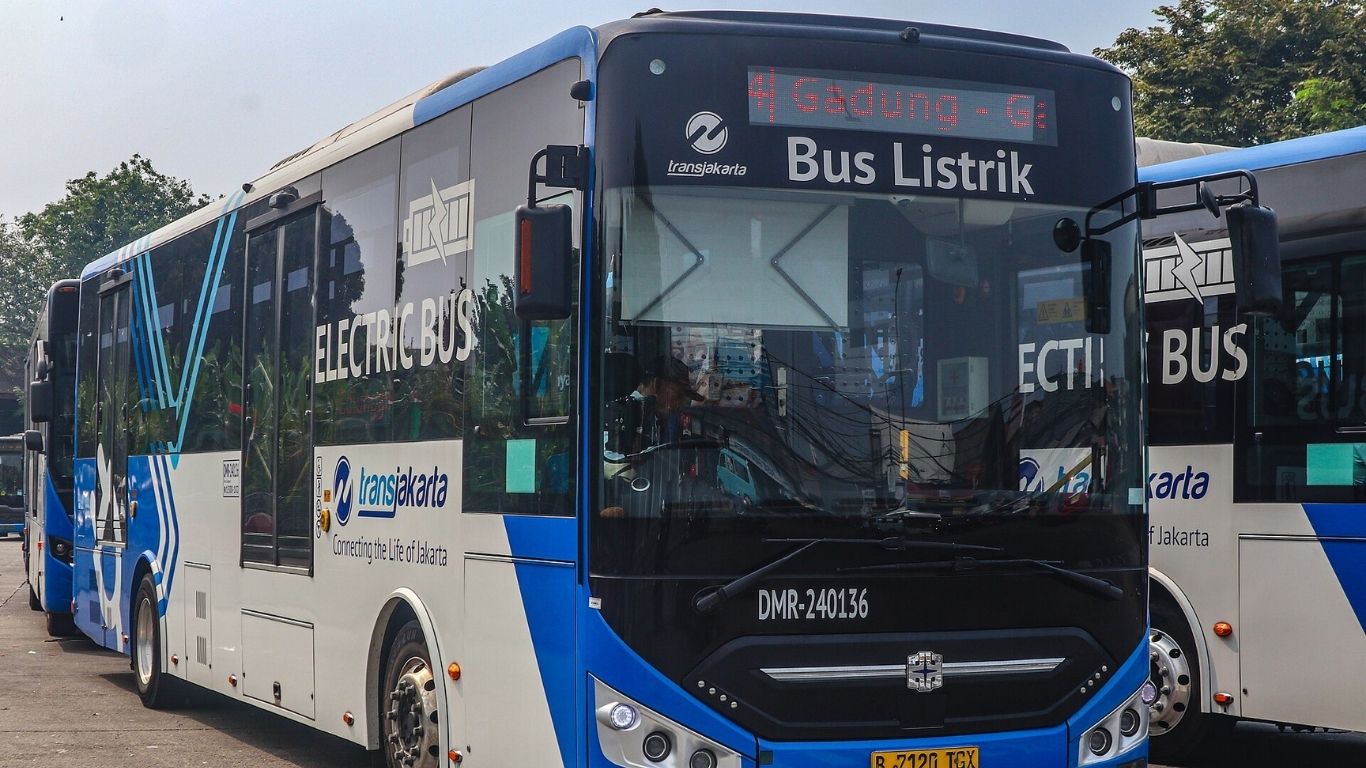
Based on statements by the Jakarta Governor and the Jakarta Transportation Agency, and reporting by ANTARA, Berita Jakarta and national media.
In short: Transjakarta and Transjabodetabek fares will change on 1 January 2027, Governor Pramono Anung confirmed on 29 September 2026. The new fare has not been announced. Rp5,000 within Jakarta is a proposal from the city’s transport council, not a decision. Free travel expands from 15 to 21 groups on the same day.
Transjakarta’s standard fare has stayed at Rp3,500 for about 20 years. That is about to end. What has not been decided yet is the new price, and several figures circulating online are proposals, older plans or route-specific fares that have been reported as if they applied to everyone.
This guide separates what is confirmed from what is still being discussed, explains what you pay today, and shows how a change could affect a month of commuting.
What’s confirmed, what’s proposed and what’s not affected
| Item | Status | Source |
| Transjakarta and Transjabodetabek fares change on 1 January 2027 | Confirmed | Governor Pramono Anung, 29 and 30 September 2026 |
| New fare amount | Not yet announced | ANTARA, 2 October; Republika, 13 October 2026 |
| Rp5,000 for travel within Jakarta, Rp10,000 for Transjabodetabek | Proposal by the Jakarta Transportation Council (DTKJ) | The Jakarta Post, 7 July; ANTARA, 2 October 2026 |
| Free travel groups expand from 15 to 21 | Confirmed, from 1 January 2027 | Governor Pramono Anung, 29 September 2026 |
| MRT Jakarta fares | To be set later, separately | Governor Pramono Anung, 30 September 2026 |
| Mikrotrans fares | Unclear: reports differ on whether it changes on 1 January or later | ANTARA and Republika, October 2026 |
| Blok M to Soekarno-Hatta Airport route at Rp15,000 | Already in effect since 1 September 2026 | Berita Jakarta, Governor’s Decree 685 of 2026 |
The governor announced the change at the provincial National Transport Day event at Balai Samudera, North Jakarta, on 29 September 2026. He said the figure would be announced before it takes effect, and that starting in January leaves time to inform the public. The following day he named the services covered: Transjakarta and Transjabodetabek. MRT and Mikrotrans would be “regulated later”, in his words.
What you pay today
The fare structure in place until the end of 2026 is simple:
- Rp3,500 per trip on Transjakarta and Transjabodetabek, in place since 2005.
- Rp2,000 per trip between 5 and 7 a.m., the long-standing early-morning fare.
- Mikrotrans minibuses: free.
- Transbandara Blok M to Soekarno-Hatta Airport: Rp15,000, set by Governor’s Decree 685 of 2026 and in effect since 1 September 2026.
- Kalideres to Soekarno-Hatta Airport: still Rp3,500, with a separate policy to follow.
Did Transjabodetabek already go up to Rp15,000?
Only one route. Some reports said Transjabodetabek fares rose to Rp15,000 on 1 September 2026. According to Berita Jakarta, the provincial government’s news portal, the Rp15,000 fare applies only to the Transbandara service between Blok M and Soekarno-Hatta Airport, which had been running on a trial fare since it opened in March 2026. The head of the Jakarta Transportation Agency, Budi Awaluddin, described it as setting an official fare rather than an increase. The Kalideres to Soekarno-Hatta route stays at Rp3,500, and the other Transjabodetabek routes linking Jakarta with its satellite cities still charge the standard fare until the January change. The fare was set after studies by Polar UI and Kompas Litbang. If you are heading to the airport, check which service you board: from Blok M you pay Rp15,000, from Kalideres the standard fare.
The proposal on the table
The figures most people quote come from the Jakarta Transportation Council (DTKJ), the advisory body that has recommended a fare adjustment to several governors. As reported in 2026, its proposal is:
- Rp5,000 within Jakarta, covering three hours of travel across BRT, non-BRT and Mikrotrans services rather than a single trip.
- Rp10,000 for Transjabodetabek, also for three hours, including the airport services.
- Mikrotrans: The Jakarta Post reported a proposed Rp2,000 fare in July; later reporting describes Mikrotrans as part of the Rp5,000 three-hour fare.
None of these figures has been adopted. In early October, ANTARA reported that the provincial government was still preparing the amount and that Rp5,000 was not yet a confirmed fare.
The Jakarta Transportation Agency has also said it plans to extend the integrated JakLingko fare, a maximum of Rp10,000 for three hours through the JakLingko app, to all Transjabodetabek routes. If the time-based model goes ahead, the price of a journey would depend less on how many buses you take and more on how long the whole trip lasts.
Why fares are changing now
The provincial government gives three reasons.
The fare has not moved in two decades. DTKJ chair Sugihardjo pointed to Jakarta’s minimum wage, which rose from Rp819,100 in 2005 to Rp5,729,876 in 2026 while the bus fare stayed at Rp3,500.
Subsidies are large. For Transjabodetabek alone, the Jakarta Transportation Agency put the 2026 subsidy at about Rp401 billion, an average of Rp12,258 per passenger. In other words, the city currently pays well over three times what the passenger pays on those routes.
Targeting. Governor Pramono has said the change is meant to shift support towards people who need it, while residents who can afford more pay closer to the real cost. He has also argued that Jakarta’s fares are low compared with the surrounding region.
Who will ride free from 1 January 2027
Fifteen groups already ride free. From 1 January 2027, the governor said, six more will be added, bringing the total to 21:
- Companions of people with disabilities
- Jobseekers holding Jakarta identity cards
- Patients who need regular referral visits to hospitals or community health centres
- Low-income school and university students who do not receive KJP or KJMU education aid
- Small business operators supported by the provincial government
- Disaster victims, including those still in recovery
Most of these groups are defined by Jakarta programmes and residency, so most expatriate professionals should plan on paying the standard fare. Household staff, drivers and their families may qualify under one of the 21 groups, and it is worth checking with them once the eligibility rules are published.
Small increases add up over a month of commuting
A single fare change looks small. Over a working month it is easier to see. The table below assumes two trips a day on 22 working days, a common pattern for a daily commuter.
| Scenario | Fare per trip | Trips per month | Monthly cost |
| Today, standard fare | Rp3,500 | 44 | Rp154,000 |
| Today, early-morning fare out, standard fare home | Rp2,000 and Rp3,500 | 44 | Rp121,000 |
| If the proposed Rp5,000 is adopted | Rp5,000 | 44 | Rp220,000 |
| If the proposed Rp10,000 Transjabodetabek fare is adopted | Rp10,000 | 44 | Rp440,000 |
Illustration by Noble Asia using current fares and the DTKJ proposal. The final fare, and whether the early-morning discount continues, have not been announced.
For a commuter within Jakarta, the proposed fare would add about Rp66,000 a month. For someone commuting daily from a satellite city on Transjabodetabek, the difference is larger: about Rp286,000 a month at the proposed rate. A three-hour fare could also change how you plan: a trip with several transfers might cost the same as a direct one, while two short separate trips might cost more.
For a household that also pays for school runs, a driver or ride-hailing, the bus fare is rarely the biggest transport cost. For staff, students and families who rely on Transjakarta every day, it matters more.
If fares rise, better service?
That question came up almost immediately. DTKJ said it understands the need for an increase and asked that it come with better service. In reporting after the announcement, the chair of a Transjakarta passenger community said Rp5,000 would be reasonable if coverage improved and problems such as cards being charged twice were fixed. Regular riders asked for shorter waiting times and more 24-hour services, and some hoped the new fare would stay below Rp5,000.
The DTKJ proposal itself describes the extra revenue as a way to fund better integration with other transport, upgraded bus stops and expanded services. Whether those improvements arrive alongside the new fare is something commuters will be watching in 2027.
What to do before January
Watch the official channels. The fare will be announced by the provincial government. Follow Transjakarta’s official app and social media, the Jakarta Transportation Agency, and Berita Jakarta rather than screenshots or forwarded messages.
Check the early-morning fare. If you currently travel before 7 a.m. to pay Rp2,000, confirm whether that discount continues under the new structure.
Review transport allowances. Employers who reimburse commuting costs, or set transport allowances for local staff, may want to revisit the amounts once the fare is known.
Factor the commute into where you live. If you are choosing a home in Jakarta, distance to a BRT corridor or MRT station affects your time more than your budget. Under a three-hour fare, a home with one reliable direct route can save time without saving money, and vice versa. It is worth timing the journey at rush hour before signing a lease.
What is still unknown
As of 19 October 2026, these points have not been officially confirmed:
- The new fare for Transjakarta and for Transjabodetabek
- Whether the fare becomes time-based (three hours) or stays per trip
- Whether the Rp2,000 early-morning fare continues
- The timing and level of any change to Mikrotrans and MRT fares
- The full eligibility rules for the 21 free travel groups
We will update this guide when the provincial government announces the figures.
Moving to Jakarta and planning your commute?
Where you live in Jakarta decides how you get around. Noble Asia helps individuals, families and companies find homes that fit the daily commute, and helps newcomers learn how the city’s transport, payment cards and apps work.
Find out more about our orientation and settling-in support, home search services and corporate relocation programmes, or contact Noble Asia at connect@nobleasia.id or WhatsApp +62 813 1668 5505.
Frequently asked questions
Will Transjakarta fares increase in 2027?
Yes. Jakarta Governor Pramono Anung confirmed on 29 September 2026 that Transjakarta and Transjabodetabek fares will be adjusted from 1 January 2027. The new amount had not been announced as of mid-October 2026. The current standard fare of Rp3,500 has been in place since 2005.
Is the new Transjakarta fare Rp5,000?
Not yet. Rp5,000 is a proposal from the Jakarta Transportation Council, which suggested it as a three-hour fare across services within Jakarta, with Rp10,000 for Transjabodetabek. ANTARA reported in October 2026 that the provincial government had not confirmed this figure and was still preparing the official amount.
Has Transjabodetabek already gone up to Rp15,000?
Only on the Transbandara route between Blok M and Soekarno-Hatta Airport, where an official Rp15,000 fare took effect on 1 September 2026. The Kalideres to Soekarno-Hatta route remains at Rp3,500, and other Transjabodetabek routes keep the standard fare until the January 2027 adjustment.
Will MRT Jakarta fares also change?
Not on 1 January 2027 as part of this adjustment. Governor Pramono said on 30 September 2026 that MRT fares would be set later. Reports differ on whether Mikrotrans changes in January or later, so check official announcements before the new year.
Who can ride Transjakarta for free?
Fifteen groups currently ride free, rising to 21 from 1 January 2027. The six new groups are companions of people with disabilities, Jakarta jobseekers, regular referral patients, low-income students without KJP or KJMU aid, supported small business operators, and disaster victims. Most are tied to Jakarta programmes or residency.
Will the Rp2,000 early-morning fare continue?
This has not been announced. Today, trips between 5 and 7 a.m. cost Rp2,000 instead of Rp3,500. Whether that discount survives the January 2027 change, or is replaced by a time-based fare, will only be clear when the provincial government publishes the new fare structure.


Join The Discussion