Fully furnished or semi-furnished? It is one of the first decisions renters, buyers, and apartment owners face in Jakarta, and it affects much more than whether a sofa is already in the living room.
The furnishing level can change the upfront cost, monthly rent, move-in timeline, maintenance responsibility, and how personal the apartment feels. For an owner or investor, it can also influence which tenants are interested, how quickly the unit is ready to market, and how much ongoing replacement and maintenance the property requires.
There is no single answer that works for everyone. A newly arrived expatriate on a fixed assignment may value a move-in-ready apartment. A family planning to stay for several years may prefer to choose its own furniture. An owner preparing a unit for corporate tenants needs to think about durability, broad appeal, and operational ease rather than personal taste alone.
The more useful question is not, “Which option is better?” It is, “Which option fits the person, lease term, property, and intended outcome?”
This guide explains what fully furnished, semi-furnished, and unfurnished usually mean in Jakarta, the real advantages and trade-offs of each, and how renters and owners can compare the total cost rather than the label alone.
What “Furnished” Actually Means in Jakarta
The terms fully furnished, semi-furnished, and unfurnished are not used consistently across Jakarta’s apartment market. Two owners in the same building may use the same label for very different inventories.
That makes the inventory list more important than the marketing description. Before agreeing to a lease or purchase, confirm exactly what is included, its condition, and who is responsible if something stops working.
Fully furnished
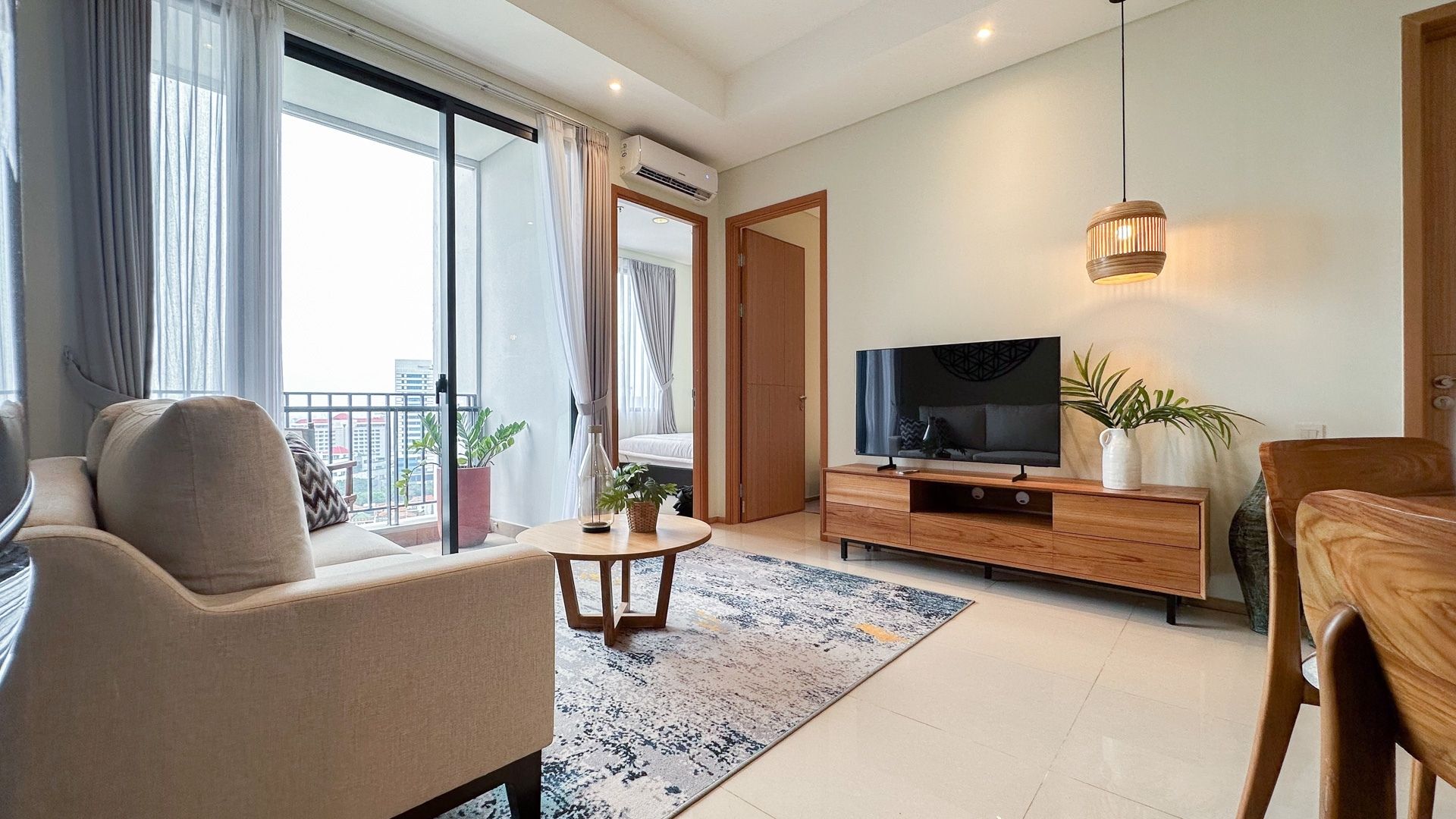
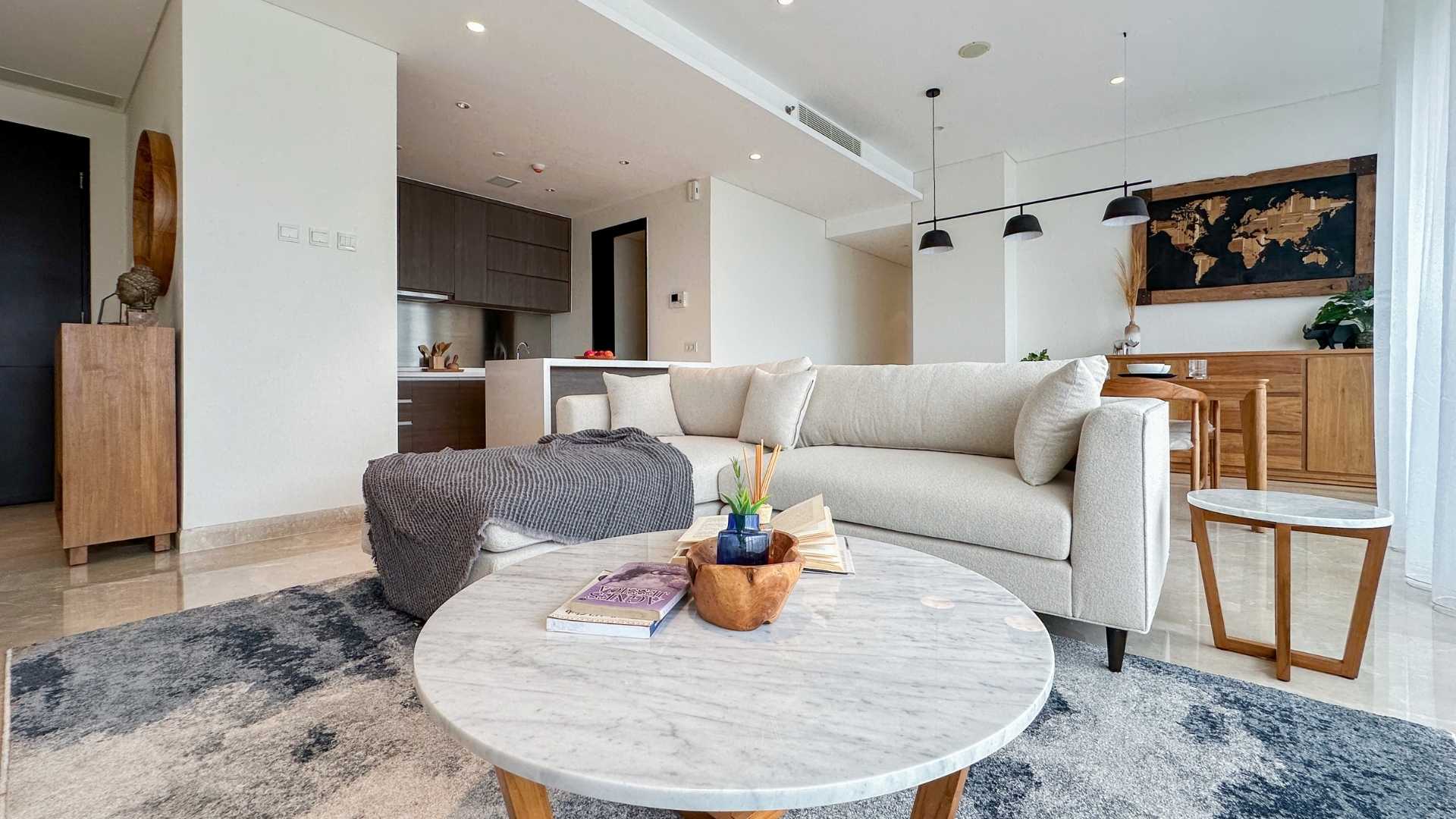
A fully furnished apartment is intended to be ready for normal day-to-day living. It commonly includes beds, sofas, dining furniture, wardrobes or storage, curtains, lighting, and major appliances such as air-conditioning units, a refrigerator, washing machine, television, and water heater.
Some units also include kitchen equipment, cookware, small appliances, linens, artwork, and decorative items. Others provide only the larger essentials. A unit can therefore be advertised as fully furnished and still require several purchases before it feels genuinely move-in ready.
A fully furnished apartment is also not automatically a serviced apartment. Serviced residences may include housekeeping, linen changes, utilities, reception support, or other hotel-style services. A standard fully furnished lease usually covers the apartment and inventory only unless additional services are stated in writing.
Semi-furnished
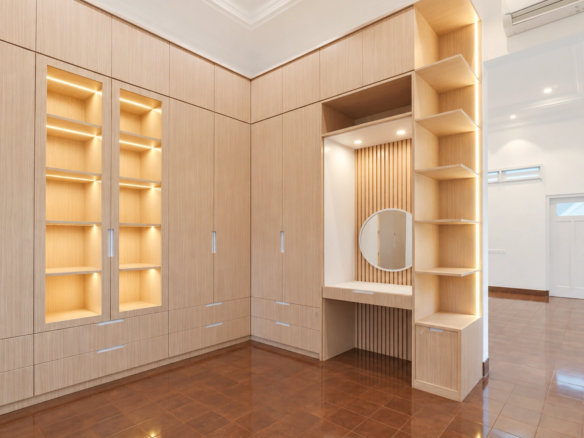
A semi-furnished apartment usually includes fixed or built-in elements but not a complete set of loose furniture. Common inclusions are a kitchen set, built-in wardrobes, air-conditioning, water heaters, lighting, and curtains or blinds.
Some semi-furnished units also include a refrigerator, washing machine, oven, or basic bed frames. Others do not. Beds, sofas, dining tables, desks, side tables, and decorative pieces are usually left for the tenant or owner to provide.
For a renter, a semi-furnished unit can be a useful middle ground: the expensive fixed elements are already installed, while the loose furniture can be chosen around personal needs and taste.
Unfurnished or bare
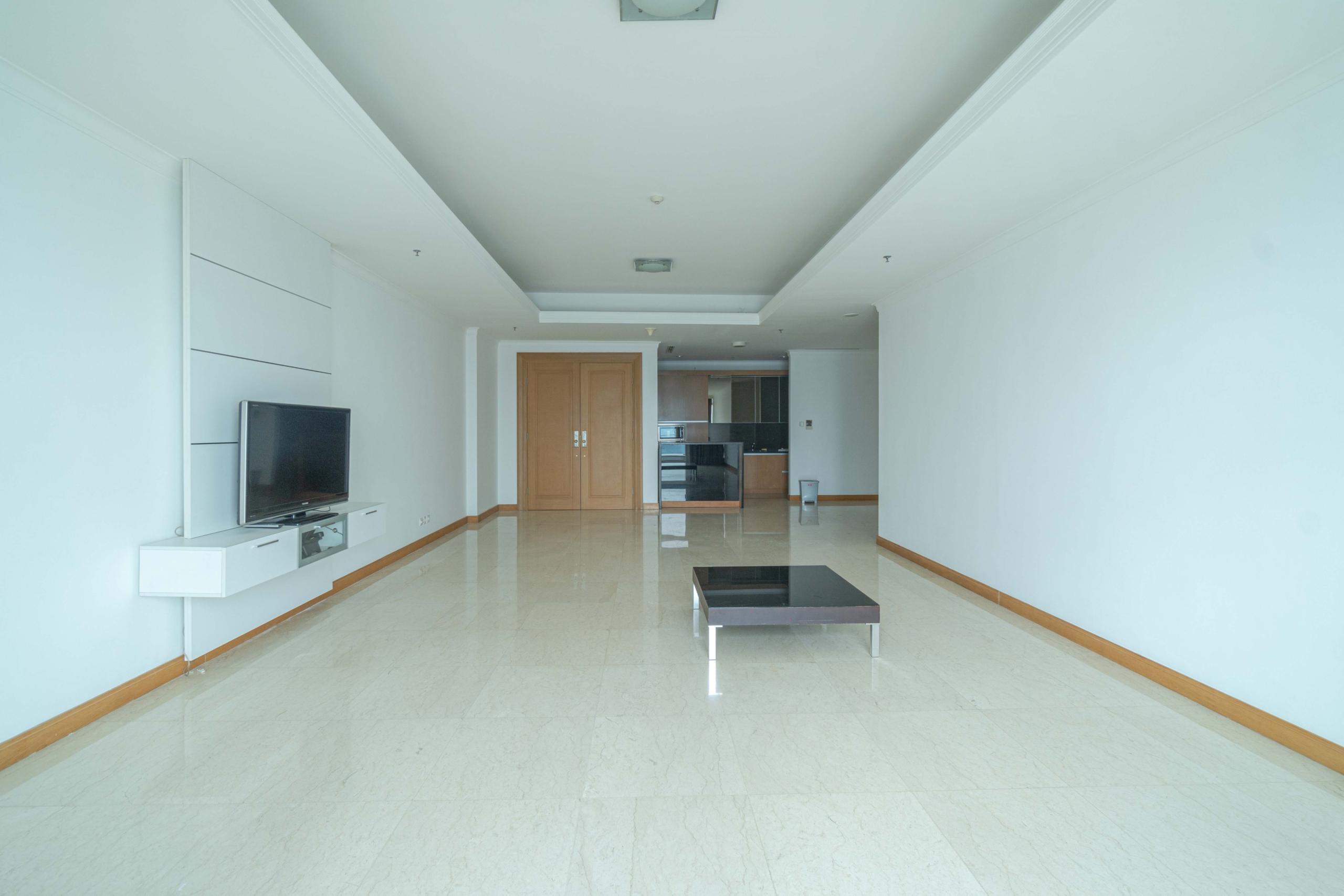
An unfurnished unit may contain only the basic fixtures supplied with the apartment. Depending on the building and owner, that may mean a kitchen, sanitary fittings, air-conditioning, and built-in storage, or it may be closer to an empty shell.
This option offers the most freedom but requires the highest level of preparation. It is more relevant for owner-occupiers, long-term tenants, or buyers planning a complete interior design or renovation rather than someone who needs to move in quickly.
Why the label is not enough
The word “furnished” says nothing about quality, condition, comfort, or suitability. A unit may technically contain every required item but still have a sofa that is too large for the room, a dining table that blocks circulation, or appliances near the end of their useful life.
Before signing, ask for a dated inventory that records the item, quantity, brand or model where relevant, and condition. Photographs at handover are also useful. The lease should distinguish normal wear and tear from damage and state who handles appliance servicing, furniture repairs, and replacement.
A practical inventory check should cover:
· beds, mattresses, sofas, dining furniture, desks, and storage;
· refrigerator, washing machine, oven, microwave, television, and other appliances;
· air-conditioning units, water heaters, lighting, and curtains;
· kitchenware, linens, artwork, and decorative items if included;
· existing marks, damage, missing parts, and appliance condition;
· items the landlord has agreed to add, remove, repair, or replace before move-in.
Fully Furnished Apartments: The Advantages and Trade-Offs
Fully furnished apartments remain a practical choice for many expatriates, corporate assignees, and residents who want a straightforward move. The value comes mainly from convenience and flexibility, not simply from receiving more furniture.
The case for fully furnished
The main advantage is speed. A tenant can move in without sourcing, transporting, assembling, or installing a household of furniture. This can make a major difference during an international relocation, when school arrangements, work, documentation, and settling-in tasks are already competing for attention.
It also reduces the initial cash required. Instead of paying for beds, seating, dining furniture, appliances, curtains, and delivery at the beginning of the lease, the tenant pays for the use of those items through the rent.
At the end of the tenancy, there is less to sell, store, donate, or ship. This is especially valuable for fixed-term assignments or residents who expect another international move.
The trade-offs
Convenience is normally reflected in the rent. A furnished unit may be priced above a comparable semi-furnished unit, although the difference varies by building, unit condition, owner, and lease terms.
The furniture is also selected by the owner. It may be comfortable and coherent, or it may be generic, dated, oversized, or chosen mainly to complete an inventory. Tenants have less freedom to create a personal home and may need written approval before removing or storing unwanted items.
Responsibility also matters. A fully furnished lease involves more owner-owned items that can fail or be damaged. The handover record should make clear which defects existed before move-in and how repairs will be handled. Tenants should not assume that every appliance replacement is automatically the landlord’s responsibility, or that every sign of use will be treated as normal wear.
Who fully furnished usually suits
Fully furnished apartments often work well for:
· newly arrived expatriates and corporate assignees;
· residents on short or fixed-term leases;
· people who do not own suitable furniture in Jakarta;
· tenants who value a fast move and simple departure;
· companies arranging accommodation that needs to be operational quickly.
It may be less suitable for someone who already owns furniture, plans to stay for many years, or cares strongly about creating a home around personal routines and taste.
Semi-Furnished Apartments: The Advantages and Trade-Offs
Semi-furnished apartments appeal to residents who want more control over how the home looks and functions, while avoiding the cost and complexity of installing every fixed element.
The case for semi-furnished
A semi-furnished unit may have a lower monthly rent than a comparable fully furnished unit. Over a longer stay, that difference can become meaningful, particularly when the resident already owns furniture or can use the same pieces for several years.
The larger benefit is control. The tenant or owner can choose the right mattress, sofa depth, dining table, work desk, children’s storage, or other pieces around daily life instead of adapting to a landlord’s standard package.
This can be especially valuable for families, people working from home, residents with accessibility needs, or anyone whose routines do not fit a generic furniture layout.
The trade-offs
The initial cost is higher because the resident must buy, rent, or move furniture. Delivery, installation, window treatments, small appliances, and styling can add more than expected, particularly when purchases are made separately without a plan.
There is also a time cost. Furniture needs to be measured, sourced, delivered, checked, and arranged. Apartment access rules, loading-bay bookings, lift protection, permitted delivery times, and building management approvals can affect the schedule.
At the end of the lease, the furniture still belongs to the tenant. It must be moved to the next home, sold, placed in storage, or disposed of. That exit plan should be considered before buying large or highly customised pieces.
Who semi-furnished usually suits
Semi-furnished apartments often work well for:
· residents expecting a longer stay;
· people who already own furniture;
· families with specific practical needs;
· owner-occupiers who want a personal home;
· tenants who prefer lower recurring rent and can accept the upfront effort;
· investors who want to control the furnishing strategy separately from the property purchase.
A Practical Decision Framework
The best choice usually becomes clearer when the decision is broken into a few practical questions.
How long are you likely to stay?
Length of stay is important, but there is no universal cut-off. A fully furnished unit can make sense for a one- or two-year assignment because it reduces setup and exit work. A semi-furnished unit can become more attractive over a longer stay because the furnishing cost is spread across more months.
Do not decide from the lease term alone. Consider whether the assignment could be extended, whether the furniture can move to another home, and whether the monthly saving is large enough to recover the furnishing cost.
Do you already own furniture?
Someone with suitable furniture in Jakarta starts from a very different position from someone arriving with two suitcases. Shipping furniture internationally can be expensive and slow, while replacing everything locally can also be a significant commitment.
Check whether existing pieces actually suit the new apartment. Jakarta units vary widely in room proportions, lift dimensions, access, and storage. Furniture that worked in a previous home may not fit the new layout comfortably.
What is the total cost, not only the monthly rent?
Compare the full expected cost over the period you plan to stay.
For a fully furnished unit, include the rent premium, security deposit, responsibility for damaged items, and any additional service charges.
For a semi-furnished unit, include furniture, appliances, delivery, installation, window treatments, maintenance, moving, storage, and the likely resale value at the end.
A simple comparison is:
Total semi-furnished setup cost ÷ monthly rent saving = approximate break-even period
For example, if furnishing and setup cost IDR 120 million and the semi-furnished unit saves IDR 5 million per month, the simple break-even period is about 24 months. This is only an illustration. The real calculation should include moving costs, repairs, resale value, financing cost, and the practical value of time and convenience.
How much personalisation do you need?
Personalisation is not only aesthetic. A resident may need a proper home office, child-safe storage, an extra-long bed, space for hobbies, pet-friendly materials, or a dining setup for regular entertaining.
A fully furnished unit can work when the existing layout supports those routines. When it does not, semi-furnished may be the better choice even if it requires more effort.
What happens at handover and at the end of the lease?
For a furnished unit, confirm the inventory, appliance testing, cleaning standard, repair process, and responsibility for missing or damaged items.
For a semi-furnished unit, confirm what may be installed, whether walls can be drilled, how curtains and lighting can be changed, and whether landlord or building approval is required. Also plan how the furniture will leave the property without causing damage or delaying handover.
Quick comparison
| Consideration | Fully furnished | Semi-furnished |
| Move-in readiness | Usually faster and more turnkey | Requires furnishing and delivery |
| Upfront furniture cost | Lower for the tenant | Higher unless furniture is already owned |
| Monthly rent | Often higher | Often lower |
| Personalisation | Limited by existing inventory | Greater control over layout and style |
| Move-out effort | Lower | Furniture must be moved, sold, or stored |
| Maintenance questions | More landlord-owned items to record | More tenant-owned items to maintain |
| Often best for | Shorter stays, new arrivals, corporate housing | Longer stays, families, owner-occupiers |
Where Interior Design Makes the Difference
The furnishing label matters less than whether the apartment has been planned around real use. A fully furnished apartment can feel uncomfortable when the pieces do not suit the space. A semi-furnished apartment can become calm, functional, and valuable when the layout and furnishing decisions work together.
Begin with the user and the purpose
A home for an owner-occupier should reflect personal routines, storage needs, comfort, and identity. A rental unit should support the intended tenant while remaining durable and broadly appealing.
That brief should guide the layout, furniture scale, lighting, finishes, and budget. Starting with a shopping list usually creates a collection of objects. Starting with the user creates a functioning home.
Design for Jakarta’s climate and apartment realities
Jakarta’s heat and humidity affect materials, finishes, upholstery, metal components, adhesives, and storage. Material selection should consider ventilation, cleaning, maintenance, and long-term performance rather than appearance alone.
Apartment projects also have operational constraints. Building management may regulate work permits, delivery hours, service lifts, noise, contractor access, protection deposits, and renovation periods. These requirements should be checked before furniture is ordered or work begins.
Make compact spaces work harder
Many apartments benefit from careful furniture scale, integrated storage, clear circulation, and pieces that serve more than one function. A slightly smaller sofa, a properly placed dining table, or built-in storage can improve daily life more than adding another decorative item.
Good space planning should make the apartment easier to move through, easier to maintain, and more comfortable to use throughout the day.
Use FF&E as a system
FF&E means furniture, fixtures, and equipment. For an apartment, an FF&E plan can coordinate furniture dimensions, appliances, lighting, window treatments, artwork, accessories, suppliers, delivery, installation, and inventory.
For owners and investors, this makes the furnishing package easier to budget, document, maintain, and repeat. For residents, it creates a more coherent home and reduces the risk of buying pieces that do not fit or work together.
The Apartment Still Comes First
The furnishing decision should not distract from the more important question: whether the apartment and building suit the resident or investment goal.
Before choosing a unit, consider the layout, natural light, storage, noise, view, lift access, parking, service-charge responsibilities, commute, building management, maintenance response, pet rules, and renovation or delivery restrictions.
Furnishing levels can vary between units in the same development because each owner makes different choices. This applies across premium Jakarta residences, including buildings such as Savyavasa, Casa Domaine, Kempinski Private Residence, and Residence 8. Confirm the actual unit, inventory, lease terms, and current condition rather than assuming every apartment in the building is offered in the same way.
For renters, the strongest choice is the combination of the right building, the right unit, and the right lease terms. For owners, the design and furnishing strategy should respond to the actual layout and likely tenant rather than copying another unit.
How Noble Design Asia Helps Apartment Owners, Residents, and Investors
Noble Design Asia creates apartments that work in real life, not only in photographs. The team connects concept, space planning, furniture, materials, fit-out, installation, and final styling around the client’s goal and the long-term use of the property.
Support can include:
- A clear brief around how the apartment will be used, whether to live in or to let, and to whom, so the scheme fits its purpose.
- Space planning, layout, and storage solutions that make compact units live larger and feel calm and functional.
- Furniture, fixtures, and finishes selected for durability in Jakarta’s climate and for broad appeal in rental use, or personal taste for owners.
- Complete furnishing packages for investors, designed to attract the right tenants and protect the asset over time.
- Styling and the finishing layer that turns a furnished unit into a polished, photograph-ready home.
- For larger projects, full interior design, renovation, and fit-out, taken from concept to handover under one accountable team.
For owners and investors, the objective is not to promise a particular rent or return. It is to prepare the apartment more thoughtfully for its target market, protect the furnishing investment through better decisions, and create a home that people can genuinely imagine living in.
For residents, the objective is a space that supports daily routines, comfort, storage, work, rest, and personal expression.
Planning to furnish a semi-furnished apartment, improve an existing unit, or prepare a property for rent? Share the apartment, timeline, intended user, and budget with Noble Design Asia, and the team will help define the most suitable next step.
📩 connect@nobleasia.id | 📞 WhatsApp: +62 813 1668 5505
Frequently Asked Questions
What is the difference between fully furnished and semi-furnished in Jakarta?
A fully furnished apartment is intended to include the main furniture and appliances needed for normal living. A semi-furnished unit usually includes fixed elements such as the kitchen, wardrobes, air-conditioning, lighting, and water heaters, but not a complete set of loose furniture. The exact definitions vary, so the written inventory is more reliable than the label.
Is fully furnished or semi-furnished cheaper?
Fully furnished normally requires less upfront spending but may have a higher monthly rent. Semi-furnished may have a lower rent but requires furniture, delivery, and installation. The cheaper option depends on the actual rent difference, setup cost, expected length of stay, and what happens to the furniture at the end.
Which option is better for expatriates moving to Jakarta?
Fully furnished is often practical for a new arrival or fixed-term assignment because it simplifies move-in and departure. Semi-furnished may work better for a longer stay, a family with specific needs, or someone who already owns furniture. The answer depends on the assignment, budget, and preferred level of personalisation.
Should the inventory list be attached to the lease?
Yes. The inventory should identify the included items and their condition, ideally supported by dated photographs. It should also record any items the landlord will add, remove, repair, or replace and clarify responsibility for normal wear, damage, servicing, and replacement.
Can a tenant negotiate the furniture and appliances?
Often, yes, subject to the owner’s agreement. A tenant may ask for an appliance to be added, an unwanted item to be removed, or damaged furniture to be replaced. Any agreement should be recorded in the lease or handover documents rather than left as a verbal promise.
Are utilities and service charges included in a furnished lease?
Not automatically. Utilities, internet, parking, service charges, sinking funds, housekeeping, and other costs are separate from the furnishing description unless the agreement states otherwise. Serviced apartments may bundle some items, but standard furnished leases often do not.
Which option is better for an apartment investor?
It depends on the target tenant, building, unit, and cost. Furnishing may broaden appeal or support a higher asking rent in some segments, but it also creates capital, maintenance, and replacement costs. The decision should be based on comparable units and a realistic net-cost calculation rather than an assumed return.
Can Noble Design Asia furnish a semi-furnished apartment?
Yes. Noble Design Asia can support space planning, furniture and material selection, FF&E packages, custom furniture, renovation, fit-out, installation, and styling. The scope should be defined around the unit’s condition, intended use, budget, timeline, and building requirements.
Is a fully furnished apartment the same as a serviced apartment?
No. A fully furnished apartment describes the furniture and equipment included. A serviced apartment may also provide housekeeping, linen changes, reception support, utilities, or other operational services. Confirm exactly what is included in the monthly payment.