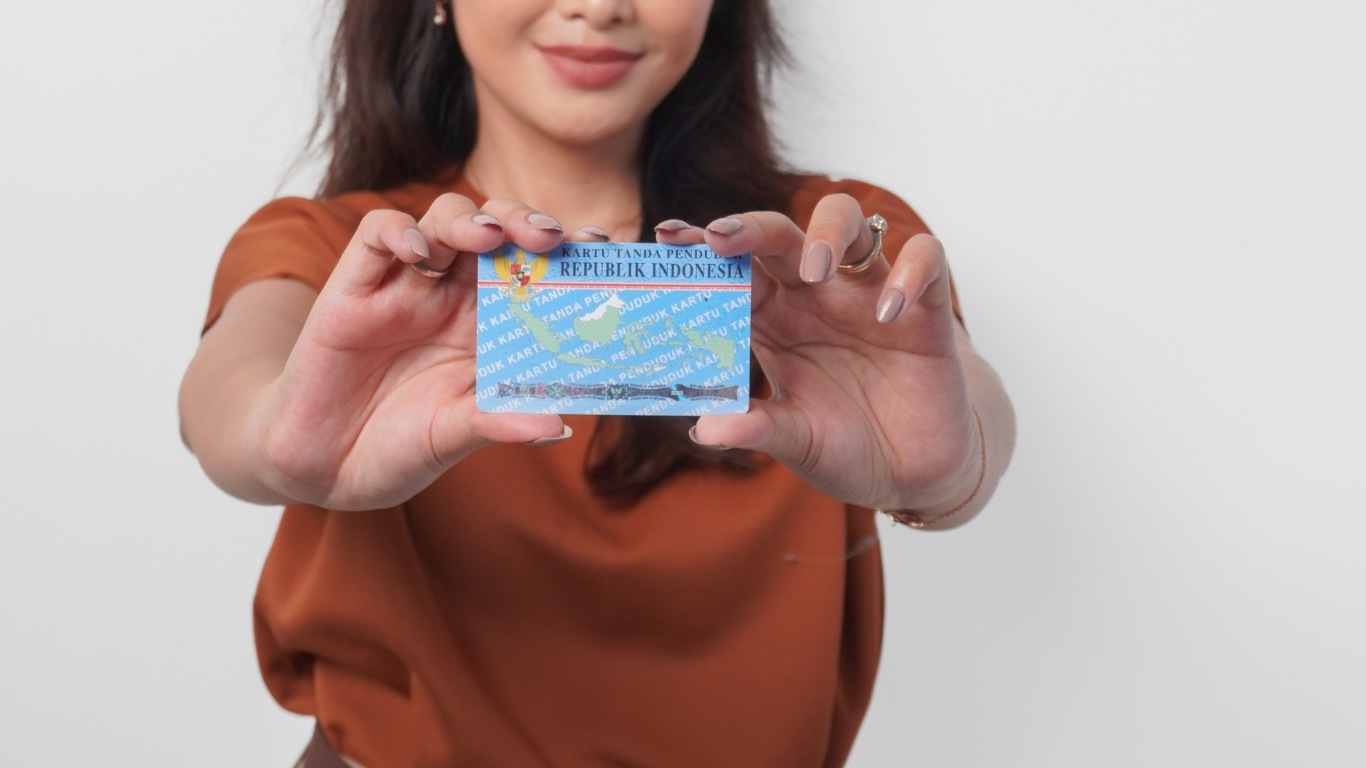
If you’re relocating to Jakarta or settling in Bali, you’ll quickly encounter one essential term: NIK (Nomor Induk Kependudukan). Think of it as Indonesia’s master key to its entire administrative system. Without it, doors start closing fast. Banks, tax offices, healthcare enrollment, even a prepaid SIM card registration all lead back to this single 16-digit number.
We hear these questions from expats constantly: Do foreigners get a NIK? Is KITAS enough for the bank? Can I register for BPJS without it? This guide answers all of that clearly, with the most up-to-date information for 2026. If you are also exploring relocation support in Jakarta, understanding NIK is the first step to getting everything right from day one.
What Is a NIK in Indonesia?
The NIK (Nomor Induk Kependudukan) is Indonesia’s national population identification number. For Indonesian citizens, it appears on the KTP (national ID card). For foreigners, it is issued once you complete civil registration at a local Dinas Kependudukan dan Pencatatan Sipil (Disdukcapil) office after securing your legal stay permit.
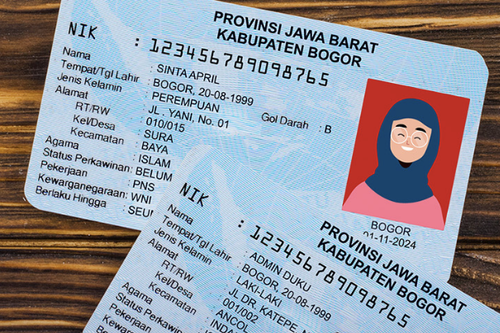
Under Indonesian Law No. 24 of 2013 on Population Administration, the NIK functions as a universal identifier across public and private services. In 2026, as Indonesia has pushed toward fully integrated digital governance, NIK has become more central than ever. It now underpins the national tax system, healthcare enrollment, and financial compliance for every legal resident, including foreigners.
Do Foreigners Get a NIK?
Yes, but only with a valid stay permit. Tourists and short-term visa holders do not qualify. NIK is tied to legal residency, specifically:
- KITAS (Kartu Izin Tinggal Terbatas): Limited Stay Permit, valid for 6 months to 2 years with annual extension options.
- KITAP (Kartu Izin Tinggal Tetap): Permanent Stay Permit, available after multiple years of lawful residency.
Once you hold a KITAS or KITAP, you must register with your local Disdukcapil. A critical 2026 update: all KITAS and KITAP renewals now require an in-person biometric verification (photo and interview) at an immigration office. The previous fully-online renewal process has been discontinued. This change directly affects civil registry timelines, so plan your immigration renewal and Disdukcapil registration together, not separately.
KITAS holders receive an SKTT (Surat Keterangan Tempat Tinggal), a temporary residency card displaying your NIK. KITAP holders receive an e-KTP Orang Asing, a chip-based national ID card. You must register at Disdukcapil within 7 to 14 days of receiving your KITAS. Missing this window can result in administrative fines and blocked access to essential services. For a full step-by-step walkthrough on address registration, read our guide on How to Do Lapor Diri with RT/RW After Moving to Jakarta or Bali.
Why NIK Matters for Foreigners in Jakarta and Bali
Whether you are in Central Jakarta’s Thamrin corridor, the SCBD business district, Kemang, or managing a property portfolio in Bali, NIK affects three major areas of daily life directly. If you are considering a move and want to understand the full picture of living as an expat in Indonesia, knowing how NIK fits into each of these is essential.
1. NIK for Tax Registration (NPWP)
Indonesia’s tax system has undergone a major transformation. As of July 1, 2024, the government officially merged the NPWP (tax identification number) with the NIK for Indonesian citizens under DGT Regulation No. PER-6/PJ/2024. For foreign individual taxpayers, the 15-digit NPWP has been updated to a 16-digit format and your NIK underpins your registration on the new Coretax portal at pajak.go.id.
If you are a KITAS holder earning income in Indonesia from employment, an investor visa, or rental income on a Bali villa, you are required to register for an NPWP and file annual tax returns. Without a NIK, your NPWP registration is incomplete and higher withholding tax rates apply automatically.
Staying more than 183 days in a tax year triggers Indonesian tax resident status (SPDN), meaning you must report worldwide income. Indonesia has tax treaties with 71 countries to prevent double taxation, but you need a valid NPWP and NIK to invoke those protections. For property investors in SCBD and Bali, NIK is also essential for clean notary transactions and rental income reporting. Learn more about property advisory in SCBD and Sudirman to understand the full ownership picture.
2. NIK for BPJS Kesehatan and BPJamsostek
BPJS is Indonesia’s mandatory social security system, split between BPJS Kesehatan (health insurance) and BPJamsostek (employment insurance). Both require NIK, and both are legally compulsory for foreigners who have worked and lived in Indonesia for more than 6 consecutive months.
Eligibility for BPJS enrollment covers:
- KITAS or KITAP holders employed by an Indonesian entity (PT, PT PMA, Representative Office, Foundation, or NGO).
- Investor KITAS and KITAP holders at executive level.
- Self-employed foreigners with legal residency may register as independent BPJS Kesehatan members.
Note: Retirement KITAS holders, tourists, and business visa holders do NOT qualify for BPJS enrollment.
Current BPJS Kesehatan contributions are 4% of wages paid by employers (capped at IDR 480,000/month) and 1% by employees (capped at IDR 120,000/month), calculated against a maximum monthly wage of IDR 12 million. Coverage extends to five family members per employee.
For families relocating to Jakarta or settling long-term in Bali, BPJS enrollment means access to Indonesia’s JKN healthcare network, currently the world’s largest national health insurance system by enrollment covering approximately 250 million people. Read more about school and community support for expat families to complete your relocation checklist.
3. NIK for Banking in Indonesia
Indonesian banks now require NIK as standard practice for customer onboarding, driven by Know-Your-Customer (KYC) regulations and the integration of financial data with the national population database. From state-owned banks like Bank Mandiri and BNI to international players like OCBC, NIK is now non-negotiable for:
- Opening savings and current accounts.
- Applying for credit cards and personal loans.
- Setting up mobile banking and digital wallets.
- Property mortgage facilities and large property transactions.
In 2026, banks are connecting customer accounts directly to the Coretax system. For expats buying apartments in Sudirman or investing in villa developments in Bali, having NIK ensures loan processing, payment verification, and tax reporting are properly aligned.
NIK vs. KITAS: What Is the Difference?
This is the most common confusion we see among new expats. Here is the simplest way to think about it: your KITAS is your permission slip to live in Indonesia legally. Your NIK is your identity within the system that lets you function administratively.
KITAS gives you the legal right to stay. NIK gives you the practical ability to access services. You need KITAS first, then NIK follows through civil registration. One without the other is incomplete.
How to Get Your NIK as a Foreigner (2026)
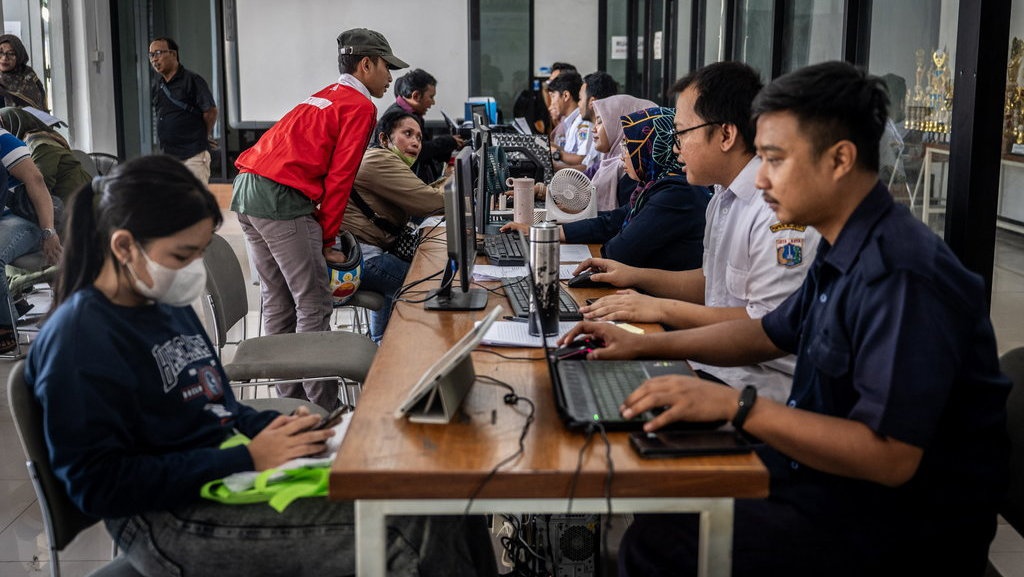
The process is more streamlined in major cities like Jakarta and Bali’s primary hubs, but it is not automatic. Here is the current step-by-step process:
Step 1: Secure Your KITAS or KITAP
Common KITAS categories in 2026 include Work KITAS (via employer sponsorship, requires RPTKA work permit), Investor KITAS (for PT PMA shareholders), Family or Spouse KITAS, Retirement KITAS (for those 55+), and Digital Nomad KITAS (E33G). All renewals now require online application via evisa.imigrasi.go.id followed by a mandatory in-person biometric session. For more on visa and immigration support, NOBLE ASIA can guide you through the full process.
Step 2: Report Your Address (Lapor Diri)
After receiving your KITAS, register your residential address at the local RT/RW level. This is the domicile declaration process, and without it, civil registry steps cannot proceed. For a detailed guide, visit our article on how to do Lapor Diri with RT/RW.
Step 3: Register at Disdukcapil
Bring these documents to your local civil registry office:
- Valid passport
- KITAS or KITAP document
- Domicile letter from RT/RW
- Sponsor documents (if applicable)
- Recent passport-sized photos
Step 4: Receive Your SKTT and NIK
KITAS holders receive the SKTT containing their NIK. KITAP holders receive the e-KTP Orang Asing. Processing times in Jakarta are generally efficient. In Bali, timeframes vary by regency. Allow two to four weeks given the 2026 biometric synchronization requirements between immigration and civil registry offices.
What Happens Without a NIK?
Operating long-term in Indonesia without a NIK is not viable in 2026. The consequences stack up quickly:
- Tax complications: Cannot register NPWP properly, cannot file annual returns, and higher withholding rates apply automatically.
- BPJS lockout: Cannot enroll in national healthcare, and employers cannot complete mandatory employee registration.
- Banking limitations: Full banking services including credit facilities, mortgage access, and mobile banking are inaccessible.
- Utility and SIM card blocks: Indonesian SIM card and utility registration require NIK.
- Property friction: Property purchases, lease agreements, and notary processes become significantly more complex without NIK-linked tax documentation.
- Administrative fines: Failing to register at Disdukcapil within the required timeframe carries formal penalties under Indonesian administrative law.
NIK and Property Investment in Indonesia
Indonesia’s property market in SCBD, Sudirman, Thamrin, Kemang, and Bali’s villa corridors in Canggu, Seminyak, and Ubud is increasingly attractive to foreign investors. But navigating property ownership or rental income without a NIK creates real obstacles.
Consider this scenario: you have invested in a apartment in Jakarta under a Hak Pakai (right to use) structure and your property generates rental income. To declare that income to the tax office, you need an NPWP tied to your NIK. When you eventually resell, the notary process and tax clearance documentation cross-reference your NIK. Golden Visa investors placing USD 1 million or more in qualifying property can stay up to 5 years, but that entire framework also loops back to NIK-linked tax compliance.
Also read: Why Savyavasa Is One of Jakarta’s Most Prestigious Residential Investments?
NIK Is Not Optional
Indonesia is moving fast toward integrated digital governance, and NIK is the thread running through all of it. From the Coretax tax portal and BPJS enrollment to banking KYC requirements and property transactions, this 16-digit number is the infrastructure behind expat life in Jakarta and Bali in 2026.
The path to getting your NIK is clear and manageable with the right guidance. But the 2026 procedural updates, including mandatory biometric renewals and the Coretax integration, mean that attempting to navigate this alone carries real risk. Aligning your immigration status, NIK registration, tax documentation, and BPJS enrollment from day one is the smartest investment you can make in a smooth Indonesian experience.
How NOBLE ASIA Supports Your Administrative Setup
Relocating to Indonesia involves far more than finding the right apartment. At NOBLE ASIA, we provide end-to-end support across visa and immigration coordination, domicile registration, home and office search, and property advisory across SCBD, Sudirman, Thamrin, and Kemang. For Bali investors, we also cover villa advisory and property management. We ensure your NIK, tax registration, BPJS enrollment, and property documentation are aligned from day one.
Planning to relocate or invest in Indonesia? Let NOBLE ASIA guide you through immigration, tax registration, and property acquisition, seamlessly and compliantly.
Click here Speak with our advisory team today or Contact us here:
📩 connect@nobleasia.id
📞 WhatsApp: +62 813 1668 5505
FAQ: NIK for Foreigners in Indonesia 2026
Q: Do foreigners automatically get a NIK with KITAS?
No. You must actively register with your local Disdukcapil within 7 to 14 days of receiving your KITAS. The NIK appears on your SKTT after completing civil registration.
Q: Can I open a bank account without NIK?
Some banks may allow limited account setup with KITAS alone, but full services including mobile banking, credit facilities, and property-linked accounts all require NIK. This is increasingly enforced across all major Indonesian banks.
Q: Is NIK the same as NPWP?
No. NIK is your civil identity number; NPWP is your tax identification number. For Indonesian citizens, NIK now functions as NPWP since July 2024. For foreigners, both remain separate documents, but NIK is required as part of NPWP registration.
Q: How long does it take to get NIK after KITAS?
In Jakarta, processing typically takes a few business days to two weeks. In Bali, timeframes vary by regency. With 2026 biometric synchronization requirements, allow two to four weeks and start the process immediately after your KITAS is issued.
Q: Do retirees in Bali need NIK?
Yes, if they hold a Retirement KITAS. However, Retirement KITAS holders are NOT eligible to enroll in BPJS Kesehatan. That restriction is specific to healthcare enrollment, not NIK registration overall.
Q: Can I register for BPJS without NIK?
No. NIK is required for enrollment in both BPJS Kesehatan and BPJamsostek. Without it, neither employer-sponsored nor independent registration can be completed.
Q: Is NIK required for SIM card registration?
Yes. Indonesian SIM card registration is linked to NIK under the country’s digital identity framework.
Q: What is the 2026 update to KITAS renewal?
All KITAS and KITAP renewals now require a hybrid process: online application through evisa.imigrasi.go.id, followed by a mandatory in-person biometric verification. The previous fully-online renewal process has been discontinued.