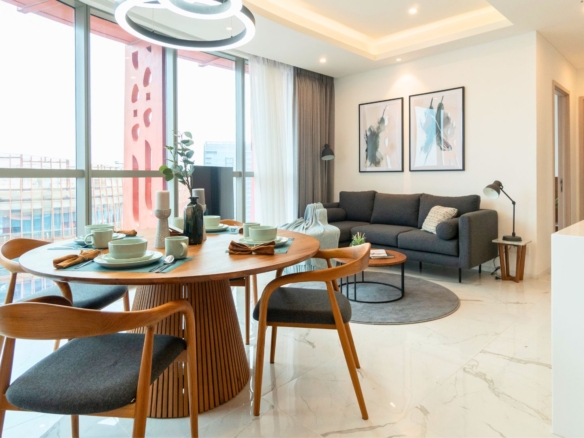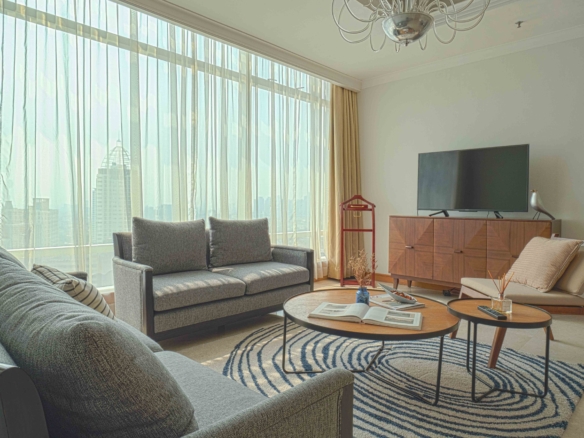
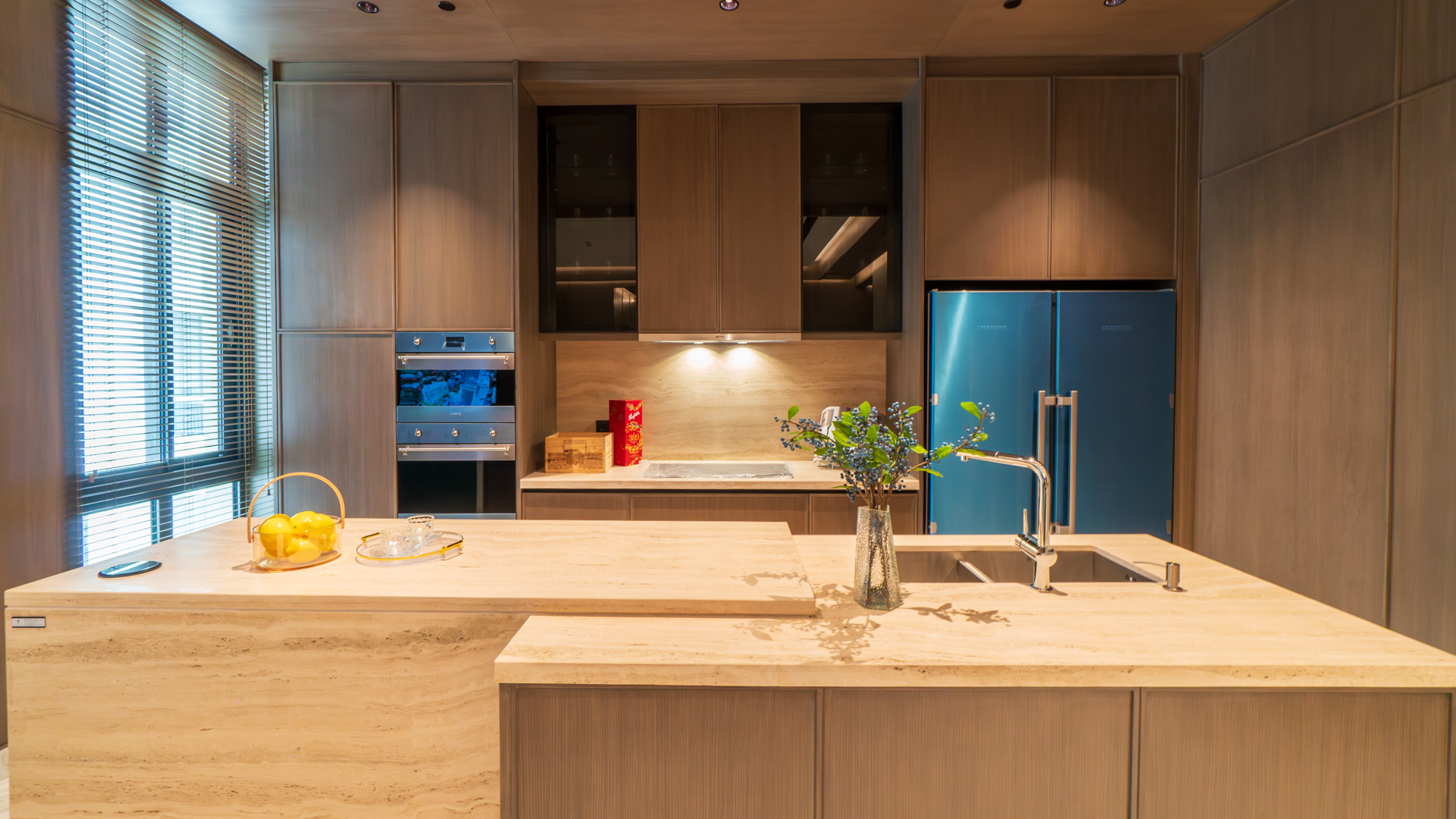
A good kitchen is not only about how it looks in photos. Beautiful cabinets, elegant countertops, and stylish lighting all matter, but a kitchen also needs to work well every single day. You should be able to prepare food, cook, clean, store groceries, and move around without feeling like the space is working against you. Whether you live in an apartment in Sudirman, SCBD, Thamrin, or Kuningan, a family home in Kemang or Pondok Indah, or a villa in Bali, the kitchen is one of the most used areas in the property. If the layout is awkward, storage is hard to reach, or materials are difficult to maintain, the kitchen becomes a daily frustration. Here is what actually makes a kitchen functional.
A Beautiful Kitchen Is Not Always a Functional Kitchen
Many kitchens look impressive at first glance but become inconvenient once people start using them. Maybe the island is too close to the cabinet. Maybe there is no counter space beside the stove. Maybe daily items are stored too far from where they are needed. Maybe the lighting looks warm and aesthetic, but the food preparation area is still too dark to chop safely.
A functional kitchen should feel easy to use, easy to maintain, and comfortable to live with every day. For expat homes and rental properties, this matters even more: a kitchen that works well makes a home easier to settle into and more appealing to prospective tenants.
1. A Kitchen Layout That Flows Well
Why the sink, stove, and fridge placement matters
The most fundamental principle in kitchen design is movement. Research from the National Kitchen and Bath Association, cited in multiple 2025 kitchen planning guides, confirms that optimal positioning of the sink, refrigerator, and stove can dramatically reduce unnecessary movement during cooking. This is the classic kitchen work triangle, and while modern kitchens have evolved beyond a strict triangular rule, the underlying logic remains: the three main zones should be close enough to work efficiently, but not so tight that they create traffic jams.
Reico Kitchen & Bath puts it practically: do not fixate on the triangle if your space does not allow it. Focus instead on balancing function and aesthetics, and design around how you actually live. For Jakarta apartments with compact layouts, this often means prioritizing a clear path between prep, cook, and clean zones above all else.
A functional kitchen layout has clear movement between sink, stove, and refrigerator, enough space to open drawers and appliance doors without obstruction, prep space near both the sink and stove, and a layout that does not block the main traffic path through the room.
For Bali villas: If the kitchen also supports guest service, a layout that separates the guest-facing serving area from the wet cooking zone makes hospitality smoother and more professional.
2. Enough Working Surface
Why counter space matters more than people think
A kitchen can have expensive finishes and high-quality appliances, but if there is nowhere to chop ingredients, place groceries, prepare coffee, or plate food, it will still feel inconvenient. This is one of the most common problems in compact kitchens, and it is almost always underestimated at the planning stage.
A functional kitchen needs working surfaces near the areas where they are actually used: counter space beside the sink for washing and prep, space beside the stove for cooking tools and ingredients, a landing area near the refrigerator for groceries, and a dedicated small appliance zone. In Indonesian homes specifically, planning for rice cookers, water dispensers, blenders, air fryers, and coffee machines on the counter is not optional. Without a dedicated zone, these appliances take over every available surface.
Quick check: If your counter has items permanently living on it that you cannot put anywhere else, your kitchen lacks enough storage in the right locations, not just counter space.
3. Smart Storage Placement
Keep daily items easy to reach
Good storage is not about having many cabinets. It is about placing the right storage in the right location. CLIQStudios explains that modern kitchen designers have largely moved from a pure triangle approach to a zone-based approach, where each activity area has its own dedicated storage. This is particularly relevant for Indonesian households where the kitchen serves many simultaneous functions.
A well-planned kitchen groups storage by activity zone:
- Cooking zone: pots, pans, spices, oils, and utensils within arm’s reach of the stove
- Prep zone: knives, cutting boards, and mixing bowls near the sink and counter
- Cleaning zone: dish soap, sponges, trash bin, and cleaning supplies under the sink
- Food storage zone: dry goods, snacks, and pantry items near the refrigerator entry point
- Appliance zone: dedicated space for rice cooker, blender, coffee machine, and toaster
For compact apartments in Sudirman, SCBD, Thamrin, and Kuningan, vertical storage can expand capacity significantly: tall pull-out pantry units, wall-mounted shelves, and built-in niches all reduce visual clutter while maximizing usable space.
4. Lighting in the Right Areas
Task lighting, ambient lighting, and accent lighting
One ceiling light may brighten a kitchen in general, but it almost never provides enough illumination for the specific tasks that happen in a kitchen. Light Ideas explains that layered lighting is structural, not decorative, and that even well-designed spaces can feel harsh and flat without it. In a kitchen, this has direct practical implications: if the chopping area is in shadow because a cabinet blocks the overhead light, that is a safety and usability problem, not just an aesthetic one.
A functional kitchen lighting plan includes ambient lighting for overall brightness, under-cabinet task lighting for countertops and prep areas, pendant lighting above an island or dining counter if applicable, and accent lighting for open shelves. In Jakarta apartments where kitchens may receive limited natural light, this layered approach makes a compact space feel more premium and easier to work in. In Bali villas, layered evening lighting also directly affects how the property photographs for listing platforms.
5. Materials That Fit Your Lifestyle
Choosing surfaces for cooking, cleaning, and long-term use
Some finishes look beautiful but are not practical for every household. A countertop may look luxurious but stain easily. A cabinet finish may look sleek but show fingerprints. The right material question is not which is most beautiful, but which fits how the space will actually be used.
For countertops specifically, the three most compared materials in 2025 are quartz, granite, and marble. Chowhound’s 2025 material comparison gives granite the overall durability edge, while research cited by Laurysen Kitchens (Natural Stone Institute) found granite countertops average 30 years, with quartz lasting up to 50 years under ideal conditions. For high-traffic family kitchens, quartz is widely recommended for its non-porous, low-maintenance surface. For heavy cooking and direct heat exposure, granite holds up better. Marble, while beautiful, is best reserved for lower-use areas or accent surfaces.
| Material | Durability | Maintenance | Heat Resistant | Best For |
| Quartz | Very high (Mohs 7) | Low, no sealing needed | Moderate (avoid 300°F+) | High-traffic kitchens, families, rentals |
| Granite | High (Mohs 6-7) | Medium, annual sealing | Excellent | Heavy daily cooking, natural stone aesthetic |
| Marble | Moderate (Mohs 3-5) | High, frequent sealing and immediate spill care | Moderate | Luxury and low-use display kitchens |
| Porcelain | Very high | Low, non-porous | Excellent | Humid climates, Bali villas, modern kitchens |
| Ceramic tile | Good | Low | Good | Budget-conscious, easy DIY replacement |
For family homes in Kemang, Cipete, Cilandak, and Pondok Indah, easy maintenance typically matters more than a delicate luxury finish. For Bali villas, the material also needs to withstand humidity, guest use, and frequent cleaning without deteriorating.
6. Ventilation That Actually Works
Why ventilation is critical in frequently used kitchens
Ventilation is one of the most commonly overlooked elements in kitchen design, especially in homes where cooking happens daily. Cooking creates heat, smoke, smell, moisture, and grease. Without proper extraction, these spread into the living area, stick to surfaces and cabinets, and make the home feel uncomfortable even after the meal is done.
In Jakarta homes, ventilation is especially important because many kitchens are connected directly to air-conditioned living or dining spaces. Without a proper range hood or exhaust system, cooking smells travel immediately into the rest of the apartment. In Bali villas, humidity and open-plan layouts make the problem even more acute: a kitchen that lacks extraction will affect not just smell but the long-term condition of cabinets, ceilings, and surface materials.
Practical note: A recirculating filter hood is better than nothing, but a ducted exhaust system that vents outside is significantly more effective for frequently cooked kitchens.
Functional Kitchen Design for Jakarta and Bali Properties
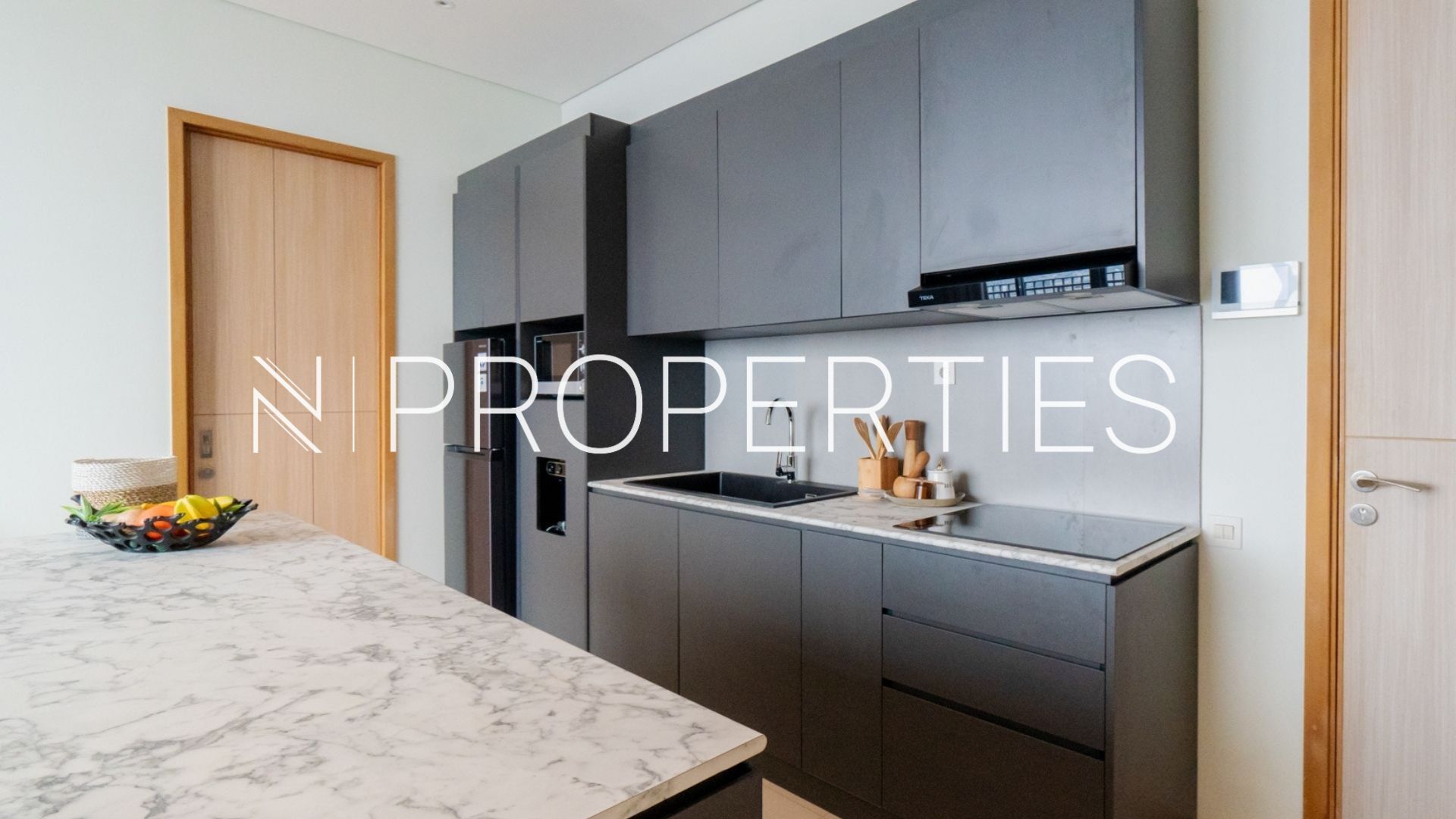
Apartments in Sudirman, SCBD, Thamrin, and Kuningan
In premium Jakarta apartments, the kitchen often needs to be sleek, compact, and efficient simultaneously. Because the kitchen is frequently visible from the living area in open-plan layouts, poor planning affects the visual quality of the entire apartment. Storage, appliance placement, lighting, and countertop planning are the highest-priority elements in this context. A well-planned compact kitchen can feel polished and professional; a poorly planned one makes the whole apartment feel less considered.
Family homes in Kemang, Cipete, Cilandak, and Pondok Indah
In larger South Jakarta homes, kitchens often need to support more complex routines: dry kitchen, wet kitchen, staff area, family meals, hosting, and dedicated storage. The design should accommodate how the household actually lives, not a generic plan. Materials that clean easily, storage that is genuinely accessible, and ventilation that keeps smells contained are especially important in homes with daily heavy cooking.
Villas and rental properties in Bali
For Bali villas, the kitchen must meet a dual standard: beautiful enough to attract guests and renters in listing photos, and durable enough to handle constant use, humidity, and regular turnovers. Materials like porcelain and sealed granite perform best in this context. Layout should support both daily living and hospitality service without those two functions crossing awkwardly.
When Should You Upgrade Your Kitchen?
A kitchen upgrade may be worth considering when the layout feels cramped and movement is awkward, counter space is consistently insufficient for daily cooking, daily-use items are hard to reach or require reorganizing every time, the kitchen feels dark even with lights on, cooking smells spread through the home, materials are difficult to clean or already showing wear, or the kitchen does not reflect how the household actually lives.
A full renovation is not always necessary. Sometimes improving storage placement, adding task lighting, or replacing a problematic surface already makes a significant difference. Noble Design supports homeowners, landlords, and expats across Jakarta and Bali in identifying which improvements will have the greatest practical impact for the available budget.
A functional kitchen is not just about looks. It is about how space works every single day.
The layout should flow without friction. Counter space should support actual food preparation. Storage should be placed where it is used. Lighting should reach the areas where work happens. Materials should fit the household’s real cooking habits. Ventilation should keep the home comfortable after cooking.
When these six elements come together, the kitchen becomes easier to use, easier to maintain, and more comfortable to live with. Whether you are upgrading an apartment in Jakarta, redesigning a family home in South Jakarta, or improving a villa in Bali, the principles are the same: design for how the space is actually used, not just for how it looks in photos. Noble Design can help apply these principles to your property from the first planning conversation to the final detail.
Planning a kitchen upgrade? Noble Design can help turn your ideas into a kitchen that looks good and works even better.
Talk to Noble Design about your kitchen
Frequently Asked Questions
What makes a kitchen functional?
A functional kitchen is easy to use, easy to clean, and comfortable for daily routines. It has a good layout, enough counter space, smart storage, proper lighting, practical materials, and working ventilation. All six elements need to work together. Getting five right while neglecting one creates daily friction.
What is the best kitchen layout for a small apartment?
For small apartments, galley, L-shaped, and one-wall layouts generally work well depending on the floor plan. The best layout supports clear movement between sink, stove, and refrigerator, and ensures prep space is close to where it is actually needed.
Is the kitchen work triangle still relevant?
Yes, though modern kitchens have expanded beyond it. Research from the National Kitchen and Bath Association confirms the triangle reduces unnecessary movement effectively, but today’s designs also use a zone-based approach that accommodates multiple cooks, islands, and open-plan layouts.
What countertop material is best for a busy kitchen?
According to multiple 2025 comparisons, quartz and granite lead for high-traffic kitchens. Quartz is non-porous, low maintenance, and scratch-resistant but less heat-tolerant. Granite handles direct heat and has longer measured lifespans (30+ years). Marble is beautiful but requires significant upkeep and is less suited for daily heavy cooking.
How do I make my kitchen feel less cramped?
Improve layout first: ensure clear movement between the main zones without obstacles. Then look at storage. Daily items too far from where they are used make kitchens feel inefficient. Adding under-cabinet task lighting also helps compact kitchens feel more open and functional.
How much counter space does a kitchen actually need?
There is no fixed minimum, but you need clear working surfaces near the sink (for washing and prep), beside the stove (for ingredients and tools), and a landing area near the fridge for groceries. In Indonesian homes, planning space for rice cookers, blenders, and coffee machines is especially important.
Why is kitchen ventilation important in Jakarta and Bali?
In Jakarta, kitchens connected to air-conditioned living areas need proper ventilation to prevent cooking smells from spreading into the rest of the home. In Bali, humidity and open-plan layouts make ventilation critical for both guest comfort and material longevity. A range hood or exhaust fan is not optional in a frequently used kitchen.
Can a kitchen upgrade increase property value?
Yes. According to research cited by Laurysen Kitchens (Appraisal Institute of Canada data), kitchen renovations typically offer a return on investment of 75% to 100%. In competitive rental markets like Jakarta and Bali, a well-designed kitchen improves daily comfort, rental appeal, and how the property presents in listing photos.