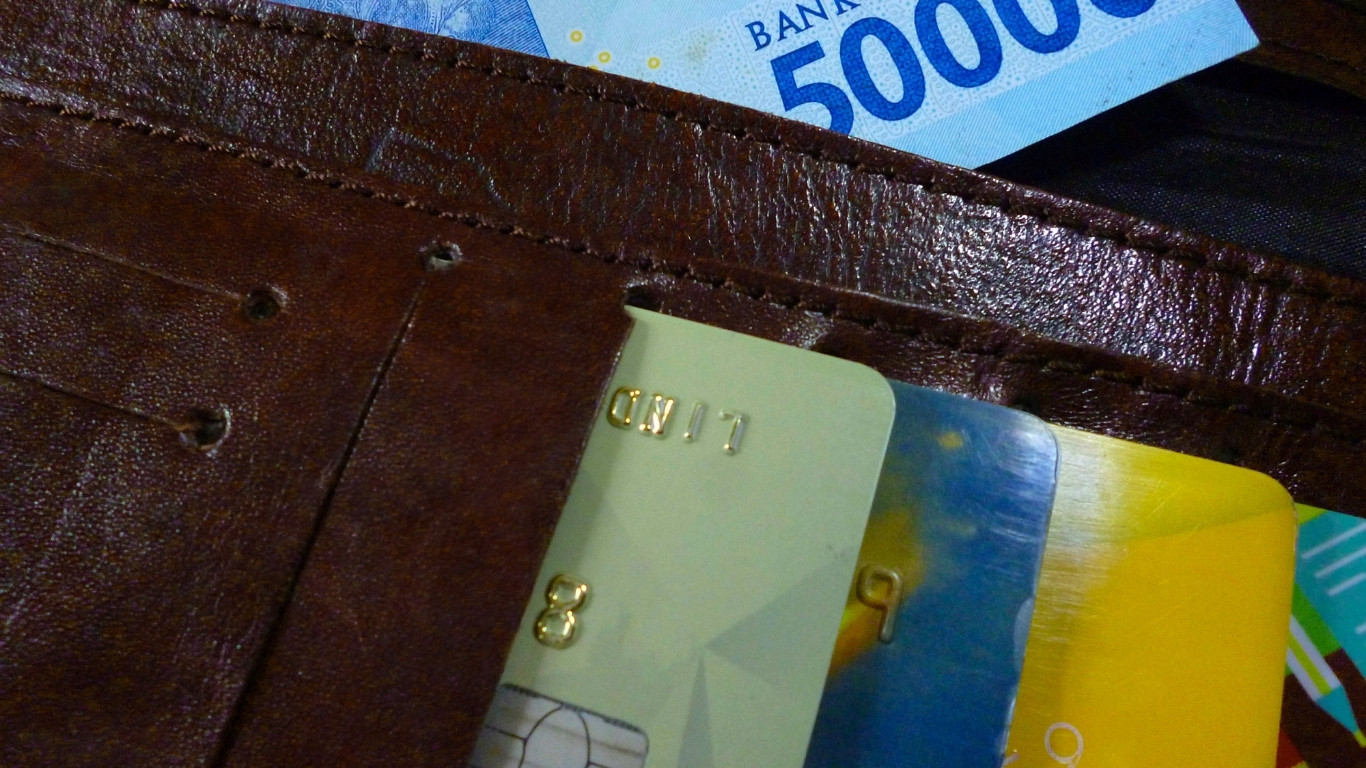
Let’s be honest. No matter how digital Indonesia becomes, there is still always that one moment when someone says, “Cash only.”
Maybe it happens at a small market in Jakarta. Maybe it is a last-minute tip for a driver in Bali. Maybe it is a deposit, a local vendor, or a place that still does not love cards. QRIS and e-wallets have changed daily payments dramatically, but cash is still part of normal life. That means knowing how to use Indonesian ATMs properly is not just a travel tip. It is basic survival knowledge for expats, long-stay visitors, and remote workers.
This guide covers what actually matters on the ground: which cards work, what fees to watch for, how Dynamic Currency Conversion catches people out, what has changed in 2026, and how to withdraw cash safely without leaking money every time you use a machine.
One of the biggest recent updates is that Bank Mandiri now applies a Rp50,000 Access Fee to foreign cards at its ATMs starting 22 February 2026, which makes ATM choice more important than before.
How ATMs Work in Indonesia
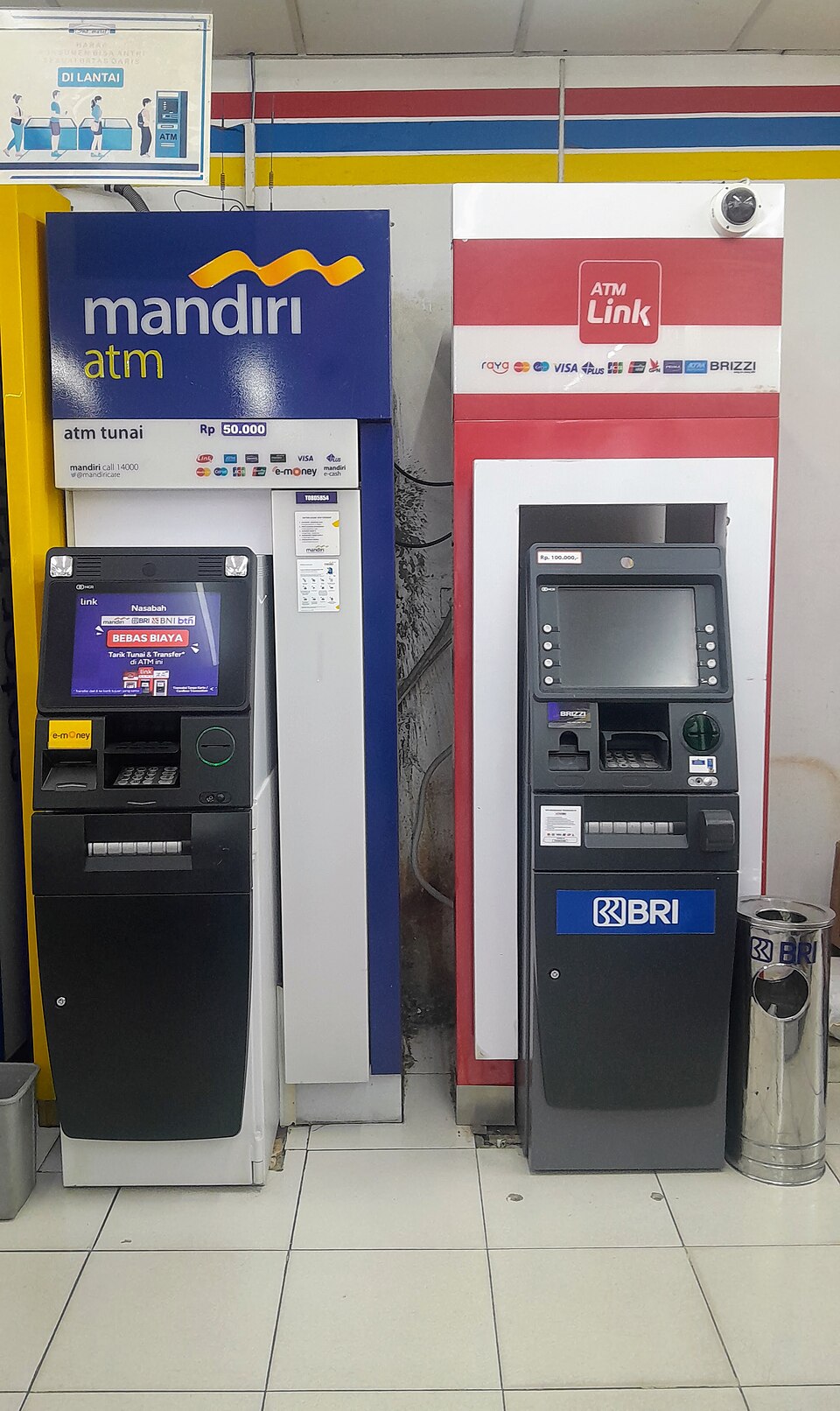
Indonesia’s ATM network is generally strong in major cities and established tourist areas. In practice, you will find the best ATM access in places like central Jakarta, major malls, airport areas, business districts, and the better-developed parts of Bali. Large bank networks such as BNI operate ATMs around the clock, and major local banks continue to maintain extensive machine coverage across urban Indonesia.
For foreign card users, the key thing is the network logo. ATMs in Indonesia that support Visa / Visa Plus or Mastercard / Cirrus are the ones you should prioritize. Bank Mandiri explicitly states that cash withdrawals can be done at ATMs with the Visa or Visa Plus logo, while BCA explains that foreign Visa and Mastercard cards can be used to withdraw Rupiah at BCA ATMs.
Most machines offer an English-language option, and they dispense Indonesian Rupiah only. That part sounds simple, but what makes the real difference is not whether you can find an ATM. It is whether you choose the right one.
Can You Use Foreign Cards in Indonesia?
Yes, usually. Most foreign debit and credit cards work in Indonesia if they are enabled for international use and linked to a supported network. In practical terms, that means a Visa, Mastercard, Cirrus, or Plus card usually has a good chance of working. BCA’s official guidance for foreign Visa and Mastercard cardholders confirms this directly for cash withdrawals at its ATMs.
Before you travel or relocate, do three things. First, make sure international ATM access is enabled. Second, check your issuer’s daily withdrawal limit. Third, tell your bank you will be in Indonesia. Many failed withdrawals are not caused by Indonesian ATMs at all. They happen because the issuing bank flags a foreign transaction, blocks the card, or applies a daily cap that feels tiny once converted into Rupiah.
If your card is rejected, do not panic immediately. Try another ATM from a different bank. One machine may fail because of network routing or temporary connectivity, while the next one works perfectly. That is very common in practice.
ATM Fees in Indonesia: What You Really Pay
This is where most people quietly lose money.
When you withdraw cash in Indonesia with a foreign card, there are usually up to three layers of cost:
1. Local ATM or operator fee
Some Indonesian ATM operators charge an access or surcharge fee to foreign cardholders. The biggest 2026 example is Mandiri’s Rp50,000 Access Fee for foreign Visa and Mastercard cards at its ATMs, effective 22 February 2026. Mandiri also states this is separate from anything charged by the foreign card issuer.
2. Your home bank’s foreign ATM fee
Your bank back home may charge an international withdrawal fee or out-of-network fee. That varies by issuer, so the Indonesian ATM is only part of the cost. BCA’s own overseas withdrawal guidance for its customers also shows how these fee layers can stack, noting withdrawal fees plus separate access fees set by the ATM owner.
3. Currency conversion markup
This is the most expensive trap of all. If the ATM asks whether you want to be charged in your home currency instead of Rupiah, that is Dynamic Currency Conversion, or DCC. Visa explicitly warns that DCC includes the exchange rate and additional fees set by the ATM or merchant side, and cardholders must be given the option to have the transaction processed in the local currency instead.
The rule that saves you money
Always choose IDR, not your home currency.
BCA’s DCC explanation for foreign Visa and Mastercard withdrawals makes clear that its ATMs can offer this choice, and Visa’s own travel guidance confirms that choosing local currency is usually the better financial move because it avoids the ATM-side conversion markup.
Withdrawal Limits in Indonesia
There is no single nationwide ATM limit that applies to every foreign cardholder. In reality, your usable limit is shaped by three things:
- the ATM itself
- the denominations loaded into that machine
- your home bank’s own daily cap
That is why two nearby ATMs may give you different results. One may allow a larger pull. Another may cut you off much sooner. Your issuing bank may also be the real bottleneck, even if the Indonesian ATM is willing to dispense more.
For expats and long-stay residents, the practical strategy is simple: do not assume one large withdrawal will always go through. If you need more cash, be ready for multiple transactions or use a branch-area ATM that is better stocked and more stable. This is also one reason some people keep a mix of local bank access, digital payments, and occasional ATM use rather than relying entirely on foreign cards.
| Fee Type | Who Charges It | Typical Amount | How to Avoid or Reduce It |
| Local ATM access fee | Indonesian ATM operator / bank | Varies by bank. One confirmed 2026 example is Bank Mandiri at Rp50,000 for foreign Visa and Mastercard cards. Other banks may show no fee or display it only on-screen. | Prefer major-bank ATMs with clear fee disclosure. Compare nearby ATMs if a surcharge appears. |
| Foreign bank withdrawal fee | Your home bank | Varies by issuer. Often a fixed international ATM fee, a percentage fee, or both. | Use a travel-friendly bank card with low or reimbursed foreign ATM fees. |
| Dynamic Currency Conversion (DCC) | ATM operator / acquirer | Usually a poor exchange rate plus hidden markup versus local-currency settlement. | Always decline DCC and continue in IDR. |
| Issuer exchange-rate markup | Your home bank or card issuer | Varies by card product and issuer policy. | Use a card known for competitive FX pricing. |
| Credit-card cash advance cost | Your credit card issuer | Cash-advance fee plus immediate interest is common. | Use a debit card instead of a credit card for ATM withdrawals. |
Which ATMs Are Best for Foreigners?
If you want fewer surprises, prioritize major local bank ATMs rather than anonymous standalone machines.
The safest practical choices are usually:
- BCA
- Mandiri
- BNI
- CIMB Niaga
Why these? Because they are large, mainstream institutions with strong physical presence, clearer on-screen prompts, and better maintained machines in branches, malls, and airports. BCA and Mandiri also have clearer public guidance around international card use than many smaller operators.
That said, 2026 changes make the choice slightly more nuanced. Mandiri’s Rp50,000 foreign-card Access Fee means it is no longer automatically the cheapest option for many international visitors, even if the machine itself is reliable. So the right question is no longer just “Will this ATM work?” It is also “What extra fee will this ATM add before my own bank charges me anything?”
ATMs to be careful with
Be cautious with:
- isolated street machines
- tourist-zone standalone ATMs
- machines in small shops with no visible bank branch nearby
These are not automatically unsafe, but they are more likely to produce higher surcharges, aggressive DCC prompts, or patchier network reliability.
| Bank / ATM Type | Foreign Card Compatibility | Published Local ATM Fee for Foreign Cards | Reliability / Practical Notes |
| BCA | Yes. Official guidance confirms foreign Visa and Mastercard cash withdrawals in Rupiah at BCA ATMs. | No standard foreign-card fee clearly published on BCA public guidance reviewed here. Check the ATM screen. | One of the most commonly recommended networks for foreigners. Strong coverage in cities and malls. |
| Bank Mandiri | Yes. Foreign cards on Visa / Visa Plus and Mastercard are supported. | Rp50,000 access fee for foreign Visa and Mastercard cards, effective 22 Feb 2026. | Reliable network, but now materially more expensive for many foreign-card users. |
| BNI | Yes. The official ATM page lists support for Visa, Mastercard, Cirrus, Plus, JCB, UnionPay, and more. | No standard foreign-card surcharge clearly published on the BNI page reviewed here. Check the ATM screen. | Good nationwide reach and especially useful outside the biggest city cores. |
| CIMB Niaga | International-capable network, but foreign-card surcharge was not clearly published on the public pages reviewed here. | No standard foreign-card surcharge clearly published online in the sources reviewed here. Check the ATM screen. | Can still be a workable option, but less transparent than the clearest bank examples above. |
| Standalone tourist-area ATM | Varies. Some accept international cards, but conditions are less predictable. | Often the least transparent and potentially the most expensive. | Highest risk for poor FX offers, aggressive DCC prompts, and weaker maintenance. Best avoided when a major-bank ATM is nearby. |
Step by Step: How to Withdraw Cash Safely
1. Find the right machine
Choose an ATM inside a bank branch, inside a major mall, or in another well-lit, high-traffic area. If the machine looks damaged, outdated, or suspicious around the card slot, skip it.
2. Confirm logo compatibility
Look for Visa / Plus or Mastercard / Cirrus logos before you insert your card. That is the quickest way to reduce failed attempts.
3. Use English if needed
Most Indonesian ATMs in expat and city areas offer English menus. That part is usually straightforward.
4. Read the fee screen carefully
Do not rush. Watch for:
- local access fee disclosure
- DCC offer
- unusually poor exchange-rate wording
5. Always choose Rupiah
If the ATM asks whether to bill you in USD, EUR, GBP, or another home currency, decline that option and continue in IDR. Visa’s official travel guidance and BCA’s DCC feature explanation both support this approach.
6. Take cash, card, and receipt
It sounds obvious, but people still walk away with one and forget the other, especially if the machine returns the card before the cash.
How to Avoid High ATM Fees in Indonesia
This is the part that actually saves money.
Always decline DCC
This is the biggest one. It is the easiest mistake to make and the most expensive one to repeat.
Withdraw larger amounts less often
If your home bank charges a flat international ATM fee, three small withdrawals are worse than one larger one. Just stay within your own security comfort zone.
Choose your ATM bank strategically
If a machine adds a large access fee, like Mandiri now does for foreign cards, it may make sense to switch to another major bank ATM nearby.
Know your issuer’s policy
Some foreign banks are generous with overseas ATM reimbursements. Others are not. That matters more over a multi-week stay than many people expect.
Use major-bank machines
This is the best balance of security, reliability, and clearer fee disclosure.
Common Mistakes Expats Make When Use Foreign Card In Indonesia
1. Accepting currency conversion
It feels intuitive because you see the amount in your own currency. But it is usually the worst deal.
2. Using whatever ATM is closest
Convenience is not always cheap. In Indonesia, a five-minute walk to a better machine can save real money.
3. Forgetting bank-side limits
You blame the Indonesian ATM, but the true problem is your issuer’s daily cap.
4. Not telling your bank
This is how people get blocked mid-trip and waste time with fraud alerts.
5. Relying only on ATM cash
ATMs are useful, but Indonesia is increasingly hybrid. The most practical setup is often a mix of cash, QRIS, and local payment tools. If you are moving long term, this is exactly the kind of daily-life issue that links well with Noble Asia’s expat relocation and living resources and guide to living in Jakarta as an expat content flow.
Smart Cash Access in Indonesia
Indonesia’s ATM system works well enough for foreigners, but the details matter more than the headline.
The best formula is still simple:
- use a major bank ATM
- choose IDR
- avoid random standalone machines
- understand your home bank’s fees
- watch for new local surcharges like Mandiri’s Rp50,000 Access Fee
Do those things consistently, and you will avoid most of the usual pain points.
Whether you are settling into Jakarta, living between Bali and Singapore, or just spending longer stretches in Indonesia, smart ATM use is one of those small practical habits that quietly makes daily life a lot easier.
FAQ Use Foreign Card in Indonesia
Can I use my foreign debit card at ATMs in Indonesia?
Yes. Most ATMs that carry Visa / Plus or Mastercard / Cirrus compatibility can process foreign cards, assuming your issuer has enabled international access.
What is the most important ATM fee to avoid?
Dynamic Currency Conversion is usually the most expensive avoidable cost because it applies an ATM-side exchange rate plus extra fees. Choosing IDR is usually the smarter option.
Which Indonesian bank ATM has a known foreign-card surcharge in 2026?
Bank Mandiri states that its ATMs charge a Rp50,000 Access Fee for foreign Visa and Mastercard cards starting 22 February 2026.
Are BCA ATMs compatible with foreign Visa and Mastercard cards?
Yes. BCA’s own guidance says foreign Visa and Mastercard cards can be used to withdraw Rupiah at BCA ATMs, and BCA ATMs may also present a DCC choice.
Why did my card get declined?
Usually because of issuer-side fraud blocks, international-use settings, network mismatch, or daily withdrawal limits.
Should I use a credit card for cash withdrawals?
Only if necessary. Cash advances often carry higher fees and interest than debit-card withdrawals.