
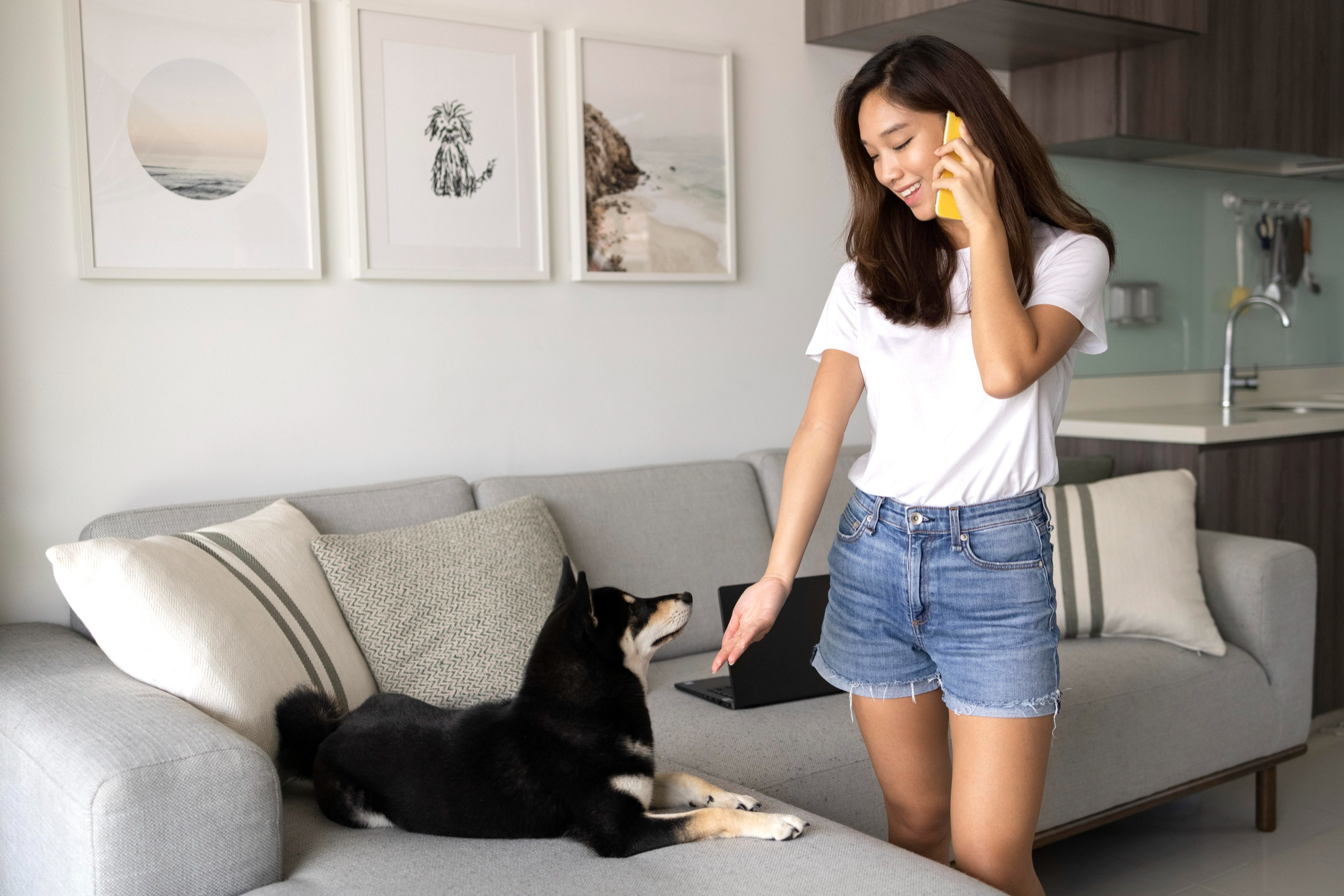
Before signing for a pet-friendly apartment in Jakarta, get the building’s current pet policy, the owner’s written consent for your specific animal, and rental terms recording that permission and any pet charges. Then walk the permitted route from the unit to outside. These checks help establish whether the home will work for your pet as well as your household.
A listing that says “pets welcome” is a starting point. Rules can differ by building, owner, unit and animal. An apartment close to work with the right layout may still have restrictions that make daily life difficult, such as limited outdoor access or a route your dog struggles to use.
Confirm permission for your pet and your unit
Ask the agent to check with both building management and the unit owner before arranging a viewing. Give them the species, breed or mix, number of animals, age and current size. For a young animal, include its expected adult size where known. “One cat” and “two large dogs” are different requests.
Request the current written pet policy for the relevant building or tower. Ask for the owner’s consent to keeping your pet in the apartment for the proposed tenancy, and clarify whether management requires separate registration or approval.
If the owner says yes but management gives a different answer, have that difference resolved before committing. A building policy that permits pets also does not establish whether an individual owner accepts one in their furnished unit.
| What to confirm | Who should confirm it | What you need to understand |
|---|---|---|
| Building or tower policy | Management or the authorised operator | Whether your pet is permitted and which restrictions apply. |
| Permission for the unit | Owner or authorised representative | Whether consent covers your pet and proposed tenancy. |
| Registration and access | Management, coordinated through your agent | Required documents, approved routes and steps before move-in. |
| Rental terms and charges | Owner or operator responsible for the agreement | Written permission, costs, responsibilities and conditions. |
Keep the dated replies and policy document with your rental paperwork. Seeing another resident with a dog is a useful reason to ask questions, but it does not confirm the terms that will apply to you.
Give the agent a complete pet brief before viewing
Alongside your budget, bedrooms, work or school location and move-in date, explain how your household lives with the animal. Will you need an outdoor route several times a day? Does your dog cope comfortably with lifts and shared corridors? Will a pet sitter need access while you travel? For a cat, will you need permission to install window or balcony protection?
You can send a message such as:
“We are looking for a two-bedroom apartment in South Jakarta from November. We have one adult indoor cat. Please confirm the building rules and the owner’s written permission for our cat before arranging viewings, including any deposit, registration requirements and restrictions on window protection.”
Adapt the details to your situation. A photograph and approximate weight can prevent misunderstandings. Ask what information management actually needs before submitting additional documents.
Noble Properties Asia’s Homes Rent & Buy service considers pets and outdoor space when matching homes to a household’s lifestyle. Including those requirements at the start helps keep unsuitable options out of the shortlist.
Ask what the pet policy actually permits
Look beyond the label and ask about the number and type of animals, size or breed limits, and whether approval applies to all units or only certain accommodation categories. If your pet is growing, clarify how any size limit would apply later.
Ask how pets must travel through the property. Is a carrier required? Which lift and entrance can you use? Which areas are off limits, and does the approved outdoor area have opening hours? Also check whether visiting animals are covered and whether a new pet would need fresh approval.
Find out how complaints about noise, hygiene or shared spaces are handled and who your contact would be. If you hear “pets are tolerated” or “just use the back entrance”, ask for the written rule behind that advice. You need an arrangement you can follow openly throughout the tenancy.
For a serviced residence, request the terms for your specific booking or long-stay agreement. An operator’s policy for one property, room category or length of stay may not apply to another.
Apartment, serviced apartment or house?
The most suitable home depends on how much access, flexibility and maintenance your household needs. Compare the arrangements for the actual property rather than assuming one housing type will always be easier.
| Home type | Who sets the pet terms | Potential advantages | Trade-offs to check |
|---|---|---|---|
| Privately owned apartment | Building management and unit owner | Managed shared areas and a choice of unit layouts. | Both sets of rules must align; shared lifts, corridors and outdoor routes. |
| Operator-run serviced apartment | Operator, subject to applicable building rules | A main operator contact and agreed household services. | Rules can depend on room category or stay length; furniture changes may be limited. |
| Landed house | Owner, plus any compound or estate rules | Potential for private outdoor space and direct ground-level access. | More upkeep; check enclosure, compound rules and the street walking route. |
A house with a garden may simplify outdoor breaks, but check the fencing, gate and responsibility for garden maintenance. An apartment may fit the commute better, provided the approved route and shared spaces suit your animal. Obtain written pet terms for whichever home you choose.
Clarify deposits and cleaning charges before paying
Ask for a breakdown of every pet-related charge. Establish whether each amount is a refundable deposit, a non-refundable fee, an ongoing charge or an end-of-stay cleaning cost. If both the owner and management request payment, ask what each amount covers.
For a deposit, confirm who receives it, which deductions may be made, how those deductions will be documented and the agreed return process. Discuss furniture, flooring, curtains and odours in plain language. Does the agreement require additional cleaning simply because a pet lived there, or does it depend on the condition at inspection?
Ask for vague wording such as “pet damage charges apply” to be explained before signing. Photograph the apartment and review its inventory at handover. Record existing scratches, stains and worn upholstery with the owner or representative so both sides have the same starting record.
Before paying a booking fee while approval is pending, obtain the cancellation and refund conditions in writing. Clarify what happens if management or the owner declines your disclosed pet. Do not assume the payment will be refundable.
Walk the route your pet will use every day
A balcony, landscaped grounds or a park on a map does not establish that you can use it with your pet. During the viewing, ask the agent or management representative to show you the permitted route from the apartment to outside.
Check the lift, exit, security point and any stairs. Look at where you would wait and pass other residents, including when carrying shopping or managing a carrier. Ask where dogs may walk or toilet and where waste should be disposed of.
For dog owners considering Kuningan, Sudirman or another busy Jakarta address, walk the actual pavement outside. Check crossings, vehicle access points and usable walking space. A short map distance can involve a route you would not want to repeat several times a day.
Verify a nearby park’s rules separately. Try the route around your normal walking time and consider access after dark or in rain. Check whether a covered exit or suitable waiting area is available.
Check the apartment from your pet’s perspective
Work through the daily arrangement inside the unit. Where will the bed, litter tray, food storage or crate go? Can doors open normally once those items are in place? Is there a quiet spot away from the entrance?
Confirm protective installations before relying on them
Look at windows, balcony doors and openings accessible to your animal. Ask the owner and management about permission, specifications and removal requirements for protective installations. If a cat net or similar modification is essential to your decision, have its suitability assessed and obtain permission before committing.
Check furnishings, noise and nearby care
Inspect floors and upholstery, storage for cleaning equipment, and the permitted furniture arrangement. In a furnished apartment, establish whether delicate pieces can be removed and how the inventory would record the change.
Listen inside the apartment and in the corridor. Lift arrivals and activity outside the door may matter to an animal that reacts to unfamiliar sounds. Identify a veterinary practice you can realistically reach and confirm its current hours and emergency arrangements directly. If you use grooming, boarding or pet sitting, check availability and the building’s visitor-access process.
Put the agreed arrangement into the rental paperwork
Compare the final agreement with the approvals you received. Ask for the accepted animal or animals to be identified clearly, the relevant building policy to be supplied or referenced, and all agreed charges and responsibilities to be recorded consistently.
If a standard clause says no pets, have that conflict resolved in the final documents. A separate conversation saying “it will be fine” leaves an important uncertainty. Where the wording or its effect is unclear, ask a qualified local legal adviser to review it before signing.
Ask how changes to house rules are communicated and what your agreement says about a change affecting the approved arrangement. A pet approval does not guarantee that policies will never change.
Where an employer signs or pays for the lease, give the person handling housing the same pet details and approval documents. Confirm who will manage pet-related costs, registration and communication with management.
Coordinate the apartment with your pet’s arrival
For an international move, apartment permission and approval to bring an animal into Indonesia need separate attention. A landlord’s consent does not establish that your pet is ready to travel.
Badan Karantina Indonesia’s guidance on travelling with cats and dogs, published on 11 March 2026, covers domestic journeys and arrivals from overseas. For international arrivals, it lists a health certificate issued by the competent authority in the origin country, vaccination records and protective rabies antibody titre test results, plus advance notification to Indonesian quarantine before departure. It also requires reporting the animal and its documents to quarantine officers on arrival.
Use that guidance as a starting point. Confirm the current requirements for your animal, origin and route with the relevant authorities, including any origin-country restrictions, and check the airline’s arrangements before fixing travel dates. The requirements for your particular journey need to be settled separately from the housing search.
Coordinate the anticipated arrival and quarantine release with apartment handover, registration and any work needed before move-in. If temporary accommodation is necessary, obtain separate written acceptance for your pet there too.
Choose a home where the rules and daily routine both work
A workable pet-friendly apartment provides clarity about permission, costs and access, together with a daily setup you can manage comfortably. Resolve these points before making a payment commitment that would be difficult to reverse.
Compare confirmed pet requirements alongside commute, space and budget. For a wider view of neighbourhoods and housing types, see our guide to expat housing in Jakarta.
Start your Jakarta home search with your pet included
Looking for a home with a pet? Tell Noble Properties Asia the species, breed or mix, size, number of animals, preferred area, budget and move-in date. These details help the team check candidate homes with owners and management before arranging the next steps.
Discuss your pet-friendly home search with Noble Properties Asia. Email connect@nobleasia.id or WhatsApp +62 813 1668 5505.
Frequently asked questions
How do I find pet-friendly apartments in Jakarta?
Give your agent your pet’s details before requesting a shortlist. Obtain the current building policy and the owner’s acceptance of that animal for the specific unit. Then compare approved options by cost, layout, access and daily routine.
Is the owner’s permission enough to keep a pet?
Check it alongside the building’s rules and registration requirements. If management and the owner give conflicting answers, have the difference resolved before committing. Each confirmation addresses a different part of the arrangement.
Does a pet-friendly apartment allow large dogs or multiple cats?
The label alone does not tell you. Ask explicitly about species, breed or mix, size and the number of pets. For a growing animal, clarify how any size limit would apply as it matures.
Is a pet deposit refundable in Jakarta?
Check the terms of the specific payment. Ask whether it is a refundable deposit or a fee, which deductions the agreement permits, and how the return process works. Get those details before transferring money.
Can I bring a pet if the rental agreement does not mention one?
Do not treat silence as confirmation. Disclose the pet and obtain written acceptance consistent with management’s policy and the final rental documents. Resolve unclear or conflicting wording before signing.
Can I install a cat net on an apartment balcony in Jakarta?
Ask the owner and management whether the proposed installation is permitted, which specifications or approvals apply, and whether removal is required when you leave. Have suitability assessed before relying on it as part of your housing choice.



Join The Discussion