For families moving to Jakarta, choosing a house can feel like a decision between two attractive but different ways of living.
A compound house may offer controlled access, managed common areas, nearby neighbours and shared facilities. A stand-alone house may provide greater privacy, more control over the property and a wider choice of locations.
Neither is automatically better.
The right choice depends on how your family lives, where the children attend school, where the adults work, how often you travel and how much responsibility you want to carry for maintenance and security.
For many households, those practical details can matter more than an impressive swimming pool or a beautifully staged living room.
What Is a Compound House in Jakarta?
In Jakarta property searches, “compound house” is a market term, not a legal category. It usually means a landed home inside a gated or managed community.
Access is typically managed through one or more gates. Services may include guards, visitor registration, shared roads, landscaping, maintenance coordination and recreational facilities.
The scale varies considerably, from a small cluster of houses to a larger community with shared facilities and an in-house team.
Controlled access and shared management
The main attraction is structure.
Where a management operator is present, visitors normally enter through a controlled gate and residents have an identified contact for common-area or shared-facility issues.
This structure may ease an initial arrival in Jakarta for families still learning how local services and neighbourhood systems work.
Community spaces and family life
Shared spaces may help children and new residents form local connections. The result depends on the compound’s size, occupancy and community.
Internal roads may carry less through-traffic than public streets, but parents should still inspect vehicle movement, pedestrian routes and supervision arrangements.
Not every compound offers the same facilities
Do not assume that the word “compound” guarantees a pool, playground, generator, concierge or maintenance team.
Some developments offer full shared facilities. Others provide little more than a gate and security post. Ask for a written list of services and confirm what is included in the rent or service charge.
What Is a Stand-Alone House?
A stand-alone house is a market description for an independent residence outside a managed compound.
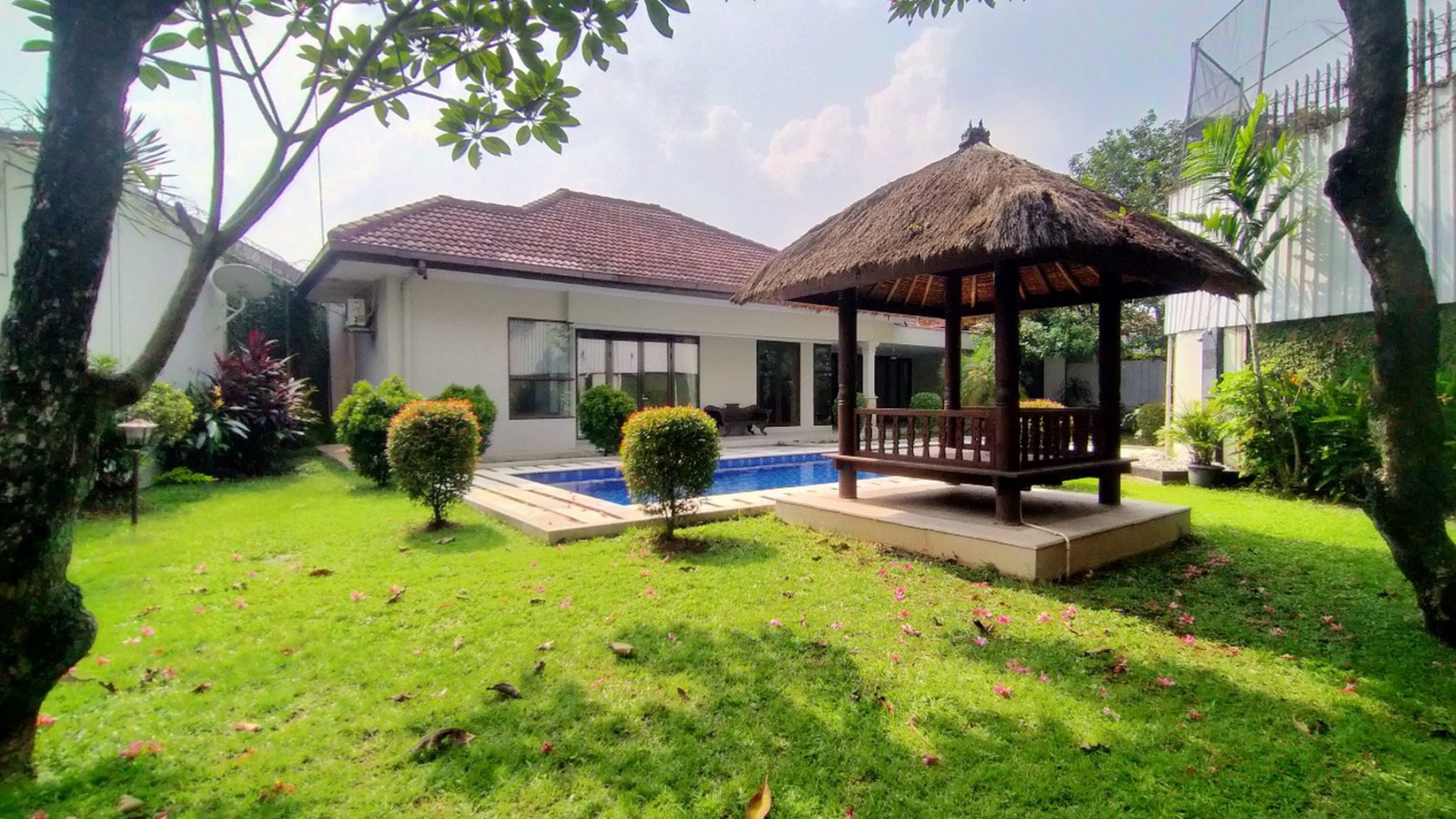
It may sit on a quiet residential street, inside a locally controlled neighbourhood or behind its own private gate. Security and maintenance may still be well organised, but they usually belong to the individual property rather than a larger residential operator.
Greater independence and privacy
Stand-alone living often appeals to residents who want fewer shared rules, more separation from neighbours and greater control over how the property is used.
Depending on the lease and landlord’s approval, residents may have more flexibility for:
● Pets
● Entertaining
● Home offices
● Garden use
● Furniture
● Minor improvements
● Household staffing
● Parking
The exact permissions must still be written into the lease.
More variety in location and architecture
Stand-alone houses are marketed across Kemang, Cipete, Cilandak, Pondok Indah, Kebayoran Baru, Pejaten and Menteng. Availability changes throughout the year.
The stock ranges from older single-storey homes with mature gardens to renovated contemporary houses. This variety creates more choice, but it also means that condition, technical quality and landlord support need to be checked property by property.
More responsibility for security and maintenance
Without a compound-management layer, the relationship with the landlord, agent and maintenance providers becomes especially important.
A private house may need individual arrangements for:
● Security
● Garden care
● Pool care
● Pest control
● Water pumps
● Generator maintenance
● Air-conditioning
● Waste collection
● Plumbing and electrical repairs
A stand-alone house can provide strong privacy and independence, but the lease and support arrangements need to be clear enough to protect that experience.
1. Which Is Better for Families With Children?
For some families with young children, a compound can provide a more structured first home in Jakarta.
Shared play spaces and nearby families may help children settle. This depends on the facilities, occupancy and community of the specific development.
A stand-alone house may be better for families that want a private garden, fewer shared rules or more separation from neighbouring homes.
The children’s ages may change the priority. Younger children may value nearby play and social space, while older children may care more about the school route, access to friends and transport independence.
A compound should not automatically be described as child-safe. Check:
● Vehicle movement inside the development
● Pool fencing and supervision
● Playground condition
● Gate procedures
● Lighting
● Pedestrian paths
● Emergency access
● Who is responsible for shared-facility safety
2. Which Option Offers Better Security?
A compound may provide a visible security structure through controlled entry, guards and visitor procedures. This is one reason some families and corporate housing programmes consider compounds.
However, a gate alone does not confirm the quality of security.
Ask:
● Is the gate staffed 24 hours?
● How are visitors and deliveries recorded?
● Are guards employed directly or through a vendor?
● Are there CCTV cameras?
● What happens during a power failure?
● Is there an emergency contact?
● Can vehicles enter without resident confirmation?
● How are domestic staff and contractors registered?
A stand-alone house can also be appropriately secured when the property has suitable walls, lighting, locks, alarms, guards and a well-managed street environment.
The decision should be based on the actual security system, not simply the property category.
3. How Do Maintenance Responsibilities Differ?
Maintenance is one of the most important differences to test before signing.
Some compounds provide central support for shared areas. Executive Paradise’s operator, for example, publishes in-house maintenance, tenant-relations staff and 24-hour security. This is one development’s model, not an industry standard.
That does not necessarily mean every repair inside the house is included.
The owner may remain responsible for structural issues, while the tenant may handle routine servicing. The compound may manage the shared swimming pool but not a private pool attached to the house.
For a stand-alone property, maintenance quality usually depends more directly on the landlord, lease terms and the person coordinating repairs.
Before signing either type, confirm responsibility for:
● Air-conditioning servicing
● Water pumps and tanks
● Roof leaks
● Electrical systems
● Pool and garden care
● Termite and pest treatment
● Generator servicing
● Appliances
● Internet infrastructure
● Damage caused by normal ageing
● Emergency call-outs
The lease should state who approves and pays for repairs, which vendors may be used and how urgent issues are reported. Do not assume a response time unless it is written.
4. Which Gives You More Privacy and Flexibility?
A stand-alone house often offers greater independence, although privacy still depends on the plot and surrounding buildings.
There may be fewer shared rules on guests, deliveries, parking or changes to the property. Private outdoor space still depends on the house and lease.
A compound still provides a private home, but it sits within a shared operating environment. Management may set rules for common areas, parking, visitors, pets or renovation work.
Some families find this reassuring. Others find it too structured.
Ask yourself whether you want a ready-made community or prefer to choose when and how you interact with neighbours.
5. How Should School and Office Commutes Affect the Decision?
Choose the area before the house type.
For families with school-age children, the school route can affect sleep, activities and family time. Test the exact campus and office journey.
South Jakarta school corridor
Pondok Indah and Cilandak are often shortlisted because Jakarta Intercultural School has campuses in both areas, while Nord Anglia School Jakarta is in Cilandak. Convenience still depends on the exact address and campus.
Cipete and Kemang may balance South Jakarta school access with routes toward the business districts, but travel time varies by street.
The correct area depends on the specific school campus—not simply the school name.
Working in SCBD, Sudirman, Thamrin or Kuningan
Living closer to a school may lengthen the office journey for one or both parents.
By contrast, choosing a house closer to SCBD, Sudirman, Thamrin or Kuningan may shorten one work commute while adding time to the school run.
There is rarely a perfect answer. The family needs to decide whose daily journey is least flexible and which commute has the greatest effect on the household.
Test the journey before signing
Do not rely only on distance or an off-peak map estimate.
Travel from the property to school and work during the hours you would normally leave. Repeat the test when possible, because traffic can change with rain, school schedules, roadworks and events.
Jakarta Intercultural School advises visitors to map the relevant campus and allow time for unpredictable traffic. Apply the same test before signing a lease.
6. Which Is Better for Pets and Outdoor Living?
Either housing type can work for pets, but permission and daily practicality need separate checks.
Some compounds publish pet facilities. Executive Paradise’s operator lists a dog park, but this should be reconfirmed for the specific house and lease.
A stand-alone house may offer a private garden, but check the fence, gate, drainage and landlord’s written permission.
In either case, confirm:
● Written landlord permission
● Compound pet rules
● Number and type of pets permitted
● Fence and gate security
● Nearby walking conditions
● Garden treatment and pesticides
● Responsibility for pet-related damage
● Access to veterinary care and grooming
Never rely only on a verbal statement that a property is pet-friendly.
7. Is a Compound House More Expensive?
Not always.
Rent is influenced by the area, land size, building condition, facilities, renovation quality, landlord expectations, lease length and current availability.
A compound with extensive facilities and central services may carry a premium. An older or smaller compound may not. A renovated stand-alone house in a central district may cost more than a compound property elsewhere.
Because asking rents and availability change frequently, compare live options with similar locations, bedroom counts and condition rather than relying on the housing category alone.
Compare the total living cost, including:
● Rent
● Service or compound charges
● Security
● Pool maintenance
● Garden maintenance
● Generator fuel and servicing
● Pest control
● Air-conditioning servicing
● Household staffing
● Utilities
● Required repairs
● Transport and commute costs
A lower advertised rent does not necessarily produce a lower total living cost.
8. Which Is Easier When You Travel Frequently?
A managed compound may suit frequent travellers when the promised support is confirmed.
Controlled access and an on-site management presence may make it easier to leave the property temporarily. Confirm whether staff monitor only common areas or also provide any house-specific checks.
A stand-alone home can also work, but it requires dependable arrangements for guards, household staff, garden care, pool maintenance, deliveries and emergency repairs.
Frequent travellers should ask who will inspect the property after heavy rain, a power interruption or a reported leak.
Compound vs Stand-Alone House: Quick Comparison
| Consideration | Compound house | Stand-alone house |
| Security | May provide controlled entry and a shared security structure | Security is arranged for the individual house or street |
| Community | May make neighbour interaction easier | More independent; social connection is built outside the property |
| Privacy | Private home, but separation from neighbours varies | Often greater separation, depending on plot and street |
| Maintenance | Shared areas may have central support; private repairs vary | Depends more directly on the landlord, lease and private vendors |
| Facilities | May include pools, parks, courts or a clubhouse | May include a private garden or pool; usually no shared facilities |
| Rules | Rules may cover visitors, parking, pets and renovations | Often more flexible, subject to the lease and neighbourhood rules |
| Property variety | Layouts may be similar within one development | Usually a wider range of sizes, ages and architectural styles |
| Travel convenience | Can be easier if on-site support is confirmed | Depends on reliable private security and maintenance arrangements |
| Best suited to | Households valuing structure, shared services and community | Households prioritising privacy, independence and property choice |
Best Jakarta Areas for Compound and Stand-Alone Houses
Pondok Indah
Pondok Indah may suit families prioritising larger homes, retail and the JIS Pondok Indah campus. Commuting and rent still vary by street.
Both house types may be available, but the best fit depends on current stock, condition, budget and route.
Cilandak and Cipete
Cilandak and Cipete place some homes near schools and TB Simatupang. The advantage depends on the exact address and destination.
Executive Paradise is one verified example of a managed compound in Cilandak. Smaller compounds and stand-alone homes also appear in the market, but availability and service levels change.
Kemang and Pejaten
Kemang has many restaurants and services, while Pejaten connects toward Kemang, Pasar Minggu and TB Simatupang. Conditions vary by street.
Street conditions vary, so check traffic, drainage, noise and access house by house.
Kebayoran Baru and Menteng
Kebayoran Baru and Menteng contain mature residential streets and varied stand-alone homes, but condition, noise and access differ.
They may work for offices, embassies, Senayan, SCBD or central Jakarta. Test school journeys to southern campuses during normal travel hours.
What to Check During a House Viewing
Property condition
● Roof, ceilings and signs of previous leaks
● Water pressure and drainage
● Electrical capacity
● Air-conditioning age and condition
● Water pumps and storage tanks
● Mould or persistent dampness
● Termite history
● Kitchen appliances
● Doors, windows and locks
● Pool equipment
● Generator and backup power
● Internet-provider availability
Location and access
● School route
● Office route
● Street width
● Delivery and visitor access
● Noise at different times
● Nearby construction
● Rainwater drainage
● Previous flooding in the property and surrounding street
Jakarta’s official Pantau Banjir platform provides government flood-status and neighbourhood-level information. Use it as one source, then ask the landlord, neighbours and local management about the property’s specific flood and drainage history.
Lease and management
● Who is the main contact after move-in?
● Who authorises repairs?
● What maintenance is included?
● Are compound fees included?
● What are the pet conditions?
● What is the notice procedure?
● What happens when an appliance fails?
● Is a pre-lease inspection included?
● How will the inventory be documented?
● What work must the landlord complete before handover?
Which Type of House Is Right for You?
Choose a compound house when you value:
● Controlled access
● A visible management structure
● Community
● Shared facilities
● Potential for easier social connection
● Access to shared management, where provided
● Potential convenience when travelling
Choose a stand-alone house when you value:
● Privacy
● Independence
● A larger private garden
● More architectural choice
● Flexible use of the home
● Greater separation from neighbours
● A specific street or central location
The decision should not begin with “compound or stand-alone?”
It should begin with the life your family is trying to build.
Where do the children need to be each morning? How much privacy feels comfortable? Who will manage a broken water pump? Will you use shared facilities? How often will the house be empty? What type of neighbourhood will help the family feel at home?
Once those questions are clear, the property search becomes more focused and the trade-offs are easier to compare.
Looking for a house in Jakarta? Noble Properties Asia can compare compound and stand-alone options, assess the fit against your school and office routes, confirm current availability and arrange a curated viewing itinerary.
📩 connect@nobleasia.id | 📞 WhatsApp: +62 813 1668 5505
Frequently Asked Questions
1. What is a compound house in Jakarta?
A compound house is a market term for a landed home inside a gated or managed community. It usually has controlled access and may include shared services or facilities. Confirm the exact scope.
2. Is a compound house safer than a stand-alone house?
A compound may have a visible shared-security system, but quality varies. A stand-alone property can also be appropriately secured. Inspect the actual controls and surrounding street.
3. Are compound houses good for expat families?
They can suit families seeking community, shared facilities and structure. A stand-alone house may suit those prioritising privacy, outdoor space or a particular street.
4. Is a stand-alone house cheaper than a compound house?
Not necessarily. Location, land and building size, condition, facilities, lease terms and landlord expectations may matter more than the category. Compare rent together with security, maintenance, transport and service costs.
5. Which Jakarta areas have compound houses?
Examples can be found in Pondok Indah, Cilandak, Cipete, Kemang and Pejaten. The mix of available compound and stand-alone homes changes regularly.
6. Which is better for families: Kemang or Pondok Indah?
Pondok Indah may suit families prioritising the JIS campus, larger residential streets and mall access. Kemang may suit households prioritising restaurants and the Kemang–Pejaten corridor. Test both commutes.
7. Can I keep a dog in a Jakarta compound house?
Some compounds accept pets, while others restrict their number, size or use of shared areas. Obtain written confirmation from both the landlord and compound management.
8. Who handles repairs in a compound house?
Where a compound has a management body, it normally handles shared areas. Repairs inside the house may remain the landlord’s or tenant’s responsibility. The lease should divide routine servicing, structural repairs and emergency work clearly.
9. What should I check before renting a stand-alone house?
Check security, water, electricity, roof condition, drainage, air-conditioning, pests, internet, garden and pool equipment, landlord responsiveness, street access and flooding history.
10. Is a compound better if I travel frequently?
It may be easier when controlled access and an on-site team provide confirmed support. Ask whether management checks private homes or only common areas.