
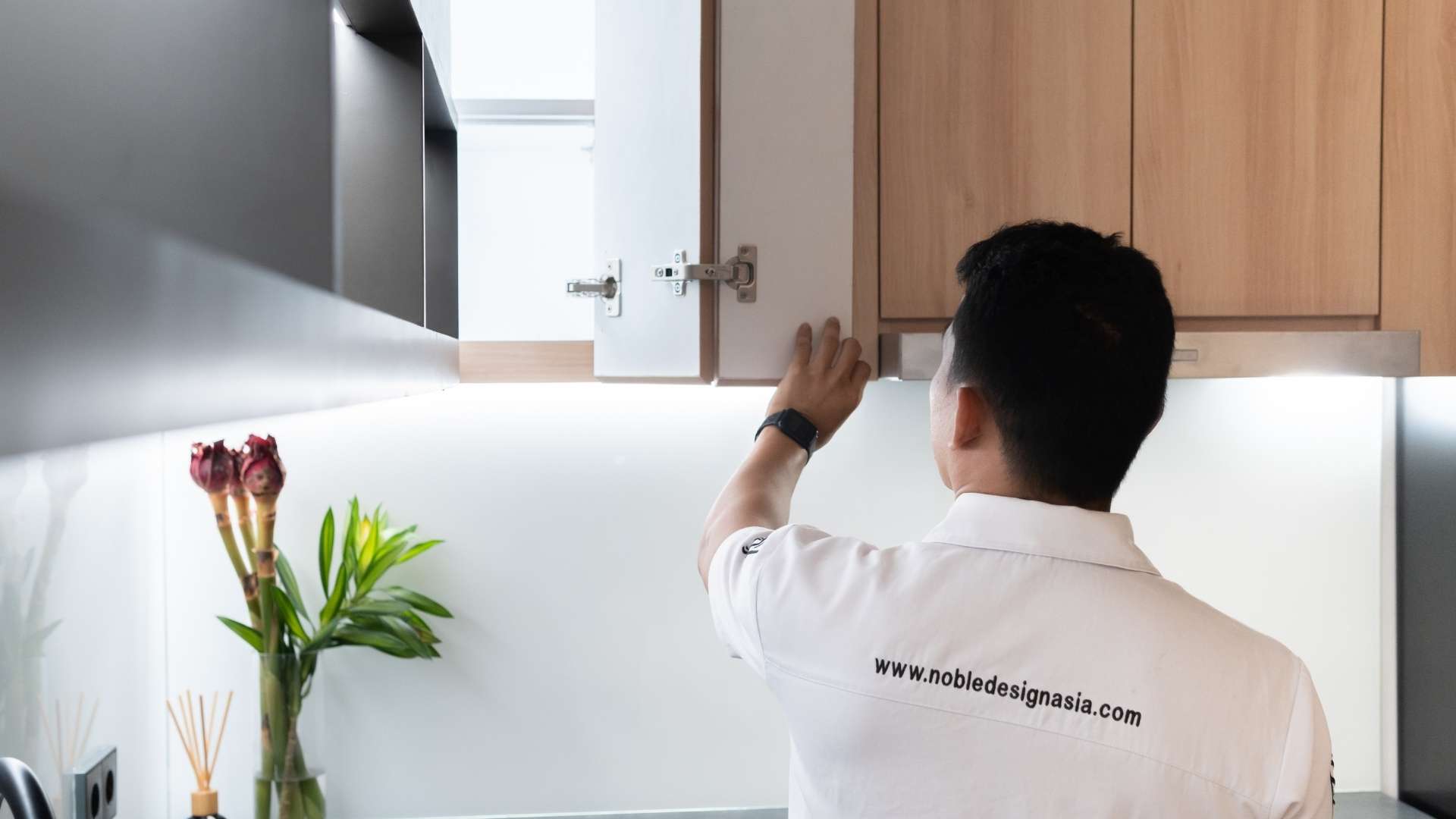
At apartment renovation handover, every defect or unfinished item needs a clear record: its location, supporting photos, the agreed action, who will address it and when it will be checked again. Keep the item open until the repair has been verified, rather than closing it when someone reports that the work is done.
For Jakarta apartment owners, this process also needs to account for building access, returning contractors and the move-in schedule. Here is how to organise the inspection and bring outstanding work to a documented close.
Inspect against the work you actually agreed
Bring the approved drawings, specifications, quotation or bill of quantities, and written changes to the walkthrough. A bill of quantities, often shortened to BOQ, is an itemised breakdown of the work. These records establish what the completed renovation should include.
Use the latest approved versions. If a cabinet layout changed during construction, inspect against that agreed revision. Compare finishes with approved samples and the specified product, rather than an image saved early in the design process.
In construction, this review is often called snagging or a punch-list inspection. RICS describes snagging as checking completed work against agreed standards, listing unsatisfactory or outstanding items, then rechecking the corrective work.
Arrange the visit when surfaces are clean enough to inspect and before furniture hides access, where possible. Invite the contractor’s representative and agree who will keep the record. For an owner living overseas, appoint an on-site representative with clear authority to report findings and an agreed limit on what they can accept.
Separate defects from unfinished work and new requests
A useful handover list distinguishes what was delivered incorrectly from what has not yet been delivered. It also separates both from a change you now want to make.
A cabinet door that rubs against its neighbour is an observed problem requiring assessment. A shelf included in the approved drawing but not installed is outstanding work. A request for an extra shelf that was never agreed is a proposed addition, with its own discussion about scope, price and timing.
Existing conditions need similar care. Use pre-renovation photographs to help distinguish earlier damage from changes during the project. If a damp patch could involve shared building services, record it and involve management and the appropriate specialist. Do not assign its cause from a photograph alone.
Where responsibility is disputed, keep the item visible as “under review”. Record both positions, the relevant drawing or specification, and the next step needed to resolve it. Removing a disputed item from the list does not resolve the underlying issue.
Walk through each room and check how it works
Use the same route on every inspection, starting at the entrance and moving through each room. Review visible finishes, then demonstrate normal operation of the relevant fittings. Consistency makes it easier to return to the same location and confirm a repair.
| Area | What to record |
|---|---|
| Walls floors and ceilings | Visible chips, stains, unfinished edges or finish differences, referenced to agreed specifications. |
| Doors drawers and cabinetry | Rubbing, sticking, alignment, hardware and whether ordinary opening and closing work properly. |
| Kitchen and bathroom | Visible leaks during normal use, drainage concerns, missing fittings and access to service points. |
| Lighting cooling and equipment | Demonstrations by the responsible installer, missing controls and any test records still required. |
Describe what you observe without guessing the cause. “Water visible inside the sink cabinet after the tap is used” is more useful than “bad plumbing”. Note when the issue occurs and ask the responsible trade to investigate.
An owner walkthrough is not a substitute for technical testing. Have qualified personnel assess electrical, gas, waterproofing, structural or other specialist concerns. Do not remove electrical covers or improvise water or load tests. Record untested or inaccessible areas as such, including who needs to check them and when.
Give each issue its own record and photographs
Create one master list in a shared spreadsheet or agreed project system. Messages can notify people about an issue, but the latest status should remain easy to find in one place. Autodesk’s punch-list guidance uses clear assignments, dates and status tracking to organise outstanding tasks.
Give each item a unique reference, such as KIT-01 for a kitchen issue. Write a location precise enough for someone who missed the walkthrough to find it. “Kitchen, lower cabinet immediately left of sink” works better than “cabinet problem”.
Take a wider photograph to establish location and a close-up to show the issue. Add a short video when movement or intermittent behaviour is important. Keep the original files and link their filenames to the item number. Include the date and any useful context, rather than relying on an undated screenshot from a chat.
The following example shows the level of detail to aim for. It is illustrative, not a record of a Noble Design Asia project.
| Field | Illustrative entry |
|---|---|
| ID and location | KIT-01 | Kitchen, lower cabinet immediately left of sink. |
| Observation and reference | Door rubs against adjacent front when opened. Compare with approved joinery drawing J-04. |
| Evidence | Dated overview KIT-01-A, close-up KIT-01-B and short operation video. |
| Action and responsibility | Joinery contractor to assess and adjust; site supervisor to coordinate access. |
| Priority and agreed date | Affects daily use. Target: 2026 for this example only. |
| Status and closure check | Action agreed. Reviewer to operate the door again and check adjacent finishes; record review date and evidence before closing. |
Keep the observation separate from the agreed remedy. A homeowner can identify a sticking door without prescribing a technical repair. If investigation is needed, record that as the next action and add the repair method once it has been agreed.
Prioritise by impact and agree realistic dates
A paint touch-up and an active leak should not sit in the list with the same priority. Agree which issues need immediate specialist attention, which interfere with normal use, and which are finishing items that can be scheduled without the same disruption.
For a suspected safety issue, stop using the affected installation and contact the appropriate qualified contractor or building team. An active leak or exposed wiring needs prompt assessment; it should not wait for the next routine review of decorative finishes.
For other items, agree a target date with the responsible person. Record dependencies such as replacement parts, access arrangements or a repair that must finish before painting can resume. Distinguish a proposed date from one the contractor has accepted.
If a deadline changes, retain the original date and record the revised date, reason and effect on other work. This gives the owner a usable update instead of an unexplained shift in the programme. A small number of unresolved issues may matter more to move-in than a high percentage of completed tasks.
Plan return visits around the apartment building
Before agreeing a repair visit in Jakarta, confirm the building’s current contractor-access requirements with management. Check work hours, service-lift bookings, protection of common areas, debris removal and any permit or notice needed for the particular work. These arrangements vary between buildings.
Identify who will provide access and who will be present to review the result. If someone has already moved in, agree how furniture and belongings will be protected and whether the work interrupts water, power or use of a room. Arrange any necessary shutdown through the responsible team.
Avoid combining a repair visit with furniture delivery when both need the same service lift or working space. For an apartment being prepared for a tenant, agree which items affect readiness before confirming the move-in arrangements.
Give the returning team the relevant item references before arrival. A visit scheduled only as “finish the remaining work” can leave the owner expecting more than the contractor has prepared to do.
Reinspect repairs before marking them closed
Use a simple sequence: open, action agreed, in progress, ready for inspection, and closed. Add “under review” where responsibility or the remedy remains unresolved. A contractor’s completion message moves an item to ready for inspection; the agreed reviewer then verifies the result.
Return to the original observation and repeat the relevant check. For a cabinet door, confirm that it operates properly and that the adjustment has not damaged an adjacent finish. For a leak, obtain the responsible trade’s findings and appropriate verification; a newly painted surface alone does not establish that the cause has been resolved.
Record the review date, reviewer, result and supporting evidence. If the repair is incomplete or the symptom returns, reopen the same item with a new dated note so the history remains intact. Give genuinely separate issues their own reference.
The Singapore Courts’ renovation best-practice guide similarly recommends written defect records with photographs and acknowledgement after rectification. This is a useful documentation principle; its Singapore dispute procedures do not apply to a Jakarta project.
For an overseas owner, use live video to follow the item numbers during the review and retain the evidence afterwards. Ask an appropriate on-site professional to verify conditions that cannot be judged reliably on video. If access or testing is unavailable, keep the item pending verification.
Make the handover record reflect what remains open
The handover document should identify the apartment, inspection date, participants, completed scope and attached outstanding-work list. If the project uses a Berita Acara Serah Terima, or BAST, make sure its wording and attachments reflect the actual condition and agreed next steps.
Distinguish receiving keys, inspecting the work and accepting completion. Read what the document records before signing, particularly where some items remain unresolved. Agree how those items will be listed, who will return and how closure will be confirmed.
Check the project contract before making decisions about final payment, retention or any defects rectification period. Retention is an agreed amount held back under the contract; it is not a percentage to assume for every renovation. Record the applicable terms and seek project-specific advice if payment or acceptance is disputed.
The same applies to warranties. Establish which party covers workmanship and which covers individual products, when the coverage starts, how to report a problem and any relevant exclusions. Do not assume that every item has the same coverage or reporting deadline.
Leave with the information needed to use and maintain the home
A completed defect list is one part of the handover. The owner also needs the information and items required to operate the apartment and arrange maintenance without repeatedly chasing the project team.
Collect the documents applicable to the agreed scope: final drawings showing installed arrangements, relevant test and commissioning records, product manuals, warranty documents and contractor or supplier contacts. Commissioning records document the checks used to confirm that installed systems operate as intended.
Request a demonstration of controls and accessible shut-off points from the relevant installer. Account for keys, access cards, remotes and agreed spare materials. Label paint or finish references so a later touch-up can be matched to the correct room.
Track missing documents and undelivered items alongside the physical work, with a responsible person and target date. Save the accepted handover record, closed defect list and original evidence together. If a new problem appears after move-in, report it promptly through the agreed channel and keep its relationship to earlier issues clear. If you are still planning the work, see our guide to apartment renovation in Jakarta.
Include handover in the renovation scope from the beginning
The most useful handover process starts before the final walkthrough. Agree who checks the work, how defects will be recorded, how return visits are coordinated and what documents must be delivered while the renovation scope is being prepared.
Noble Design Asia’s Turn-Key Renovation & Fit-Out service covers the project through to final handover, including final inspections, snag lists and functional testing of electrical, plumbing and HVAC systems. Confirm the inspection responsibilities, documentation and follow-up arrangements in the proposal for your apartment.
Discuss an apartment renovation scope that includes inspections, defect tracking and handover with Noble Design Asia:
Email connect@nobleasia.id or WhatsApp us here +62 851-1772-8578.
Apartment Renovation Handover: Frequently Asked Questions
What is a renovation snag list?
It is a record of unsatisfactory or outstanding work identified during an inspection. Each item should have an exact location, evidence, an agreed next action, a responsible person and a way to verify completion.
Can an apartment be handed over with minor defects?
That depends on the condition of the apartment, the project agreement and what the parties are accepting. Record any unresolved items and return arrangements clearly. A safety concern or an issue preventing normal use needs separate assessment, regardless of how small the remaining list appears.
Should I make the final payment before every item is closed?
Review the payment and completion terms in your contract. Do not assume that a particular retention percentage or right to withhold payment applies. Where the position is disputed, obtain project-specific advice before deciding how to proceed.
How can I manage handover while I am overseas?
Appoint an on-site representative, use a shared issue list and arrange a live walkthrough against item numbers. Agree who can verify repairs and who can accept completion. Photographs and video support the record but do not replace specialist inspections or tests.
What should I do if a repaired defect returns?
Record the new observation and date, refer to the original item and notify the responsible party through the agreed reporting channel. Reopen the item where appropriate and request investigation of the recurring problem. Check the applicable contract and warranty terms rather than assuming the original closure ends all follow-up.



Join The Discussion