
Nobody warns you about the silence.
Not the kind that comes from peace and quiet — Jakarta is rarely that. The silence I mean is the one that arrives on a Sunday afternoon, about six weeks into the move, when the excitement has worn off and the children are finally in school and the house is unpacked and your partner looks at you across the kitchen and says: “Is this actually going to work?”
That moment is not a crisis. It is, in my experience, one of the most normal and least-discussed parts of relocating a family to any new city. Jakarta included. And the reason I open with it is this: no budget spreadsheet will ever fully prepare a family for the emotional cost of the first few months. But a realistic, honest understanding of what life actually costs here — not the headline number, not the comparison to Singapore — can take a significant amount of pressure off the practical side of the adjustment.
I have spent more than two decades helping families relocate to Indonesia. I have seen families thrive on budgets that looked impossibly tight on paper. I have seen families unravel on packages that looked generous. The difference is almost never the money itself. It is whether the family was prepared for what the money would actually need to cover.
This is that guide.
First: Reset the Comparison
People moving to Jakarta from Singapore, Hong Kong, or London arrive with a mental benchmark. They know what things cost back home, and they arrive expecting Jakarta to feel cheap by comparison. Sometimes it does. A plate of nasi goreng at a local warung will cost less than a coffee in most European cities. A full-time household assistant — something that changes daily life dramatically for families with young children — is within reach for most expat packages.
But the Jakarta that most international families actually live in is not cheap. The Jakarta of international schools, premium apartments, private drivers, imported groceries, and the kind of healthcare that feels familiar is a different city entirely from the one the cost-of-living indexes are measuring. According to Wise’s 2026 cost of living data, a family of four in Jakarta needs around USD 2,345 per month before rent. That figure is technically accurate for a locally-benchmarked lifestyle. For an expat family living the way most expat families live, the real number is considerably higher.
A 2026 estimate from International Schools Jakarta puts a typical expat family of four — with housing, one child in international school, private transport, and a reasonable lifestyle — somewhere between USD 7,400 and USD 11,400 per month all-in. That range will feel shocking to some families and familiar to others, depending on where they are coming from and what they have been told to expect.
The honest answer to “how much does it cost to live in Jakarta with a family?” is: it depends almost entirely on two decisions you have not yet made. Where your children go to school. And where you live.
Everything else follows from those two.
The School Decision Is Also the Housing Decision
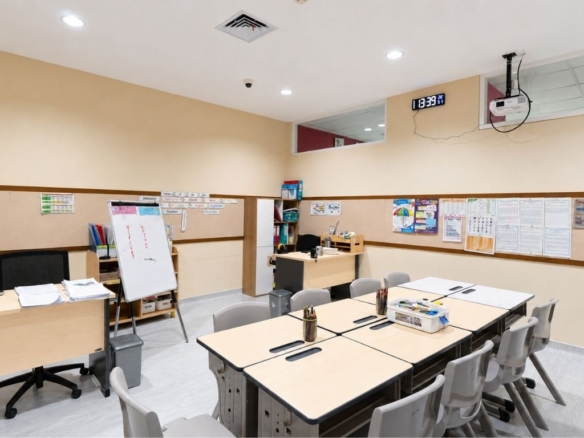
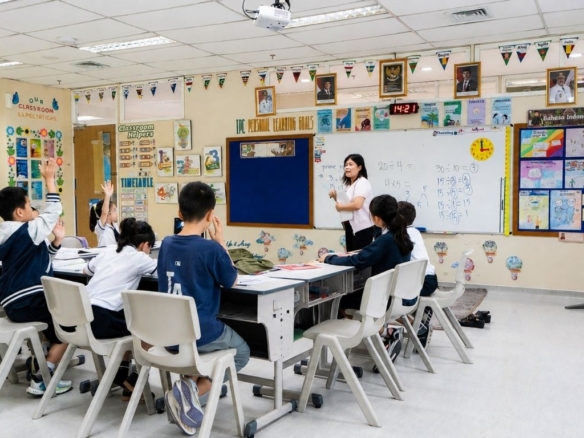
This is the piece of advice I give every family before they start looking at properties, and it is the piece most families wish they had heard sooner. In Jakarta, you do not find a home and then find a school. You find a school — a confirmed place, in writing — and then you find a home within a workable distance of it.
Jakarta’s international schools — JIS, BSJ, SPH, ACG, and the others — are not evenly distributed across the city. They sit in clusters, mostly in South Jakarta and certain parts of Central Jakarta. The waitlists at the better-regarded schools are long, available places are not guaranteed at any age group, and the application process takes time. A family that arrives in Jakarta, signs a lease in Sudirman because it is convenient for the office, and then discovers that the only available place for their eight-year-old is at a school in Cilandak has created a problem they will live with every morning for the duration of the assignment.
The school run in Jakarta traffic is not a minor inconvenience. It is, for many families, the single most reliable source of daily stress. I have watched families spend considerable energy making a beautiful apartment work — new furniture, careful decoration, weekend brunches in Kemang — while a forty-five-minute morning commute to school quietly hollowed out the family’s goodwill toward the city. The apartment was not the problem. The sequence was.
The rule: School confirmed first. Housing search starts from the school location outward. Not the other way.
What international school fees actually look like
Tuition at Jakarta’s international schools ranges from around USD 3,500 to USD 39,000 per year, depending on curriculum, grade level, and school. That range is wide, and the top end is real. For context: Jakarta Intercultural School’s published 2026–2027 fee schedule shows Elementary tuition at IDR 450,866,000 and Middle School at IDR 527,037,000 per year — before development levies, transport, uniforms, lunch, extracurriculars, and exam fees.
Two children in premium international schools can put education at or above housing as the largest annual line item in the family budget. The families who are blindsided by this are usually the ones whose company covers “school fees” in the relocation policy without specifying a cap — and who discover at enrolment that the definition of school fees is narrower than they assumed.
Before you finalise the schooling plan, get the full fee schedule. Not the headline tuition figure. The full schedule, including every additional charge the school lists. Then multiply it by the number of children and convert it to a monthly equivalent. That number belongs in your budget before anything else.
Housing: What the Photos Will Not Tell You
Jakarta’s premium residential market has genuinely good options. There are buildings with professional management, responsive maintenance teams, and lease processes that work cleanly. There are also buildings that photograph beautifully and create daily frustration after move-in. The gap between the two is not always visible until you are living inside it.
The variables that matter most to a family — water pressure at 6:30am when three people are showering before school, air-conditioning reliability in a city where turning it off is not really an option, noise transmission between units, the actual responsiveness of the building management office when something breaks — none of these appear in a property listing. They are known only to people who have placed families in these buildings and watched what happened.
There is also the lease structure. Jakarta residential leases are typically paid one year in advance, sometimes two. Not monthly. Not quarterly. In full, upfront, at signing. This is not unusual or suspicious — it is simply how the market works. But a family that has budgeted around a monthly rent figure and arrives at signing to discover the actual cash requirement is twelve to fourteen times that amount, plus a two-month security deposit on top, is not going to have a good first week.
Budget reality: Build your housing budget around annual lease cost plus two months’ deposit. The monthly figure is for reference only. The cash you need at signing is the annual total.
Apartments or a landed house?
Most expat families in Jakarta face this question early. It is less about preference and more about what the family’s daily life actually requires.
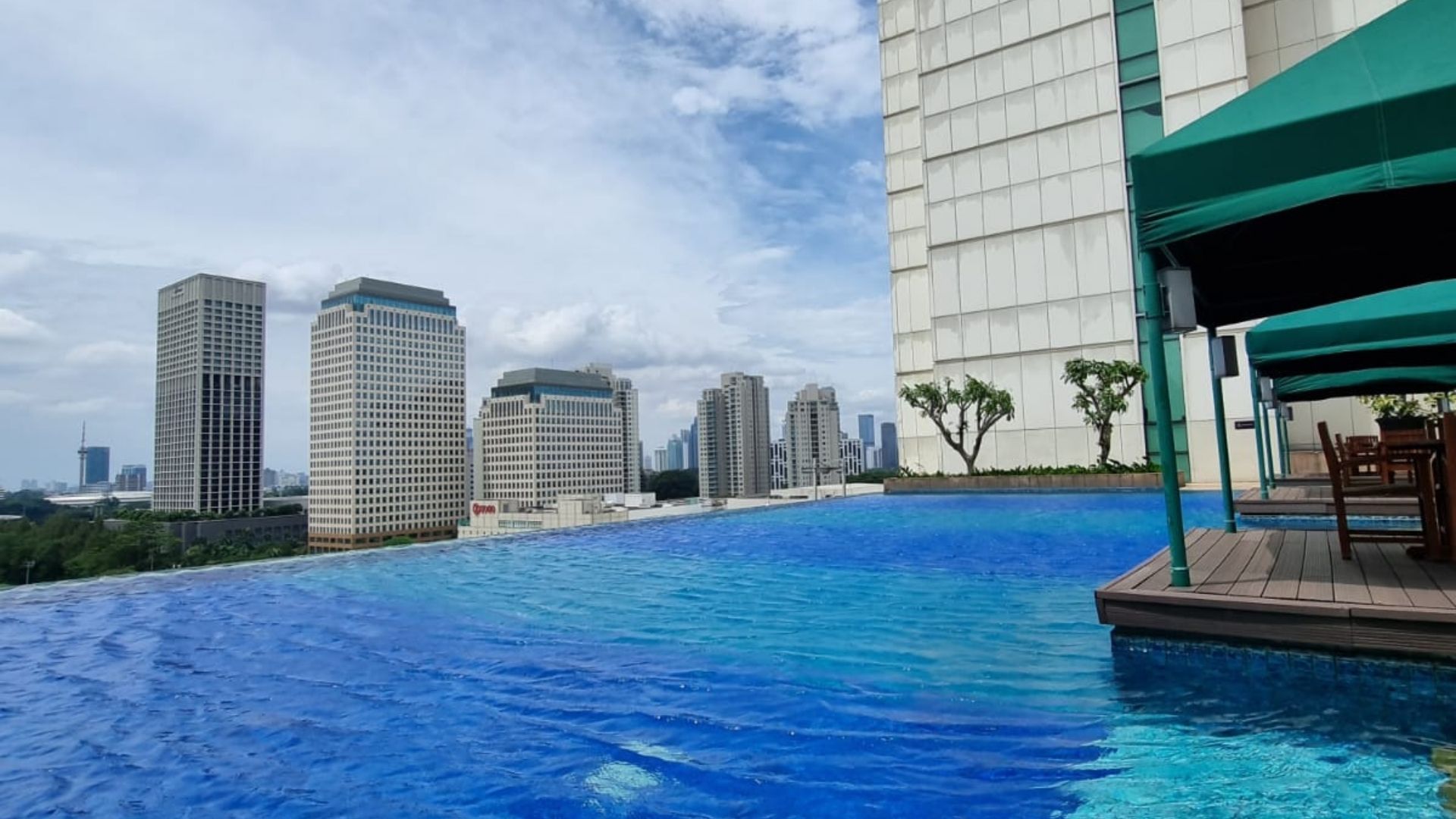
Apartments win on security, facilities, and maintenance support. The pool, the gym, the 24-hour security desk, the building management team that handles the broken air-conditioning without you needing to track down a landlord — for a family arriving in a new city with young children and two working parents, those things reduce stress in ways that are easy to underestimate before arrival and very easy to appreciate after.
Landed houses win on space, character, and the kind of daily life that does not feel like you are living inside a hotel lobby. A garden. A kitchen that is not separated from the living room by a corridor. Room for a household assistant to have their own space. Outdoor space for children and, often crucially, for pets. The South Jakarta neighbourhoods — Kemang, Pondok Indah, Cilandak, Cipete, Kebayoran Baru — are where most families land when they choose this path, and there are good reasons why the expat family community has gathered there for decades.
The trade-off is maintenance — and it is a bigger trade-off than most families anticipate. A lower rent is not always a better deal. An older house with persistent plumbing issues, air-conditioning units that have not been properly serviced, a landlord who is difficult to reach, and a pest control situation that was not disclosed at viewing will cost a family in time, money, and morale over the course of a year.
There is one piece of advice I give every incoming expat family without exception, and it saves more frustration than almost anything else: if at all possible, choose a home that is managed by a professional property management team — either an apartment building or a gated compound with on-site management. This is not about prestige or lifestyle preference. It is about a very practical reality that most families only discover after they have already signed a lease on a standalone house.
What most people arriving in Jakarta do not know is that the majority of standalone rental houses are owned by private landlords who do not employ their own maintenance staff. There is no salaried technician on call. When something breaks — the air-conditioning, the water heater, the electrical panel, the plumbing — the landlord calls a freelance worker. That freelance worker is also being called by every other property owner in the neighborhood. He is not committed to your landlord. He comes when he can.
In a city where the temperature rarely drops below 28 degrees and air-conditioning is not a luxury — it is the thing standing between your family and a sleepless night, waiting three or four days for a repair is not a minor inconvenience. It is a genuinely difficult situation: children who cannot sleep, a household that cannot function, and two working parents with no time to chase a technician who is not picking up the phone.
A professionally managed apartment building or gated compound solves this entirely. There is a maintenance team on-site, on a monthly salary, whose job it is to fix things. You call the front desk or message building management. Someone comes — usually the same day, often within hours — because the staff are employed and committed to the property full-time, not juggling twenty other clients across the city.
My consistent advice to new arrivals: Start in a professionally managed apartment or gated compound for your first assignment. You can always move to a standalone house in year two, once you know the city, know the neighbourhoods, and know how to properly vet a landlord and their maintenance setup. Do not learn that lesson the hard way in your first month with a broken air-conditioning unit and a three-day wait.
The properties families come back to
Savyavasa in Dharmawangsa keeps appearing at the top of shortlists for families moving from dense Asian cities — Tokyo, Hong Kong, Singapore — who need the reassurance of a well-managed building but want space and greenery that those cities could not give them. Three hectares, a kilometre of jogging trail, kids’ play areas that children actually use, an urban forest that makes Jakarta’s heat more bearable, and a clinic and minimart on the estate. The 3BR and 4BR layouts are genuinely family-sized. The South Jakarta location puts it within reach of the main international school areas and the Kemang lifestyle corridor. The honest caveat: the morning commute to Sudirman is real, and parents working in the CBD should test that route before signing.
Casa Domaine on Jl. KH Mas Mansyur is the opposite calculation: premium CBD living for families where at least one parent works in Sudirman, SCBD, or Thamrin and the commute friction reduction is worth the trade-off of a more urban setting. The 3BR layouts run 148 to 168 sqm; the 4BR family residences around 340 sqm. Building management is professional and consistent. For a family that has been warned about Jakarta traffic and wants to eliminate the worst of it, this building delivers on that.
Kempinski Private Residence in Thamrin is not for everyone, and it does not try to be. For families with a premium package, a senior leadership profile, and a preference for having everything handled — groceries, dining, maintenance, concierge — within the building’s footprint, it is one of Jakarta’s most complete residential addresses. Direct access to Grand Indonesia. Hotel-standard service. Residences from 123 to 750 sqm. The location at Bundaran HI puts it at the centre of the city in a way that is either exactly what a family needs or entirely the wrong atmosphere, depending on who is being relocated.
Families comparing a wider set of options will also look at Anandamaya Residences, which has a strong established reputation in the Sudirman corridor and reliable availability in larger layouts. And for families who want South Jakarta’s residential atmosphere at a considered price point, Atmaya Residence in Cilandak sits close to the international school corridor and the Kemang lifestyle area — a useful option when the school decision has already anchored the family to the southern part of the city.
The right property for any given family depends on their specific school location, office, family size, and the kind of daily life they want to build. Noble Asia can help families compare options based on those real parameters — not simply on what photographs well. Explore residential listings in Jakarta or reach out directly to discuss the search.
Not sure which neighbourhood fits your family’s school and office combination? The Jakarta area guides on nobleasiaid.com break down each district by commute, school proximity, lifestyle, and housing type — useful reading before you commit to a search. If you would rather talk it through with someone who knows the city, Noble Asia’s team can give you a 20-minute orientation call before you have signed anything.
The Budget: What Families Actually Spend in Jakarta in 2026
The following ranges are not aspirational or worst-case. They are what families in Jakarta genuinely spend at different lifestyle levels, based on the patterns I see repeatedly in relocation planning conversations.
Modest family lifestyle — IDR 35 to 60 million per month, excluding school fees
This is achievable for a family in a simpler apartment or landed house, eating mostly local food, using ride-hailing rather than a private driver, and being deliberate about imported groceries and lifestyle spending. It is a real way to live in Jakarta, and some families do it well — particularly those who arrived curious about the city rather than defensive toward it. It is not, however, the lifestyle most expat families end up living after a few months, once the convenience infrastructure of the expat world starts to feel normal.
Comfortable expat family lifestyle — IDR 70 to 130 million per month, plus school fees separately
A well-located apartment or landed house. Private transport or a regular driver arrangement. A household assistant. International-standard groceries alongside local shopping. Dining out several times a week. Children in activities. This is the lifestyle that most expat families in Jakarta maintain, and the one that relocation packages are typically structured around. School fees are additional to this figure and need to be budgeted separately on an annual basis.
Premium family lifestyle — above IDR 130 million per month, plus school fees
Luxury residence. Full-time driver. Full-time household staff. Premium healthcare. Frequent international dining. Regular domestic and regional travel. Children in top international schools. For families at this level, Jakarta is genuinely one of the more comfortable postings in APAC — the infrastructure is there, the service culture is warm, and the cost remains lower than equivalent living in Singapore or Hong Kong even at the premium end.
The number most families miss: The first three months will cost more than the steady-state monthly budget. Advance rent, deposit, setup costs, temporary accommodation, household establishment, school uniforms and supplies, and the general over-spending of a family still figuring out the city all land in the first quarter. Prepare a separate setup budget and do not measure the first three months against the monthly average.
The Costs That Catch Families Off Guard in 2026
The grocery budget in month one
Almost every expat family overspends on groceries in the first few months. They arrive with food preferences shaped by twenty years of living somewhere else, and they search for those familiar products — the specific cereal, the cheese that tastes right, the baby food brand, the dietary items — and they find them at premium supermarkets at prices that reflect their imported status. The monthly grocery bill that a family expected to be lower than back home turns out to be equivalent or higher, because they are shopping at Ranch Market or Grand Lucky and not at Carrefour or the local pasar.
The families who calibrate this fastest are the ones who arrive curious about Indonesian food rather than resistant to it. A family that is genuinely willing to eat local food several times a week, mix local and imported ingredients, and explore the fresh produce markets will find Jakarta genuinely affordable at the table. A family that needs everything to taste like it did in Brussels will find Jakarta expensive.
Transport is not one line item — it is five
The family budget that includes “transport: IDR X per month” is almost always wrong, because transport for a family in Jakarta is not one expense. It is the driver’s monthly salary. The car fuel and maintenance. The school bus fee, if the school offers one and the family uses it. The ride-hailing apps for the parent who does not have the car today. The motorcycle taxi for short trips. And the parking fees at every mall, restaurant, and school event the family attends.
A private driver arrangement — which most families with children end up choosing for the school run and the primary parent’s commute — is one of the more significant monthly line items and one of the least clearly defined in relocation packages. Budgeting for transport means budgeting for all of these together, not estimating from a ride-hailing app. Jakarta MRT fares are low (IDR 3,000 to IDR 14,000 per trip) and the network is genuinely useful for adults commuting along the Sudirman corridor, but it does not solve the school run, the grocery trip, or the afternoon activity pickup.
“Furnished” does not mean “ready for a family”
A furnished apartment in Jakarta typically contains the basics: beds, sofas, dining table, wardrobes, kitchen appliances. It does not typically contain the fifty small things a family needs to actually function — children’s bedding, bath mats, kitchen tools beyond a rice cooker and a basic set of pots, child safety equipment, a proper coffee setup, adequate storage, a water dispenser that works, curtains that actually block the morning light in a child’s bedroom.
The first week in a new home involves a significant procurement exercise. Factor several million rupiah into the setup budget for household establishment, and do not be surprised when the total is higher than anticipated.
Healthcare: read the policy before you need it
Jakarta has good private healthcare. RS Pondok Indah, Siloam, Mitra Keluarga, and the international standard facilities are competent and accessible. The problem is not availability — it is insurance coverage assumptions that turn out to be wrong when a family actually needs care.
Many employer-provided health plans have exclusions that families do not discover until they are sitting in a hospital. Maternity coverage. Dental care. Mental health services. Chronic condition management. Pre-existing conditions. Medical evacuation. Each of these is frequently either excluded, capped at an amount that does not reflect Jakarta’s private hospital costs, or subject to administrative processes that take time a family in a health situation does not have.
Read the policy document before you arrive, not after the first medical bill. If there are gaps, address them with a supplementary policy before departure. Jakarta is a very manageable healthcare environment when you are prepared for it. It is a stressful one when you discover the gaps in a waiting room.
The Part Nobody Budgets For
Here is something that does not appear in any cost-of-living guide and that I have watched affect family finances and family wellbeing in equal measure: the trailing spouse.
In most international assignments to Jakarta, one partner is the “working” partner — the one with the KITAS tied to employment, the office to go to, the ready-made social structure of colleagues and meetings and a professional identity. The other partner, in many families, arrives on a dependent visa without automatic work rights, without their professional network, and without the structure that makes a city feel liveable.
That partner — statistically often a woman, though not always — will spend money in the first few months filling the hours. Classes, gym memberships, social clubs, activities, coffee with whoever is available, shopping that is partly about buying things and partly about having somewhere to go. This is not waste. It is the completely rational response to a difficult social situation. But it is also a budget line item that most relocation plans do not account for.
The families who navigate this best are the ones who name it directly before departure. Who plan the trailing partner’s first ninety days with the same intentionality they bring to the school search and the housing decision. Who identify the Jakarta International Women’s Club, the Hash House Harriers, the professional associations, the language classes, the volunteer opportunities — whatever matches that person’s interests and temperament — and who treat building that structure as a relocation deliverable, not an afterthought.
The ones who do not plan for it discover, usually around month three, that the assignment is in trouble from the inside — not because of anything wrong with Jakarta, but because one half of the family has not yet found their version of it.
The Jakarta That Families Fall in Love With
I have been saying hard things in this guide. That is because families deserve an honest account, not a promotional one. But I want to end this section with something that is equally true.
Jakarta is genuinely one of the more liveable cities in Southeast Asia for a family that arrives with the right preparation and the right mindset. The domestic help culture — affordable, warm, and allowing parents to actually be present with their children in the evenings rather than cooking and cleaning — is something families from Western Europe describe as life-changing. The food, once a family leans into it rather than away from it, is extraordinary. The expat community is genuinely welcoming. The weekends — trips to Bali, to Yogyakarta, to Lombok, to the green hills outside the city — are extraordinary.
The families who thrive here are not the ones with the biggest packages. They are the ones who arrived curious, who gave themselves permission to find a different version of normal, and who had the practical groundwork — the right home, the right school, the right support structure — in place before they needed it.
That groundwork is exactly what a good relocation process is for.
How Noble Asia Supports Family Relocation to Jakarta
Noble Asia has been supporting expat families, HR teams, and global mobility partners with relocation and destination services across Indonesia for more than two decades. For families moving to Jakarta, that means practical, experience-based support from the planning stage through to the settled-in stage — and beyond, when lease renewals, school changes, or departure coordination become relevant.
Family relocation support typically includes:
- Pre-arrival consultation — honest area guidance, housing and school sequencing, cost briefing, and timeline planning before any commitments are made
- Home search — shortlisting based on confirmed school location, commute testing, building management assessment, and lease structure review
- School search guidance — identifying schools with available places, supporting the application process, and coordinating the school-first, housing-second sequence
- Lease negotiation — payment structure, deposit terms, repair obligations, and move-in condition documentation
- Settling-in support — bank account guidance, mobile setup, household staff introduction, healthcare orientation, local area familiarisation
- Tenancy management — ongoing support for repairs, landlord communication, renewal coordination, and departure
For families who want to explore housing options before committing to a search, the residential listings on nobleasiaid.com are a useful starting point. For families who want to talk through the specifics of their situation before they start, reach out directly.
📩 connect@nobleasia.id | 📞 WhatsApp: +62 813 1668 5505
Questions Families Ask Before They Move
How much does it really cost to live in Jakarta with a family in 2026?
For a comfortable expat family lifestyle — good housing, one child in international school, private transport, a household assistant, and regular dining out — budget IDR 70 to 130 million per month, plus school fees as a separate annual item. A modest lifestyle can be managed for IDR 35 to 60 million per month excluding major school fees. Premium living, with luxury housing, full staff, and premium schools, runs above IDR 130 million. The first three months will cost more than the steady-state monthly figure — prepare a separate setup budget.
Should we choose housing or school first?
School first, always. Secure a confirmed school place in writing before you commit to a neighbourhood. The best home is the one that puts your children’s school at a manageable commute. In Jakarta traffic, that logic applies in both directions: a long school run on a beautiful route is still a long school run at 7am every weekday.
Do we need a car and driver?
For most families with school-age children: yes, eventually. Not necessarily from day one, but within the first few months. Ride-hailing works well for adults commuting solo and for ad-hoc trips. It does not work reliably for school runs, afternoon activity pickups, grocery trips with small children, or the general logistics of a family with multiple daily destinations. A regular driver arrangement — whether through a car ownership or rental setup — makes daily life significantly more manageable and is worth factoring into the budget from the start.
What does “furnished” mean in a Jakarta lease — do we need to bring our own things?
Furnished in Jakarta means the main furniture is provided: beds, wardrobes, sofas, dining table, and basic kitchen appliances. It does not mean the home is ready for a family to move in and function immediately. Plan for a household establishment spend in the first week — children’s bedding, kitchen tools, storage, child safety items, a proper water dispenser, and the dozens of small things that make a house feel liveable. Budget several million rupiah for this and expect to spend it quickly.
Is Jakarta healthcare good enough for a family with young children?
Yes — Jakarta has capable private hospitals and specialist clinics, and the quality at the established private facilities (RS Pondok Indah, Siloam Hospitals, Mitra Keluarga) is generally reliable for standard family healthcare needs. The issue is not quality — it is insurance coverage. Read your health policy carefully before arrival. Check specifically for maternity cover, dental, mental health, medical evacuation, and pre-existing condition exclusions. The families who struggle with healthcare in Jakarta are almost always the ones who discovered a coverage gap at the wrong moment.
What do most families underestimate in the Jakarta cost of living?
Three things, consistently. First: the advance rent requirement — twelve months upfront is the market norm, and the cash requirement at lease signing is far higher than a monthly rent figure suggests. Second: international school fees, which need to be calculated annually and in full (including all additional charges beyond headline tuition) before being converted to a monthly planning number. Third: the household and transport setup in the first three months, which runs well above steady-state costs and catches families off guard when they are already financially stretched from the move itself.