

Indonesia is one of the most rewarding places in Asia to build a business presence, but it is rarely a simple relocation destination. The country is vast, layered, and deeply local: 38 provinces, hundreds of languages and ethnic groups, and business norms that do not always follow the standard APAC playbook. For HR managers and global mobility teams, this means an Indonesia assignment cannot be managed as a routine transfer with a few local adjustments. It needs its own rhythm, its own sequencing, and a clear understanding of how life actually works on the ground.
This article is written for teams that already understand international assignments, but want a more honest view of Indonesia: where plans tend to slow down, why families struggle when the sequence is wrong, and how housing, schools, immigration, culture, and daily life are more connected than they first appear.
Why Indonesia Does Not Fit the Standard APAC Relocation Model
Most experienced mobility teams have a process that works well across Singapore, Hong Kong, Kuala Lumpur, or Tokyo. Indonesia asks for something different. The destination is not difficult because people are unwilling to help; it becomes difficult when the process assumes that timelines, payment habits, communication styles, and family priorities work the same way they do elsewhere.
The immigration and housing timelines conflict with each other
In many APAC markets, immigration and housing can move almost side by side. In Indonesia, that assumption often creates pressure later. Work permit approval — including IMTA and RPTKA authorisation before the KITAS process — can take six to eight weeks in normal conditions. At the same time, the better homes in Central and South Jakarta do not wait patiently for paperwork to finish. Good units move quickly, and landlords are unlikely to hold a property for long without a signed commitment.
When companies wait for immigration clearance before starting the home search, the assignee often arrives to a rushed week of viewings and a decision made under pressure. That first housing choice then shapes the commute, the school run, the family routine, and the overall quality of the first year.
Practical fix: Start the housing brief as soon as the assignment is confirmed. The assignee can compare neighbourhoods, review options, and shortlist remotely long before the visa process is complete.
Lease payment terms are unlike anywhere else in the APAC region
Jakarta leases can be a surprise even for seasoned expatriates. Residential rent is commonly paid one year in advance, and sometimes two. This is not an unusual request or a red flag; it is simply how much of the local market operates. Security deposits and agent fees are usually separate.
The problem is rarely the rent itself. The problem is cash flow. A relocation budget built around a monthly figure can suddenly become a significant upfront payment in the first month, before the assignee has even settled into the office.
Practical fix: Budget for the annual lease cost plus deposit from the beginning. Confirm whether the company pays the landlord directly or expects the assignee to pay first and claim reimbursement later.
The school decision drives the housing decision — not the other way around
For families, school placement should come before the home search. In Jakarta, international school places at schools such as JIS, BSJ, SPH, and ACG can be limited, especially for certain year groups. Applications may need to start months in advance, and the family may have to build its housing plan around the school that actually has a confirmed place.
A beautiful apartment in Sudirman may look perfect on paper, but it becomes a daily problem if the child’s school is in Cilandak and the family is spending hours in traffic. In Jakarta, location is not just about distance. It is about route, school timing, office hours, rain, traffic patterns, and how much daily friction a family can absorb.
Practical fix: Begin the school search as soon as family status is confirmed. Shortlist homes around the confirmed school location, realistic commute routes, and transport options.
The Cultural Layer HR Briefings Often Miss
The practical side of relocation is only half the story. The other half is cultural adjustment — and in Indonesia, this can determine whether an assignee becomes effective quickly or spends months misreading the room. These patterns come from long experience supporting destination services in Indonesia and from conversations within the global mobility community, including WERC APAC discussions.
The “yes” is not agreement — it is courtesy
In Indonesia, harmony matters. People are generally careful not to embarrass others, especially in a workplace setting. So when an assignee asks a team, “Does everyone understand?” the answer is very often yes. But that yes may simply mean, “I hear you, and I respect your position.” It does not always mean, “I fully understand, agree, and can deliver exactly as discussed.”
There is a local phrase that captures this well: Asal Bapak Senang, loosely meaning “as long as the boss is happy.” It describes the habit of giving senior people the answer they want to hear, particularly in public or group situations. A newly arrived manager who expects open disagreement in meetings can spend months believing everything is aligned, only to discover later that the team had concerns all along but did not feel safe raising them directly.
The answer is not to push people to become blunt overnight. It is to create smaller check-ins, ask specific follow-up questions, and build enough trust that people can disagree without feeling exposed. In Indonesia, clarity often comes through relationship first, then process.
Public feedback ends working relationships
Another important concept is malu. It is often translated as shame, but in daily professional life it is closer to losing face. Correcting someone in front of colleagues, even gently, can have a far bigger impact than many expatriate managers expect.
The employee may smile, nod, and appear completely fine. They may even thank the manager. But the relationship may have shifted quietly. In Indonesia, feedback is usually handled privately, with care, and sometimes through a trusted intermediary. Assignees from more direct work cultures need to understand this before they begin leading local teams, not after damage has already been done.
Indonesia is not one country — it is 38 provinces with different operating systems
One of the easiest mistakes is to brief an assignee on “Indonesian culture” as if it were one uniform thing. It is not. Indonesia is a country of regions, languages, histories, religions, and communication styles. A Batak colleague from North Sumatra may be direct and energetic. A Javanese colleague from Central Java may communicate more subtly and carefully. Sundanese communication may feel softer and more indirect. Minangkabau culture often brings a strong instinct for negotiation and consensus.
That diversity matters inside the workplace. It shapes how people raise problems, how they respond to hierarchy, how decisions are made, and how trust is built. An assignee who has worked with one Indonesian colleague before has not necessarily learned how to work with an Indonesian team.
Time operates differently — and it is not disrespect
Many assignees hear the phrase jam karet, or “rubber time,” within their first few weeks. It describes a more flexible relationship with time: meetings may start late, timelines may stretch, and delays may be explained indirectly rather than immediately.
This does not mean people do not care. Often, it reflects a culture where relationships, obligations, traffic, family matters, and process can compete with clock-time precision. The most effective assignees learn where punctuality must be non-negotiable and where a little flexibility prevents unnecessary friction.
For HR teams: A cultural briefing for Indonesia should not be treated as a courtesy add-on. It is one of the highest-value investments in the first 90 days. The assignee who understands these patterns before arrival will lead with more patience, fewer assumptions, and better results.
The Relocation Sequence That Actually Works
The best Indonesia relocations are not necessarily the ones with the biggest budgets. They are the ones that get the order right. The timeline below assumes a standard corporate assignment with a confirmed start date and a family component, but the principle applies just as much to solo moves: start the items that cannot be rushed before the assignee feels the pressure of arrival.
12 or more weeks before arrival
- Confirm assignment structure: duration, sponsoring entity, role classification, and whether IMTA/RPTKA is required
- Begin immigration process — this is the longest lead-time item and cannot be shortened by starting it later
- If family is relocating: begin school search immediately, before any housing decision is made
- Brief the assignee on Indonesian cultural norms — specifically the communication dynamics described above
- Prepare the relocation budget using annual lease cost plus deposit, not monthly rent
8 to 10 weeks before arrival
- Begin housing brief and remote property shortlisting based on confirmed school location and office address
- Arrange temporary accommodation for the first two to four weeks — the home search should not be completed under arrival-week pressure
- For families: confirm school places in writing before committing to a neighbourhood. Do not sign a lease until the school situation is resolved.
4 to 6 weeks before arrival
- Conduct property viewings remotely (video) and shortlist to two or three options for in-person decision on arrival
- Review lease terms carefully — payment schedule, deposit structure, repair obligations, and move-out conditions are the four most common friction points in Jakarta tenancy
- Brief the assignee on what the settling-in period will look like: bank account setup, mobile registration, internet, and utilities all require in-person steps that cannot be done from abroad
Arrival through week four
- Temporary accommodation first — do not commit the assignee to a permanent lease under the pressure of jet lag and new-city disorientation
- Property viewings in person, with local advisory support to check building management quality, actual commute times, and lease conditions
- Bank account and mobile setup — both require the KITAS card, which typically arrives two to three weeks after immigration registration
- Local area orientation: supermarkets, healthcare, emergency contacts, driver or transport options
- School start coordination: transport logistics, uniform requirements, first-week communication with school administration
Housing for Corporate Assignees in Jakarta: What the Photos Do Not Show
Jakarta has far more high-quality residential options than it did ten years ago. Many buildings now offer good facilities, professional management, and a level of comfort that works well for senior assignees and families. But photographs can still be misleading. A lobby may look impressive online while daily life in the building tells a different story.
The things that matter after move-in are often invisible during a quick viewing: how quickly maintenance responds, whether the water pressure is reliable, how noisy the building is at night, how the lifts perform at school-run hours, and what the commute really feels like in rain and traffic. These are the details that turn a good-looking apartment into either a workable home or a daily frustration.
The properties below regularly appear in NOBLE ASIA’s corporate relocation work. The aim here is not simply to list features, but to explain which type of assignee each building actually suits.
Savyavasa — Dharmawangsa, South Jakarta

Savyavasa in Dharmawangsa feels more residential than many of Jakarta’s central apartment towers. Set within a three-hectare estate, it offers green space, a jogging trail, family facilities, pet-friendly living, and practical conveniences such as an on-site minimart and clinic. Layouts range from two-bedroom executive units to larger family residences.
It works particularly well for families who want space, greenery, and a softer landing after dense urban postings such as Tokyo, Hong Kong, or Singapore. The location is also practical for schools and lifestyle areas in South Jakarta. The trade-off is the commute: anyone working daily in Sudirman or Thamrin should test the route during peak hours before committing.
Casa Domaine — Sudirman/Karet Tengsin, Central Jakarta
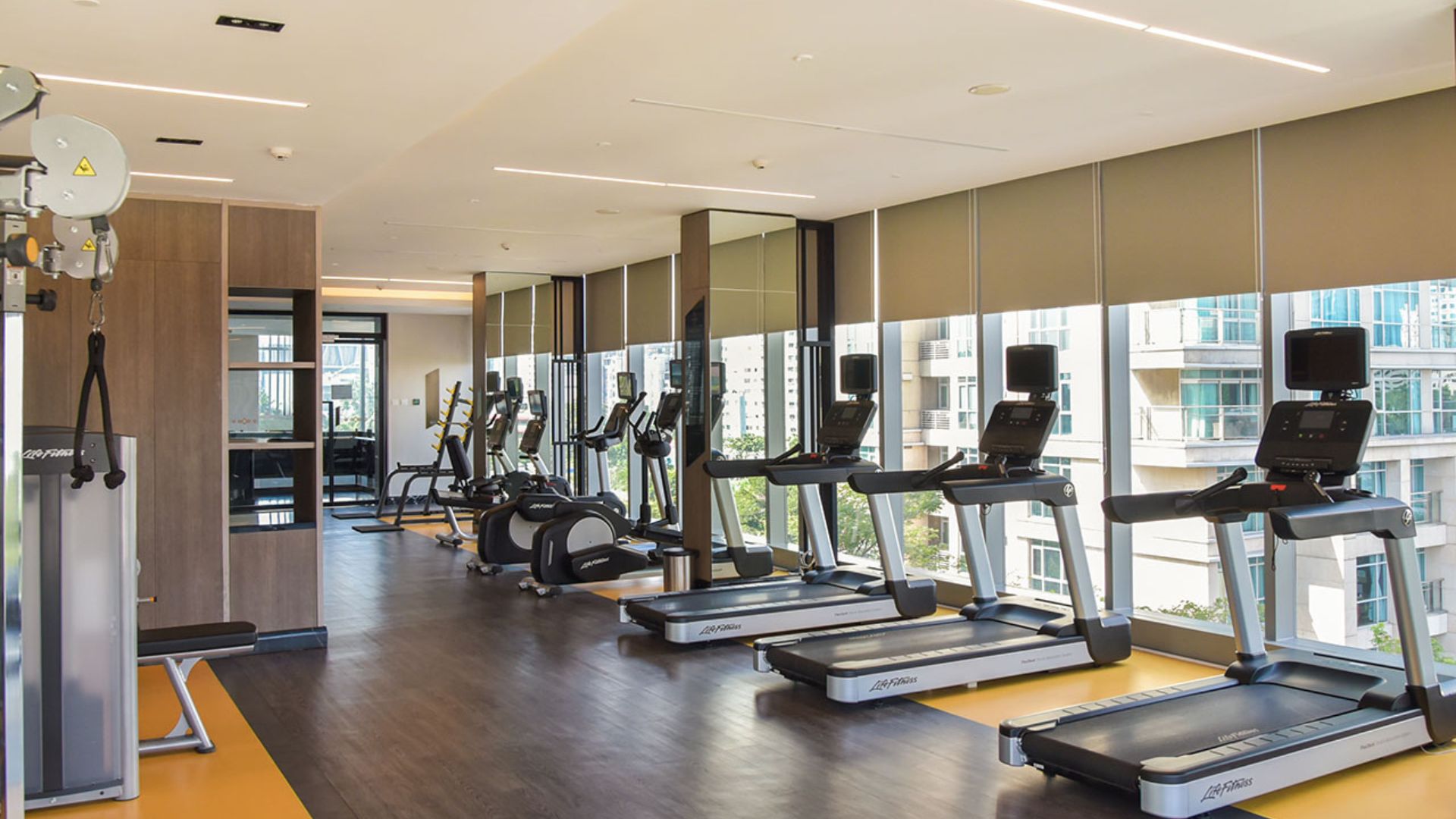
Casa Domaine is a strong fit for assignees whose work life is centred around Sudirman, Thamrin, or Kuningan. Its location on Jl. KH Mas Mansyur gives quick access to the CBD, and the building has the kind of professional management that matters when HR does not want to be pulled into every maintenance issue.
It is especially suitable for senior leaders or families who need the office commute to be simple. What it does not offer is the quieter neighbourhood feeling of South Jakarta. For some assignees, that is a worthwhile trade-off. For others, especially families who want parks, schools, and weekend routines nearby, it may feel too business-district focused.
Samara Suites — Gatot Subroto
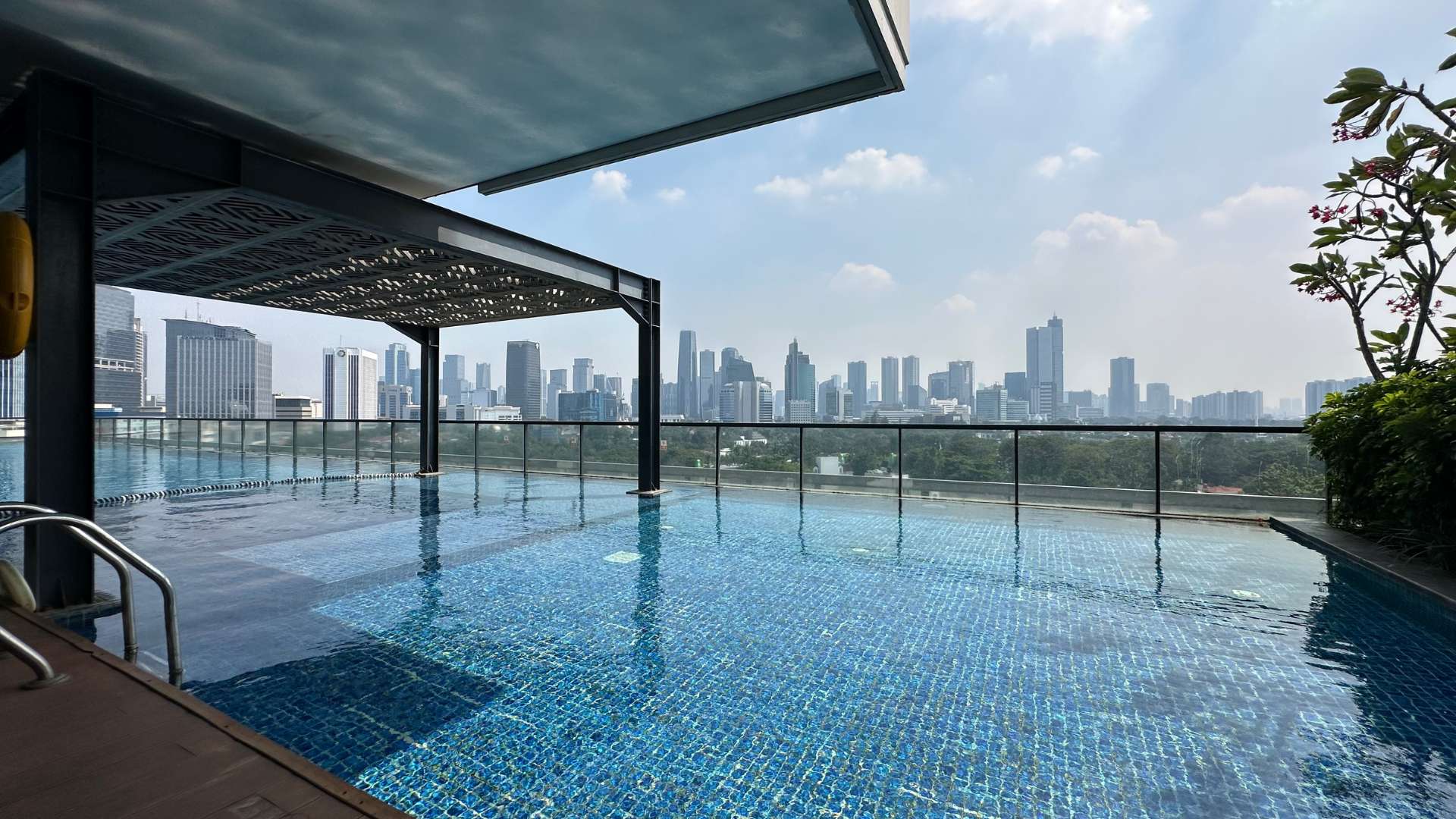
Samara Suites offers a useful middle ground: central enough for business access, but often more balanced in price and positioning than the top-tier Sudirman addresses. It can work well for professionals, couples, or smaller families who want convenience without overextending the housing budget.
Its appeal is practical rather than showy. The building has solid facilities, responsive management, and access to multiple business districts. It is a good option when a company wants quality and reliability, but does not need a trophy address to be part of the package.
Anandamaya Residences — Sudirman
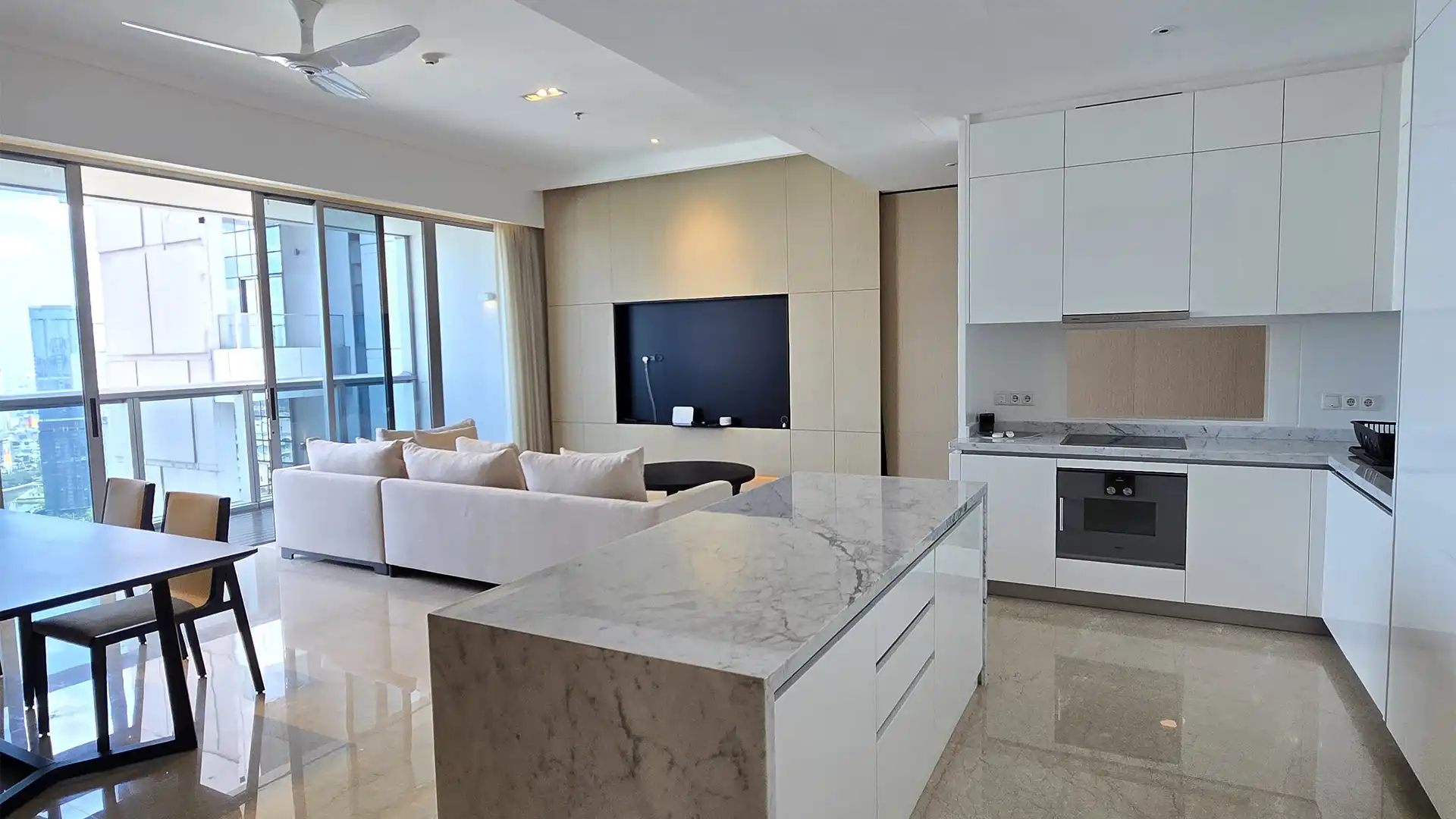
Anandamaya Residences is one of Jakarta’s best-known premium addresses. It has a strong reputation among senior expatriates, polished facilities, and a central location that suits executives whose working week is anchored around Sudirman.
The honest caution is availability. Larger family layouts can be limited, and good units do not sit on the market for long. If Anandamaya is the preferred building, the search should begin early and a second-choice option should be kept ready.
Atmaya Residence — Cilandak, South Jakarta

Atmaya Residence in Cilandak is better suited to assignees who want a quieter South Jakarta base rather than a central high-rise lifestyle. It offers good access to Kemang, TB Simatupang, and several international school corridors, which makes it especially relevant when school location is driving the housing decision.
It is a sensible fit for a professional or small family whose office is outside the CBD, or for someone who values neighbourhood feel over being close to Sudirman. It is not ideal for an assignee who needs to be in central Jakarta early every morning. In that case, the commute can quickly become the hidden cost of an otherwise attractive home.
The Family Assignment: Where Most Programmes Underinvest
Solo assignments are operationally complex. Family assignments are complex and emotionally loaded, and the two do not resolve in the same way.
The most common point of failure in family assignments is not the immigration, the housing, or the school search — it is the trailing spouse. A partner who arrives without work authorisation, without a professional network, and without a clear identity in the new city will begin to struggle within the first three months. That struggle does not stay contained. It affects the assignee’s focus, the family’s stability, and — in a pattern that global mobility data consistently confirms — the assignment completion rate.
Indonesian visa regulations create a specific structural challenge here. A spouse who relocates on a dependent KITAS does not automatically have work rights. If the trailing partner has a professional identity — a career, not just a job — that restriction needs to be addressed directly in the pre-departure conversation, not discovered on arrival.
The family relocation plan should explicitly cover:
- School place confirmed before housing is finalised
- Trailing spouse briefed on work authorisation reality before departure
- Community access: international clubs, professional groups, and expat networks that the spouse can join independently of the assignee’s company
- Children’s activities identified before the first week — the difference between a child who thrives and one who struggles in Jakarta often comes down to whether they have a routine and social connection within the first month
- Healthcare: establish GP, pediatrician, and nearest suitable emergency hospital before the family needs them
- Household staff guidance: for many assignees arriving from Europe or North America, managing household staff is a new dynamic, and the norms around hiring, compensation, and working conditions in Indonesia differ from what they expect
Common Challenges in Indonesia Assignments: The Honest List
These are the issues that appear most consistently in assignment debrief conversations, grouped by when they typically surface.
In the first month
- Immigration processing taking longer than the assignee was briefed — particularly if the sponsoring entity has not processed a foreign worker permit recently
- Temporary accommodation running long because the home search was started too late or the lease negotiation took longer than expected
- Bank account and mobile setup delayed because the KITAS card is not yet issued
- Lease payment shock: the advance rent requirement was not factored into the relocation budget
In months two to four
- Housing dissatisfaction from a rushed decision — building management problems, noise, traffic access that looked fine on a Saturday but is unworkable at 7:30am on a school day
- Communication misreads: the assignee believes their team is aligned and delivering; the team is practising Asal Bapak Senang and the problem only becomes visible at a critical deadline
- School commute creating daily family stress — a problem that is extremely difficult to resolve without moving house
- Trailing spouse struggling without structure or professional engagement
In months five through twelve
- Lease renewal conflict: the assignee wants to move to a better property, but the advance payment means breaking the current lease carries a significant financial penalty
- Maintenance issues left unresolved by the landlord or building management, creating ongoing frustration
- Assignment extension or early return discussion triggered by family adjustment failure, not professional performance
How NOBLE ASIA Supports Corporate Relocation in Indonesia
NOBLE ASIA is a Jakarta-based destination services provider with two decades of experience supporting corporate assignees, HR teams, global mobility partners, and embassies across Indonesia. The team manages relocation end-to-end, from pre-departure planning through departure support, and maintains ongoing tenancy management for assignees who need a local contact point after move-in.
Corporate relocation support typically includes:
- Pre-arrival consultation — area guidance, housing shortlisting, cost briefing, and timeline preparation before the assignee books their flight
- Home search — property selection based on office and school location, commute testing, building management assessment, and lease review
- School search guidance — school identification, application support, and coordination of the school-housing sequence
- Settling-in support — bank account guidance, mobile setup, internet coordination, local orientation, healthcare introduction, and household staff guidance
- Tenancy management — ongoing support for repairs, landlord communication, building management, renewal coordination, and move-out
- Office search and commercial property advisory, when relevant to the assignment
For companies managing multiple assignments or establishing a new Indonesia programme, Noble Asia can also serve as the on-ground coordination partner for HR, reducing the operational load on the global mobility team.
Contact: connect@nobleasia.id | WhatsApp: +62 813 1668 5505
Final Thought: Indonesia Rewards Preparation, Not Assumptions
A successful Indonesia assignment is rarely about solving one big problem. It is about getting dozens of smaller decisions right, in the right order, before they begin to affect one another. Immigration shapes the arrival date. School placement shapes the neighbourhood. The neighbourhood shapes the commute. The commute shapes family rhythm. Cultural understanding shapes whether the assignee can lead effectively once the boxes are unpacked.
This is why Indonesia should not be treated as a standard regional move with a few local notes added at the end. It deserves early planning, honest briefing, and people on the ground who understand both the formal process and the informal realities that make daily life work here.
For HR teams, the goal is not simply to move an employee into Indonesia. The goal is to give that person — and, where relevant, their family — enough structure, context, and confidence to begin well. When that happens, the relocation becomes more than a logistical exercise. It becomes the foundation for a productive assignment, a steadier family transition, and a better first year in Indonesia.
Frequently Asked Questions
How far in advance should the immigration process start for an Indonesia assignment?
Start at least twelve weeks before the intended arrival or start date. Indonesia’s work authorisation process is not something HR should try to compress at the end. The RPTKA and related manpower approvals need to be in place before the KITAS process can move properly, and the timeline can stretch if the sponsoring entity has not handled a foreign worker application recently. The safest approach is to treat immigration as the first critical-path item, not as an administrative step that can wait until travel plans are nearly fixed.
Can a trailing spouse work in Indonesia on a dependent KITAS?
No, not automatically. A dependent KITAS allows the spouse to live in Indonesia, but it does not give them the right to work. If the spouse expects to continue their career, this needs a serious conversation before the move is accepted. Depending on the situation, they may need a separate work permit arrangement or another compliant structure, but this cannot be assumed. Leaving the question until after arrival often creates frustration, especially for partners who have stepped away from an established professional life to support the assignment.
Why do Jakarta leases require annual advance payment — is it negotiable?
Annual advance payment is normal in Jakarta, particularly for the homes most corporate assignees will consider. For many landlords, twelve months upfront is simply the expected structure. There may be room to negotiate a split payment, such as six months plus six months, especially for a strong corporate tenant or a longer lease, but monthly payment is uncommon. HR teams should therefore budget from the annual figure, not from the monthly rental number shown in a property listing.
Should the company prioritise school search or home search first?
For families with children, the school search should come first. Jakarta traffic makes this non-negotiable. A home that looks ideal on paper can become the wrong decision if it creates a difficult school run every morning and afternoon. International school places are also not guaranteed, especially in popular year groups, so the family needs to know where the children can realistically enrol before choosing where to live. Once the school location is clear, the housing search becomes much smarter and far less stressful.
What is the single most commonly overlooked item in Indonesia relocation budgets?
Advance rent is the item most often underestimated. A company may approve a monthly housing allowance and then discover that the landlord expects twelve months upfront, plus a security deposit and sometimes other move-in costs. In practice, the cash needed at lease signing can be much higher than the monthly rent suggests. This should be built into the relocation budget before the property search begins, so the assignee is not left negotiating under pressure after finding the right home.


Join The Discussion