
Most cost of living guides for Jakarta eventually say the same thing: it depends. True, but not very helpful when you are trying to decide whether a move is financially realistic. What you really need is a clearer answer: if you are moving to Jakarta in 2026 as a single expat or professional, what will everyday life actually cost?
This guide gives you practical numbers, but it also covers the part many guides skip: the housing decisions that shape almost everything else. For a single person relocating to Jakarta, your apartment affects far more than rent. Its location, building management, lease structure, and surrounding neighbourhood will influence your commute, your social life, your monthly budget, and how quickly the city starts to feel manageable. Choose well and Jakarta becomes much easier to settle into. Choose badly and even a reasonable budget can start to feel stretched.
Is Jakarta Expensive for a Single Expat in 2026?
Compared with Singapore, Hong Kong, or Tokyo, Jakarta is not especially expensive. Compared with the version of Jakarta many people imagine before they arrive, it can be more costly than expected.
That is because Jakarta operates on several very different price levels at once. You can eat an excellent plate of nasi goreng at a neighbourhood warung for very little. But once you add a reliable apartment, a gym, stable internet for video calls, regular ride-hailing, air-conditioning, and the occasional imported grocery run, the monthly total rises quickly.
A useful way to think about the cost of living Jakarta singles 2026 conversation is to break it into three realistic lifestyle levels. Many single expats arrive aiming for the lower end, then move up slightly once they understand what daily comfort in the city really requires.
Simple lifestyle — IDR 10 to 18 million per month. This usually means a modest apartment or room, mostly local food, and careful use of public transport or ride-hailing. It can work for younger professionals and locally hired expats, especially if they are open to local routines and do not expect Western-style convenience at every turn.
Comfortable professional lifestyle — IDR 20 to 40 million per month. This is where most single expats eventually land: a decent apartment in a managed building, regular meals out, a gym membership, ride-hailing for commuting and social plans, and a mix of local and imported groceries. At this level, living in Jakarta as a single expat starts to feel less like a budget exercise and more like a normal life.
Premium expat lifestyle — above IDR 45 million per month. This covers luxury apartments in Sudirman, SCBD, or other prime addresses, frequent international dining, private transport, and premium services. At this level, Jakarta can be very comfortable by international standards while still costing less than a comparable lifestyle in Singapore.
The number most singles underestimate: The first three months usually cost more than your normal monthly budget. Advance rent, deposits, household setup, and the spending that comes with learning a new city all arrive at once. Keep a separate setup budget and do not judge month one against your long-term target.
Housing in Jakarta: The Decision That Shapes Everything Else
For a single person in Jakarta, housing is more than the biggest item in the budget. It decides how long you spend in traffic, which neighbourhood becomes your daily base, how easy it is to meet people, and whether home feels comfortable or constantly inconvenient. A poor housing choice is also expensive to undo, because Jakarta leases are often paid far in advance.
Before you start viewing apartments for singles Jakarta, answer three questions honestly. Where is your office? Do you care more about being close to work or close to restaurants, friends, and nightlife? And how much Jakarta traffic are you genuinely willing to tolerate every day?
That last question is easy to underestimate. A 45-minute commute may sound manageable until you do it twice a day for several weeks. In Jakarta, five kilometres can take fifteen minutes or almost an hour depending on the route, the weather, the time of day, and whatever else is happening in the city. A property that looks close on a map may not feel close at 8am on a Monday.
Before you sign anything: Test the actual commute. Not on a Sunday afternoon. On a weekday morning, from the apartment building to your office door, at the time you would actually leave. That one trip will tell you more than any map.
What kind of building matters as much as which neighbourhood
Single expats in Jakarta generally choose between three types of housing: a kost-style room or budget apartment, a mid-range apartment in a managed building, or a premium residence. The difference is not only price. It is also the kind of daily life each option gives you.
Budget accommodation can make sense if you want a more local experience and your expectations are set accordingly. The trade-offs are usually smaller rooms, fewer facilities, inconsistent maintenance, and building management that may be limited or informal. If you travel often and mostly need a place to sleep, it can be a reasonable choice. If you want to cook, work from home, host friends, or simply feel comfortable after a long day, the savings may not be worth the frustration.
Whatever your budget, one piece of advice matters more than almost anything else: choose a building with professional on-site management. It sounds basic, but it only feels obvious after you have spent days waiting for a broken air-conditioning unit to be fixed.
Many standalone rental units and privately owned apartments depend entirely on the landlord to arrange repairs. When something breaks, the landlord calls a freelance technician, and that technician comes when available. In a city where temperatures are regularly hot and humid, waiting several days for air-conditioning repairs is not a small inconvenience.
A professionally managed building has staff on site, clear reporting channels, and people whose job is to solve building problems. For someone new to Jakarta without a support network yet, that can make the difference between a minor issue and a week of unnecessary stress.
Not sure where to start your search? Browse Noble Asia’s residential listings — filtered by area, building type, and budget, with honest descriptions of what each building is actually like to live in.
The lease structure you need to understand before you search
Jakarta apartment advance rent explained simply: residential leases are usually paid one year in advance. Not monthly, and usually not quarterly. Twelve months upfront, plus a security deposit, is normal market practice. It is not necessarily a warning sign, but it does surprise many first-time renters.
In practical terms, a unit quoted at IDR 15 million per month may require IDR 180 million in rent upfront, plus around IDR 30 million as a two-month deposit. That is IDR 210 million before furniture, utilities, groceries, or household setup. Know this figure before you fall in love with a property.
Some landlords may accept two payments, especially for longer leases or corporate tenants: six months at the start and six months later. It is worth asking. But do not assume monthly payment is available. It usually is not, and pushing too hard for it can make a landlord question your reliability as a tenant.
The Neighbourhoods: Who Each Area Is Actually For
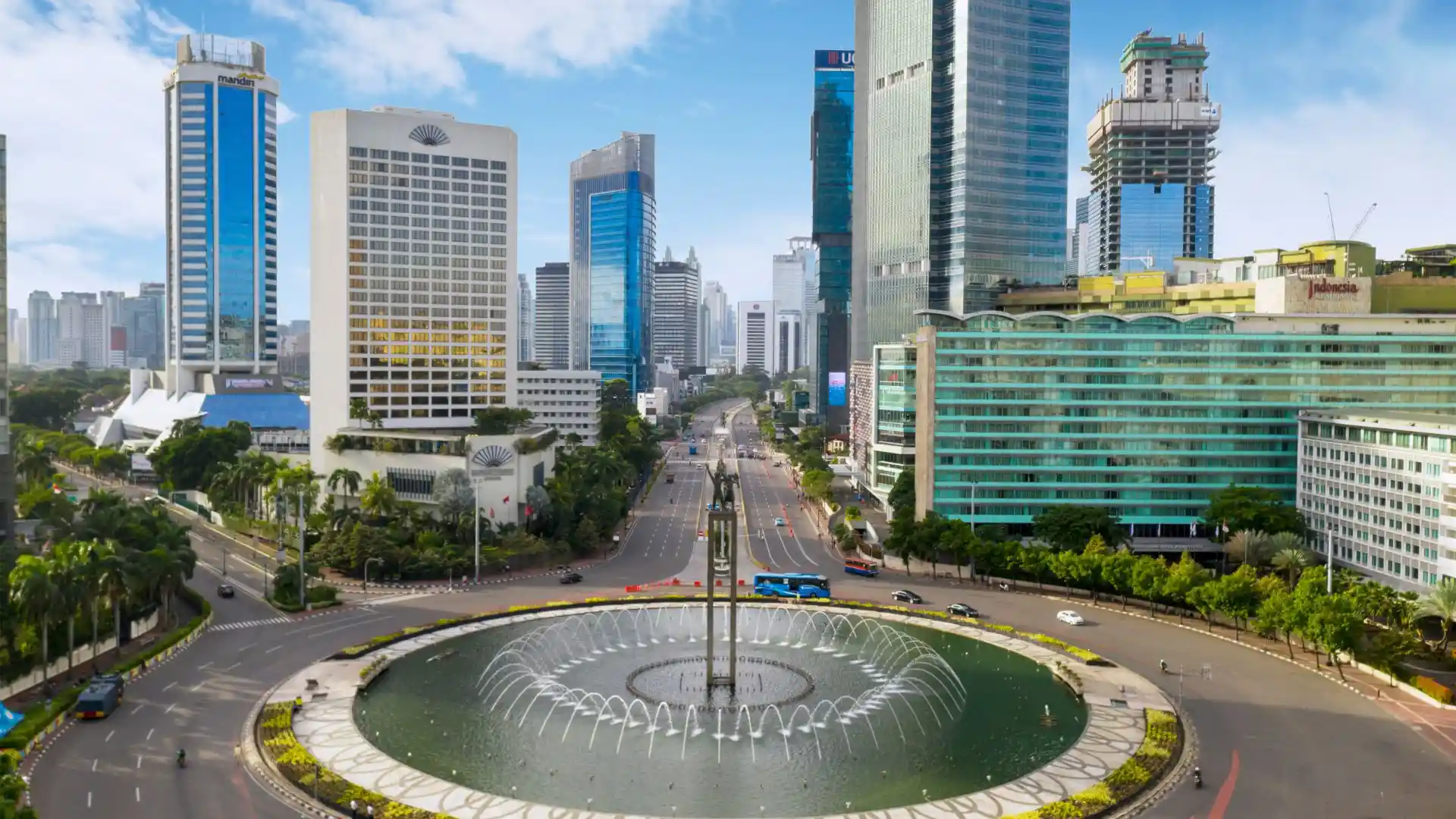
The best neighbourhoods Jakarta expats choose are not interchangeable. Each area suits a different kind of routine. A beautiful apartment in the wrong neighbourhood can still create daily friction, especially if your work, social life, and commute are pulling you in different directions. Here is a more realistic view of who each area is actually for.
Sudirman and Thamrin — for the zero-commute professional
Sudirman and Thamrin form Jakarta’s main business corridor. If your office is here, living nearby can remove the commute almost completely. Buildings such as Casa Domaine, Le Parc Residence, and Kempinski Private Residence offer strong management, reliable maintenance, and immediate access to major offices. The trade-off is density. This is a city-centre environment, not a quiet cafe neighbourhood.
Right for: professionals working in the CBD who want to walk to the office, use the MRT easily, and have delivery and services close by. Less right for: anyone looking for a softer neighbourhood feel, casual street life, or a social routine built around cafes and community.
SCBD and Senopati — for the professional who also wants a life
SCBD and Senopati are among the most popular areas for single expats, and the appeal is easy to understand. SCBD combines offices, restaurants, bars, gyms, and premium residences in one compact district. Senopati adds a more lived-in neighbourhood feel, with independent cafes, restaurants, quieter streets, and a strong mix of expats and young Indonesian professionals.
Residences such as Samara Suites, District 8, and other SCBD apartments Jakarta options attract people who want work and social life close together. If you are new to the city and want a neighbourhood that makes it easier to meet people, SCBD and Senopati are often the strongest starting point.
Interested in SCBD or Senopati? Talk to a Noble Asia consultant about which buildings in this area have availability, what the real lease terms look like, and what has changed in the past six months.
Kuningan — for the diplomat or corporate professional
Kuningan is Jakarta’s embassy district, with strong business access, a broad range of apartment prices, and a slightly more international feel than many parts of the CBD. It is popular with diplomats, development organisation staff, and corporate professionals based around Mega Kuningan. Oakwood Suites Kuningan is a good example of the kind of serviced residence newly arrived expats often appreciate: practical, easy to manage, and useful during the first few months before you know the city well enough to choose a long-term home with confidence.
Kemang — for the expat who wants community over convenience
Kemang has been an expat neighbourhood for decades, and you can feel it in the area’s independent restaurants, international grocery options, weekend markets, and easy familiarity. The commute to the CBD is real, so plan around 30 to 45 minutes each way during morning traffic. But for singles who value community, social connection, and a more relaxed urban feel over a short commute, Kemang still earns its reputation.
Menteng — for the professional who wants quiet and centre
Menteng is central, leafy, and more residential than the CBD. It has a calmer atmosphere, larger homes, and easy access to the city centre without the same noise and density as Sudirman. Most single expats here choose apartments rather than houses, but the area still feels quieter and more settled. It suits professionals who want a peaceful home base and do not mind a 15- to 20-minute commute to most CBD offices.
Pondok Indah — for the single expat who thinks like a family
Pondok Indah is more suburban, more spacious, and more removed from Jakarta’s daily intensity. It has a large expat community, excellent hospitals and clinics, major malls, and a residential feel that appeals to people who want to feel settled rather than constantly stimulated. For single expats who work partly from home, travel often, or simply want a calmer base, it is worth considering even with the longer commute.
Not sure which neighbourhood fits your office location and lifestyle? Explore Noble Asia’s Jakarta area guides — each area broken down by commute, building options, lifestyle, and price range.
The Rest of the Budget: What Singles Actually Spend
Food — the variable you control most
Jakarta is one of Southeast Asia’s best food cities, which is good news for your budget. Local food is genuinely excellent and genuinely affordable. A full meal at a warung or food court can cost a fraction of what you would pay for a comparable meal in Singapore or Kuala Lumpur. The fastest way to overspend is to rely too heavily on imported groceries and international restaurants simply because they feel familiar. You do not need to avoid them, but a routine that mixes local favourites with occasional international meals keeps costs sensible without making daily life feel restrictive.
Food delivery is everywhere in Jakarta, and it is dangerously convenient. Gojek and Grab can bring almost anything to your door, almost anywhere, at almost any hour. The problem is not one expensive order. It is the quiet habit of spending IDR 50,000 several times a day without noticing. Set a delivery budget for the first few months while you figure out where to eat well for less.
Transport — the decision that lives or dies with your housing choice
If you choose your apartment well — close to your office or near the MRT — transport costs are much easier to manage. Jakarta’s MRT runs from Lebak Bulus in South Jakarta through Sudirman and toward Kota, with fares that are low by international standards. For the commuting part of your day, it is usually the most reliable option in the city.
Transport costs tend to expand in the evenings and on weekends, when ride-hailing becomes the default for social plans across a city where very little feels nearby. That does not mean you need to avoid going out. It simply means ride-hailing should be treated as a real monthly budget item, not a handful of small charges you only notice at the end of the month.
Private drivers are common among senior executives and families, but most single professionals do not need one. Unless your role involves frequent meetings across the city, ride-hailing usually covers daily life well enough and gives you more flexibility.
Utilities and the lease small print
Before you sign a lease, confirm the practical details directly instead of assuming they are covered by the listing. Ask whether electricity is included or billed separately, whether the service charge is part of the rent, whether internet is already installed or requires a separate contract, whether parking is included, and whether the unit is truly functional as a furnished apartment. Furnished should mean more than a bed and a sofa; it should include working appliances, basic kitchen equipment, and the essentials you need to live there from day one.
Electricity in Jakarta is metered, and for larger apartments where the air-conditioning runs most of the day, the bill can be higher than expected. A furnished apartment in a premium building with air-conditioning on from morning to night can generate an electricity bill that surprises newly arrived expats. Before signing, ask the previous tenant or building management what the typical monthly electricity cost is for that exact unit. It should be part of your budget calculation, not a surprise after move-in.
Healthcare — set this up before you need it
Jakarta has good private healthcare through established hospitals such as RS Pondok Indah, Siloam, Mitra Keluarga, and others. For standard medical needs, the quality is generally reliable. What catches single expats off guard is usually not the care itself, but the cost of using private hospitals without proper coverage.
If your employer provides health insurance, read the policy before you arrive. Check dental, mental health, specialist consultations, emergency treatment, and medical evacuation, because these benefits are often capped or excluded. If you are relocating independently, arrange supplementary coverage before departure. Healthcare is not a category to improvise once you are already dealing with an illness or injury in a new city.
Nightlife and alcohol — the budget line that surprises almost everyone
This is one of the budget lines that catches people off guard: alcohol in Jakarta is expensive. It is not quite Singapore expensive, but it costs far more than many newcomers expect from a city where local food, transport, and services can feel relatively affordable. A beer at a mid-range bar often sits around IDR 60,000 to IDR 100,000. Cocktails at a rooftop bar, lounge, or nightclub usually start around IDR 150,000 and climb quickly from there. Club bottles are in a different category altogether.
A big part of the reason is tax. Indonesia places substantial excise duties on alcohol, so the drink that feels inexpensive in Bangkok or Ho Chi Minh City may cost several times more in Jakarta. For singles who go out often, this is one of the fastest ways a comfortable monthly budget quietly turns into a premium one.
It is also worth correcting a common assumption. Jakarta has a genuinely active nightlife culture. Central and South Jakarta, especially around SCBD, Senopati, Kemang, and Menteng, have busy bars, pubs, live music venues, restaurants, and clubs. The expat community goes out, young Indonesian professionals go out, and the city does not suddenly close down after dinner.
What is true is that alcohol is not available everywhere, and the tone of a night out can change a lot by neighbourhood. Some restaurants and areas are dry or more family-oriented, while SCBD, Senopati, Kemang, and parts of Menteng offer plenty of options for expats looking for bars Jakarta expats actually use. If nightlife is part of your social routine, treat it as a real monthly cost rather than an occasional extra.
Practical note: If your social life involves regular nights out, add IDR 3 to 8 million per month to your lifestyle budget depending on how often and where you go. Rooftop bars and clubs in SCBD will take you to the higher end of that range faster than you expect.
A Note for Female Expats: What Nobody Prepares You For
This section is for women relocating to Jakarta alone. Not because the experience is always harder, but because it can be different in ways standard relocation briefings rarely explain. Those differences often become noticeable a few months in, once the excitement of arrival has settled and daily life starts to feel more permanent.
The first few months are often exciting. Jakarta is welcoming, the food is excellent, weekends away are easy to plan, and many women find they can afford a larger and more comfortable home than they had before. That sense of independence is real, and for many female expats Jakarta can be professionally and personally rewarding.
Over time, though, the social landscape becomes clearer. Making close Indonesian female friends may take longer than expected. Many Indonesian women in their 20s and 30s have full family, work, religious, and community commitments, so friendships often develop through repeated contact rather than spontaneous after-work plans. The connection can absolutely happen, but it usually takes patience and consistency.
Dating in Jakarta as a foreign woman can also feel different from dating in many Western cities. Some Indonesian men may be hesitant to approach foreign women because of language confidence, assumptions about cultural differences, or family expectations around religion and long-term relationships. This is not a universal rule, but it is common enough that many women notice it.
The practical effect can feel like social invisibility, especially for someone who was used to meeting people easily back home. It is not necessarily rejection. Often, it is simply hesitation, uncertainty, or different social rules. The expat dating scene exists, but it can be transient and uneven, with people on short assignments or in complicated life stages. For some women, that combination takes time to adjust to.
That adjustment is easier when you expect it. A woman who moves to Jakarta assuming her social and romantic life will follow the same pattern as it did at home may feel isolated by month five. A woman who understands from the beginning that Jakarta’s social architecture works differently can build her support system more intentionally and avoid taking the slower pace personally.
What actually helps:
- Choose your neighbourhood with social infrastructure in mind. Kemang and Senopati have a strong concentration of expat community life, international cafes, fitness studios, and events where friendships can form more naturally. A CBD apartment that only connects you to the office may feel efficient at first but narrow later.
- Build community early, ideally in the first 60 days. Look for women’s networks, expat running groups, fitness studios, language classes, professional associations, volunteer organisations, or any group that matches how you naturally like to meet people.
- Use co-working spaces if you work hybrid or remotely. International co-working spaces in Kemang, SCBD, and nearby business areas can provide regular human contact and a community of people adjusting to the city in similar ways.
- Remember that the social dynamic is cultural, not personal. Slower friendship-building or hesitation in dating does not mean you are doing anything wrong. It simply means Jakarta may require a more intentional approach.
Jakarta can be safe, interesting, professionally rewarding, and genuinely liveable for a solo woman. The key is to treat community-building as part of the relocation plan, not something to figure out only after loneliness appears.
What Singles Consistently Forget in the First Month
Most people remember the big decisions. It is the small practical details that pile up.
- Temporary accommodation while the housing search is completed. Try not to commit to a permanent lease from abroad under pressure. Arrive, spend one or two weeks in a serviced apartment or hotel, view properties properly, and sign the right lease rather than the first available one.
- The household setup spend in week one. Even a furnished apartment needs extras: kitchen tools, climate-appropriate bedding, a water dispenser, storage, cleaning supplies, and the small items that make a space feel liveable rather than temporary.
- SIM card and mobile data registration. Indonesian SIM cards require passport registration. It is usually straightforward, but do it on day one so you are not stuck without data while trying to navigate a new city.
- Bank account timing. Many banks require your KITAS card before opening an account, and the card may arrive a few weeks after immigration registration. Keep enough cash or card access available for that gap.
- SKTT registration. After receiving your KITAS card, you usually need to register at the local civil registry office within the required timeframe. It sounds like a minor administrative step until you need it for banking or other formal processes.
- The social gap in month two. The first few weeks feel exciting. Then the novelty fades, routines begin, and the absence of your usual social structure becomes obvious. This is normal and manageable if you start building community early through expat groups, sports, language classes, professional networks, or whatever fits your personality.
Finding the Right Home in Jakarta: Where Noble Asia Comes In
For a single expat arriving in Jakarta, the housing search is one of the most important decisions of the relocation. The right apartment, in the right building and neighbourhood, makes the rest of the adjustment much easier. The wrong one creates small daily problems that can last for the full lease.
Noble Asia has helped single professionals, expats, and executives find homes in Jakarta for more than two decades. The value is not only access to listings. It is knowing which buildings are well managed, which landlords respond quickly, which neighbourhoods match different work and social routines, and how to approach lease terms so the advance rent and deposit are clear from the beginning.
For a single expat, that local knowledge can save weeks of trial and error, especially during the period when you are also starting a new role, learning the city, and setting up daily life.
Noble Asia’s support for single expats finding a home in Jakarta typically includes:
- Area and neighbourhood consultation — honest assessment of which areas fit your office location, budget, and lifestyle before you waste viewings on the wrong neighbourhoods
- Property shortlisting — a curated set of options based on your specific brief, not a portal dump of everything available
- Viewing coordination — scheduling and accompanying viewings so you are comparing properties with someone who knows what to look for and what questions to ask
- Lease review and negotiation — payment structure, deposit terms, repair obligations, move-in condition, and the lease clauses that matter most for a single expat
- Move-in inspection — documenting the condition of the property before you take occupancy, which protects your deposit when you leave
- Settling-in support — bank account guidance, mobile setup, SKTT registration, local orientation, and the practical setup that turns an apartment into a functioning home
- Tenancy management — a local contact for repairs, landlord communication, and lease renewal when the time comes
Ready to find your apartment in Jakarta? Tell us your office location, your budget, and what kind of building matters to you. We will shortlist options that actually fit — and save you the month of trial and error most expats go through on their own.
📩 connect@nobleasia.id | 📞 WhatsApp: +62 813 1668 5505 | Talk to a local expert →
Questions Singles Ask Before They Move
How much does it cost to live in Jakarta as a single expat in 2026?
A comfortable professional lifestyle — decent apartment in a managed building, regular dining out, ride-hailing, gym, groceries — runs IDR 20 to 40 million per month, excluding advance rent and setup costs. A simple lifestyle can be managed for IDR 10 to 18 million. A premium lifestyle with a luxury address and private transport runs above IDR 45 million. The first three months cost significantly more than the steady-state monthly figure — plan a separate setup budget.
Do I need to pay rent a year in advance in Jakarta?
Yes, in almost all cases. Annual advance payment is market standard for residential leases in Jakarta. A two-payment structure (six months and six months) is sometimes negotiable, particularly for longer leases. Monthly payment is rarely available. Know the full cash requirement — twelve months plus two months’ deposit — before you begin viewing properties.
Which neighbourhood is best for a single expat in Jakarta?
It depends on your office location and what matters more to you — convenience or community. SCBD and Senopati is the strongest area for single expats who want work access and social infrastructure together. Sudirman and Thamrin suits professionals whose office is in the CBD and who want to eliminate the commute entirely. Kemang suits those who prioritise lifestyle and community over a short commute. The Noble Asia area guides break each area down by commute, building options, and lifestyle before you commit to a search.
Do I need a car as a single person in Jakarta?
Probably not, unless your role involves frequent cross-city meetings. Most single expats manage well with the MRT for the commute leg and ride-hailing (Gojek, Grab) for everything else. A private driver arrangement makes more sense for families or executives with daily meeting schedules across the city. Budget ride-hailing as a real monthly line item — daily reliance adds up faster than most people expect.
How do I find a good apartment in Jakarta without wasting months on the wrong options?
Work with someone who knows the buildings, not just the listings. Online property portals show what is available. They do not tell you which buildings have responsive management, which landlords honour their lease conditions, or which neighbourhood will suit how you actually live. Noble Asia’s housing search service is built for exactly this: shortlisting the right properties for your specific situation, handling the lease negotiation, and making sure the apartment you move into is the apartment that was described — not a version of it that looked better before you signed.
What is the most important thing to check before signing a Jakarta lease?
The electricity billing arrangement. It is the cost most renters do not think about until the first bill arrives. Ask the building management or previous tenant what a typical monthly electricity bill looks like for the specific unit at normal usage. In a Jakarta summer — which is to say, any month of the year — air-conditioning running through the day can generate a bill that materially changes the real monthly cost of the apartment.