For anyone living in Indonesia, the word Pancasila appears more often than expected. You may hear it during school ceremonies, national events, public speeches, office commemorations, or conversations about Indonesian identity. For Indonesians, it is not just a formal word from history books. It is part of the country’s national foundation.
But for many newcomers, especially expats living in Jakarta, Bali, or other parts of Indonesia, Pancasila can feel a little abstract at first. Is it a philosophy? A political idea? A national value system? A moral guide?
The simple answer is: Pancasila is Indonesia’s national philosophy and state foundation. It consists of five principles that help explain how a country with thousands of islands, hundreds of ethnic groups, many local languages, and different religious communities can stay connected as one nation.
Pancasila was first introduced by Sukarno in a historic speech on June 1, 1945, during a BPUPKI session as Indonesia was preparing for independence. That moment is now remembered as the Birth of Pancasila, or Hari Lahir Pancasila
For expats and long-term residents, understanding Pancasila is useful because it gives context to Indonesian life. It helps explain why unity, religion, politeness, deliberation, community, and social harmony are so important here.
What Is Pancasila?
The word Pancasila comes from Sanskrit. Panca means five, while sila means principles or foundations. In Indonesia, Pancasila refers to the five official principles that form the philosophical basis of the state.
The five principles are commonly understood as:
- Belief in the One and Only God
- Just and Civilized Humanity
- The Unity of Indonesia
- Democracy Guided by Deliberation and Representation
- Social Justice for All Indonesians
These principles are included in the preamble of Indonesia’s 1945 Constitution and continue to shape the country’s national identity.
Why Pancasila Matters in Indonesia
Indonesia is not a small or culturally uniform country. It stretches across a vast archipelago and includes many ethnicities, religions, languages, customs, and regional identities. A person in Aceh may have a very different daily culture from someone in Bali, Papua, Java, or Sulawesi.
So, what holds all of this together?
Pancasila acts like a shared roof over many different rooms. Each room may have its own language, customs, food, traditions, and way of life. But the roof keeps everyone under the same national home.
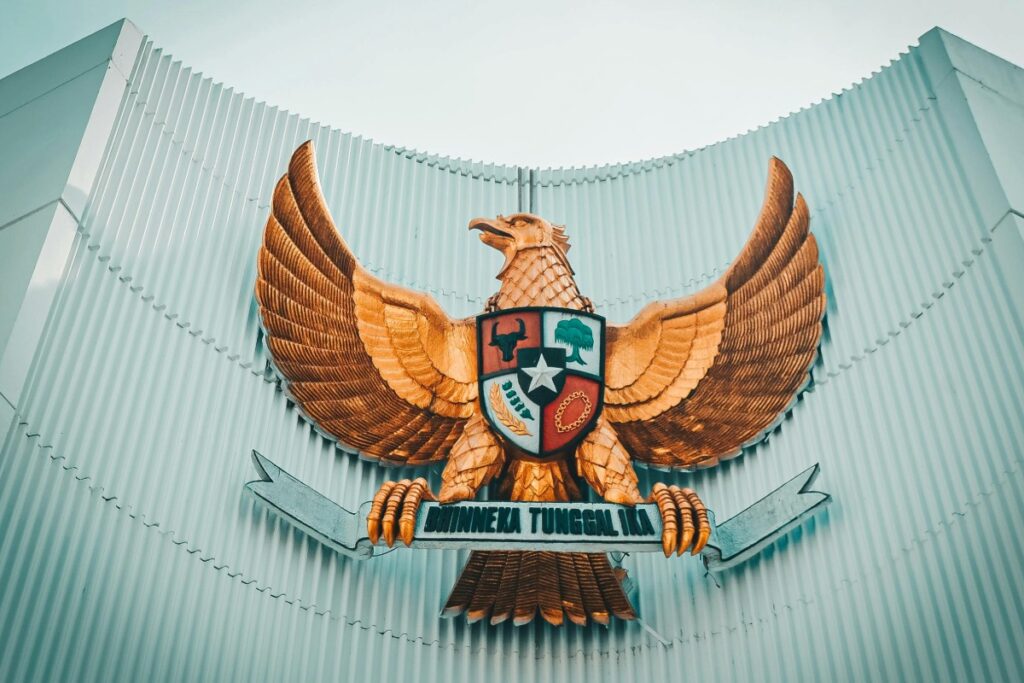
This is why Pancasila is deeply connected to Indonesia’s motto, Bhinneka Tunggal Ika, which is commonly translated as Unity in Diversity. The motto is written on Indonesia’s national emblem, Garuda Pancasila, and reflects the idea that difference does not have to weaken unity.
The Historical Birth of Pancasila
The birth of Pancasila is closely tied to Indonesia’s journey toward independence.
On June 1, 1945, Sukarno delivered a speech before BPUPKI, the Investigating Committee for Preparatory Work for Independence. In that speech, he proposed a set of principles that could become the foundation of an independent Indonesia. This speech later became known as the Birth of Pancasila Address.
At that time, Indonesia was preparing to become a sovereign state. One of the most difficult questions was not only how to become independent, but also how to build a country that could include everyone.
Indonesia needed a foundation broad enough to unite Muslims, Christians, Hindus, Buddhists, Confucians, indigenous belief communities, Javanese, Sundanese, Balinese, Batak, Minangkabau, Papuan communities, and many others. It needed a national idea that did not belong to only one group.
Pancasila became that shared foundation.
It was not just a political formula. It was a national compromise, a philosophical anchor, and a way to imagine Indonesia as one nation without forcing every community to become the same.
The Five Principles of Pancasila
To understand Pancasila, it helps to look at each principle in a practical way. These principles may sound formal, but they are still visible in everyday Indonesian life.
1. Belief in the One and Only God
The first principle recognizes the importance of faith and spirituality in Indonesian society. Indonesia is not a secular country in the same sense as some Western countries, but it is also not built around only one religious identity.
Instead, this principle acknowledges belief in God while allowing different recognized religions to exist within national life.
For expats, this explains why religion is visible in many public spaces. You may notice prayer rooms in malls, offices, schools, and airports. You may hear the call to prayer from mosques. You may see public celebrations for Idul Fitri, Christmas, Nyepi, Vesak, and other religious holidays.
This does not mean every Indonesian practices religion in the same way. But it does mean that religious respect is an important part of social life. In daily interaction, greetings during religious holidays, sensitivity around prayer times, and awareness of religious customs are often appreciated.
2. Just and Civilized Humanity
The second principle focuses on humanity, dignity, fairness, and respect. It reflects the idea that people should be treated in a humane and civilized way.
In daily Indonesian culture, this can be seen in the importance of politeness, social harmony, respect for elders, and careful communication. People often try to avoid direct confrontation, not because honesty is unimportant, but because preserving dignity matters.
For example, in a workplace setting, feedback may be delivered gently rather than bluntly. In a neighborhood, people may prioritize friendly relationships even when discussing small problems. In family or community settings, maintaining harmony is often seen as part of being respectful.
For newcomers, this can take time to understand. A “yes” may sometimes mean “I hear you,” not necessarily “I fully agree.” A soft refusal may be expressed indirectly. This is where cultural awareness helps. Indonesia often values the bridge more than the loudest voice crossing it.
3. The Unity of Indonesia
The third principle is central to understanding the country.
Indonesia is made up of many local identities. People may strongly identify with their region, ethnic group, language, or cultural background. Yet, Pancasila emphasizes that these differences can still exist within one Indonesian identity.
This principle is especially important because Indonesia’s diversity is not symbolic. It is real, visible, and part of everyday life. Different regions have different foods, customs, dialects, traditional clothing, ceremonies, and social norms.
For expats, this means Indonesia may feel very different depending on where you live. Jakarta feels different from Bali. Bali feels different from Yogyakarta. Yogyakarta feels different from Medan, Makassar, or Manado.
Pancasila helps explain how these differences are connected. It does not erase local identity. It gives these identities a national frame.
4. Democracy Guided by Deliberation
The fourth principle describes Indonesia’s approach to democracy, with emphasis on consultation, representation, and deliberation.
A key concept here is musyawarah, which means discussion or deliberation to reach agreement. In practice, this reflects a preference for decision-making that considers group harmony and collective input.
You may see this in community meetings, workplace discussions, family decisions, and neighborhood matters. Rather than rushing into a decision based only on individual preference, people may prefer to talk through the issue and find a middle ground.
For expats working with Indonesian teams, this is important. Decision-making may sometimes feel slower, especially if you are used to direct and fast conclusions. But the process often reflects a desire to include different voices and avoid unnecessary tension.
Think of it like weaving. One thread alone does not make the fabric. The strength comes from many threads being carefully connected.
5. Social Justice for All Indonesians
The fifth principle focuses on fairness, welfare, and social justice for all citizens.
This principle reflects the idea that development should benefit society broadly, not only a small group. In a country with regional differences, income gaps, and uneven access to services, social justice remains an important national goal.
For expats, this helps explain why many public conversations in Indonesia include issues such as affordable housing, education, healthcare, public infrastructure, regional development, and community welfare.
You may also notice the importance of collective responsibility in daily life. Community support, charity, neighborhood cooperation, and mutual assistance are common parts of Indonesian society. The idea is not only “How do I succeed?” but also “How do we move forward together?”
Why Pancasila Was Important for a Diverse Nation
Indonesia’s diversity is one of its greatest strengths, but diversity also requires a strong foundation. A country with many islands, ethnic groups, languages, and religions needs a shared idea that can include different communities without forcing them into one mold.
Pancasila helped answer that challenge.
It gave Indonesia a national philosophy that could recognize faith, protect humanity, support unity, encourage deliberation, and promote social justice. These values helped shape Indonesia’s identity as a plural nation.
This is why Pancasila remains relevant today. It continues to remind Indonesians that unity is not about sameness. Unity is about choosing to belong together despite differences.
For expats, this is one of the most important ideas to understand. Indonesia is not one single cultural experience. It is a collection of many experiences, connected by shared national values.
How Pancasila Shapes Indonesian Life Today
Pancasila is not only remembered during ceremonies. It still appears in everyday life, especially through education, public institutions, national events, and civic discussions.
You may notice Pancasila in:
- School ceremonies
- Government offices
- National speeches
- Public holiday messages
- Civic education
- Discussions about tolerance and unity
- Community events
- National symbols and ceremonies
For Indonesian citizens, Pancasila is introduced from a young age. Students learn the five principles in school, and many official ceremonies include references to national values.
For expats, this may feel formal at first. But it reflects something important. In a country as diverse as Indonesia, unity is not treated as automatic. It is taught, practiced, remembered, and reinforced.
Pancasila Day in Indonesia
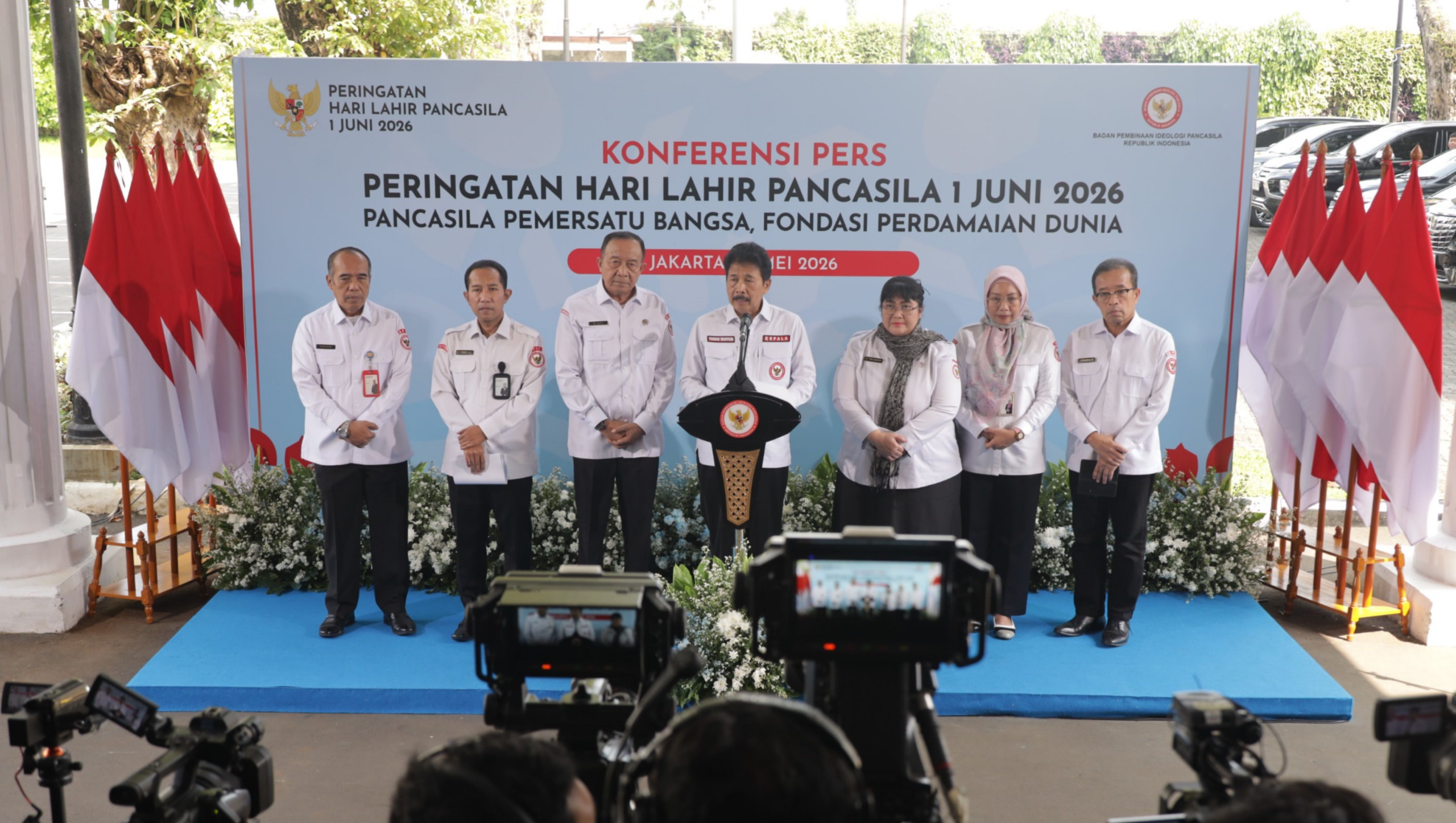
Every year, June 1 is commemorated as Pancasila Day, or Hari Lahir Pancasila. The date marks Sukarno’s 1945 speech, when the concept of Pancasila was first introduced as the philosophical foundation for Indonesia.
In 2026, Pancasila Day falls on Monday, June 1, 2026, and it is listed as a national holiday in Indonesia.
For expats living in Jakarta, Bali, or other Indonesian cities, Pancasila Day may feel quieter than major religious holidays such as Idul Fitri, Christmas, or Nyepi. However, schools, government offices, and many businesses may be closed. You may also see official ceremonies, national-themed social media posts, community activities, or public messages about unity and national identity.
It is a good moment to understand Indonesia beyond travel guides and practical relocation checklists. Pancasila Day reminds people of the values that helped shape the country.
What Expats Can Learn from Pancasila
For expats, Pancasila is not something you need to memorize like a school exam. But understanding its meaning can help you read Indonesian society more clearly.
It explains why religion is respected in public life. It explains why unity is often emphasized. It explains why people may prefer polite and indirect communication. It explains why group discussion matters. It also explains why community and social responsibility remain important values.
When you understand Pancasila, you begin to understand Indonesia beyond logistics.
You are not only learning where to live, how to open a bank account, which school to choose, or how to get around Jakarta. You are also learning the values that shape how people interact, celebrate, work, and live together.
That cultural understanding can make relocation smoother, especially for families, professionals, and long-term residents.
Learn Indonesia Beyond the Surface
Understanding Pancasila is a good starting point for anyone who wants to understand Indonesia more deeply. It is not only about history, but also about the values that continue to shape daily life, community, communication, and national identity.
For expats, families, and professionals living in Indonesia, learning the cultural background behind moments like Pancasila Day can make the relocation experience feel more meaningful. It helps you understand not just where you live, but why things are done the way they are.
Through Noble Asia’s cultural and language support, you can explore Indonesia beyond practical relocation needs, from local customs and social etiquette to cultural values that shape everyday interaction.
Want to better understand Indonesian culture while living here? Explore our language and cultural programs at:
📞 WhatsApp: +62 813 1668 5505
FAQ: The Birth of Pancasila in Indonesia
What is Pancasila?
Pancasila is Indonesia’s national philosophy and state foundation. It consists of five principles: belief in God, humanity, unity, democracy through deliberation, and social justice.
What does Pancasila mean?
The word Pancasila comes from Sanskrit. “Panca” means five, and “sila” means principles or foundations.
When was Pancasila born?
Pancasila was first introduced by Sukarno on June 1, 1945, during a BPUPKI session as Indonesia was preparing for independence.
Who introduced Pancasila?
Pancasila was introduced by Sukarno, Indonesia’s first president, in his historic June 1, 1945 speech.
Why is June 1 important in Indonesia?
June 1 is remembered as Pancasila Day because it marks the date when Sukarno introduced the idea of Pancasila as Indonesia’s national foundation.
Is Pancasila Day a public holiday in Indonesia?
Yes. Pancasila Day on June 1 is a national public holiday in Indonesia.
What are the five principles of Pancasila?
The five principles are belief in the One and Only God, just and civilized humanity, the unity of Indonesia, democracy guided by deliberation and representation, and social justice for all Indonesians.
Is Pancasila a religion?
No. Pancasila is not a religion. It is Indonesia’s national philosophy. However, its first principle recognizes belief in God as an important part of national life.
Why is Pancasila important for Indonesia?
Pancasila is important because it provides a shared foundation for a very diverse country. It helps unite people across different religions, cultures, regions, and ethnic backgrounds.
What should expats know about Pancasila?
Expats should understand that Pancasila helps explain Indonesian values such as religious respect, unity, politeness, social harmony, community responsibility, and decision-making through discussion.