
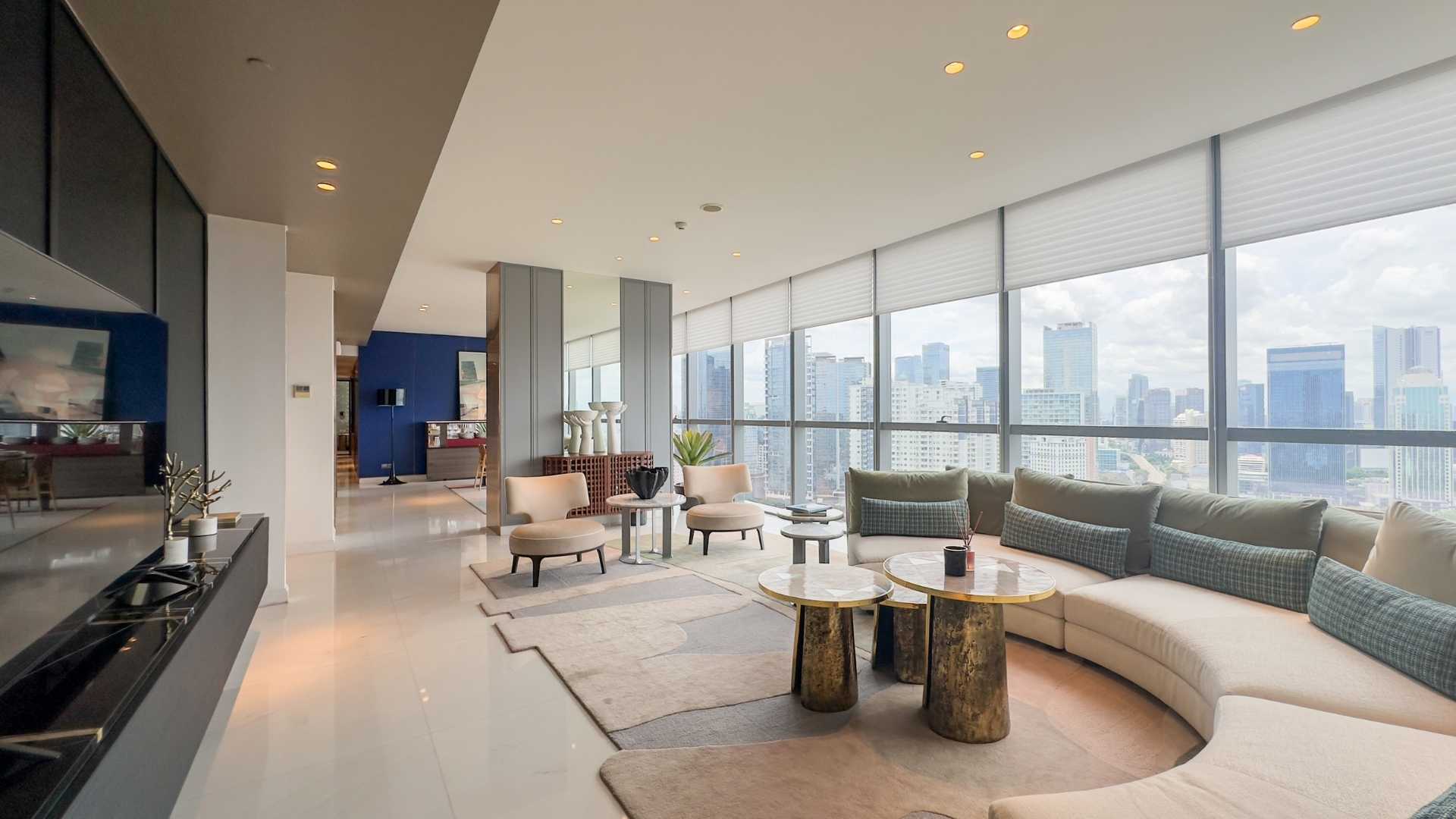
Most Jakarta interiors are designed to impress on handover day. The homes worth living in are designed differently.
The difference shows up slowly. A material that looked refined at first starts to warp in the second wet season. A layout that photographed well turns out to be quietly exhausting to move through every day. The air gets heavy in the afternoon because no one thought seriously about ventilation. The paint off-gasses for months in a space a child sleeps in.
Noble Design Asia was built on a different premise. A home is where your health, your rest, and your family’s wellbeing actually happen. That means the design process, the materials, the construction, and the furniture all need to answer to a higher standard than looks alone.
This guide covers what luxury interior design in Jakarta truly involves in 2026: how to brief it, how space gets planned, what separates materials that last from materials that fail, how a well-run project actually moves from sketch to handover, and what it genuinely costs. It is written for homeowners who want a home they are glad to return to, not just one that photographs well.
A Premium Home Begins With How You Live, Not How It Looks
The most expensive mistake in luxury interior design is starting with the aesthetic. A beautiful concept built on a misunderstanding of how a household actually lives will be quietly resented within months: the kitchen in the wrong place, the lighting too harsh to relax under, nowhere near enough storage for how the home is actually used. Good design starts with the brief.
What a proper brief captures
A thorough brief goes well beyond ‘make it feel high-end.’ A good designer wants to understand:
- How the household really uses the home day to day where you cook, work, unwind, and entertain, and at what scale.
- Who lives there, including children, elderly parents and household staff, and the privacy, light and circulation each person needs.
- The objects and collections that matter include art, wine, a library, instruments so the home is planned around them rather than forced to accommodate them after the fact.
- The atmosphere you want each space to hold, and the impression the home makes on a guest arriving for the first time.
- The non-negotiables: a prayer space, a specific kitchen configuration, particular room adjacencies the household cannot do without.
- Health and comfort priorities: air quality, acoustic separation, natural light, materials that are safe for the people who live there.
The hours spent getting the brief right are the cheapest hours in the project. Every decision afterwards is faster, cleaner, and far less likely to be revisited.
Designing for the way Jakarta homes actually work
A home designed from a generic international template will miss things that matter here. Many Jakarta households keep a dedicated prayer space with ablution facilities nearby. It deserves a properly located, respectfully finished room, not a leftover corner. The kitchen often runs as two spaces: a show kitchen for living and a working wet kitchen behind it. Staff circulation and quiet zones deserve proper thought, not an afterthought. And in the city’s high-rise residences, vertical living and the skyline view shape almost every spatial decision. Designing with these patterns in mind, rather than against them, is what separates a home a family settles into naturally from one they constantly work around.
Space Planning: The Decisions Beneath Every Beautiful Interior
Space planning is the discipline beneath the surface of every well-made home. Before a single finish is chosen, the plan decides how the space feels to move through, where the eye comes to rest, and how light and air reach into each room. Get this layer right and even a modest palette feels generous. Get it wrong and no amount of expensive materials will rescue it.
The gradient from social to private
The best residential layouts are organised as a gradient. Social and active spaces, the entrance, living and dining areas, the kitchen sit along the natural arrival route and capture the view. Private, restful spaces, bedrooms, a study, reading corners sit deeper in, protected and calm. Good zoning is what lets an open-plan apartment feel serene rather than exposed.
Framing the view rather than fighting it
In a Jakarta high-rise, the skyline becomes part of the interior. The design has to frame it rather than fight it: planning sightlines from the door inward, keeping the palette calm where the glass does the talking, managing reflections after dark. The view is one of the most valuable materials in the home and should be treated as such.
Proportion, circulation, and the space you feel
Every home loses a share of its floor area to circulation the routes between rooms and the space around furniture. Plan it too tight and even a large apartment feels cramped. Plan it too loose and rooms feel hollow and unresolved. Proportion is what you feel before you can name it, and it is where considered design quietly earns its value.
Sustainable Design: Why It Matters More Than the Mood Board
Sustainability in residential design is not a trend or a marketing term. It is what determines whether a home performs well in year five, whether the air inside is actually clean, and whether the materials you chose were made in ways worth choosing.
Noble Design Asia approaches sustainability not as a certification exercise but as a design discipline. That means making decisions that serve the long-term health of the home and the people in it.
Materials that are honest about what they are
In Jakarta’s climate, humidity and heat are not occasional conditions, they are constants. Untreated timber warps. Poor-quality veneers delaminate. Composites that contain formaldehyde off-gas in enclosed spaces for years. The choice of material is not only an aesthetic decision; it is a health decision and a durability decision.
Noble Design Asia specifies materials that can be accounted for: natural stone, solid and engineered timber with certified finishes, low-VOC paints and adhesives, and textiles that are what they claim to be. This is not more expensive when you account for what you avoid replacing, repainting, or living with.
Indonesian craftsmanship as a sustainable choice
Jakarta has genuinely strong local craftsmanship in joinery, stone work and metalwork. A designer who knows the right makers can deliver a bespoke result at a fraction of an imported equivalent, with a significantly lower environmental footprint and a far shorter supply chain. This is also where the home gains something no imported product can offer: a material connection to the place it is built in.
Designing for the long term
Responsible design thinks beyond move-in day. Spaces planned with flexibility rooms that can grow with a family, lighting that is circadian-aware, ventilation that works with the building rather than against it are homes that serve their owners for decades, not just seasons.
Healthy Furniture and Interiors: What ‘Non-Toxic’ Actually Means
The furniture and finishes inside a home are not inert. Many conventional materials release compounds into the air long after installation: formaldehyde from composite boards, volatile organic compounds from certain paints, flame retardants in upholstery foam, heavy-metal dyes in some imported textiles.
In a well-sealed, air-conditioned apartment exactly the kind of home most Noble Design Asia clients live in, those compounds have nowhere to go. Children and infants, who breathe more air relative to their body weight and spend more time on floors and soft surfaces, are disproportionately exposed.
What Noble Design Asia specifies instead
- Solid wood and certified engineered timber over composite boards wherever possible, or composite boards that meet formaldehyde-free standards.
- Low-VOC and water-based paints, lacquers and adhesives throughout the fit-out.
- Upholstery and foam that avoids halogenated flame retardants, using mechanical fire safety and natural alternatives instead.
- Textiles certified under OEKO-TEX or equivalent standards, meaning they have been tested for harmful substances at every stage of production.
- Natural fibre rugs and floor coverings where budget and use allow, in preference to synthetic alternatives.
This is not a premium add-on. It is a baseline standard Noble Design Asia applies across projects because the people who live in the homes deserve it.
Why air quality is a design decision
Good ventilation and filtration make a real daily difference, particularly given Jakarta’s outdoor air quality. Biophilic elements, plants, natural materials, daylight have a well-documented effect on stress, focus and rest. A home that considers what is in the air and what is on the surfaces is a home that quietly supports the health of everyone who lives there. Noble Design Asia treats this as part of the design brief, not an afterthought.
The Design Elements That Make or Break a Premium Home
Once the plan is sound and the materials are responsibly chosen, a handful of elements do most of the work in deciding whether a home becomes a daily pleasure or a quiet disappointment. These are the areas where experience earns its value, because the difference between adequate and exceptional is rarely visible in a render. It shows up at the end of a long day.
Lighting: the most underrated decision in the home
Lighting does more for how a home feels than almost any other element, and it is the one most often left to a default grid of downlights. Good lighting works in layers: ambient light for the overall space, task light where it is needed, accent light to give depth and to hold art and texture. Colour temperature matters. Warmer light makes living and bedroom spaces feel calm and restorative. Dimming and zoning allow a single room to move from bright and practical in the morning to soft and intimate at night, balancing beautifully against the city lights beyond the glass.
Bespoke joinery: where a home becomes tailored
Off-the-shelf furniture can only take a home so far. Bespoke joinery custom wardrobes, kitchen cabinetry, a wine display, a library wall is where a residence starts to feel made for its owner. Custom work uses the exact dimensions of the space, carries materials cleanly from one room to the next, and hides the clutter of daily life. This is also where Indonesian craftsmanship comes into its own.
Art, objects, and the discipline of curation
A premium home is curated, not filled. Art, sculpture, ceramics and meaningful objects give a home its personality. The most considered interiors leave room to breathe, allowing a few strong pieces to hold attention rather than crowding every surface. For many Jakarta homeowners this is also a chance to feature Indonesian artists and makers, deepening the connection between the home and its setting.
Tropical modern: designing with a sense of place
The strongest Jakarta interiors resist importing a finished European or hotel look wholesale. Instead they pair a clean, contemporary framework with materials and craft drawn from Indonesia: warm timbers, natural stone, woven textures and crafted detail, set against a restrained modern backdrop. This approach also suits the climate, working with Jakarta’s environment rather than against it. The result is a home that feels both worldly and unmistakably of its place.
Designing for Jakarta’s Premium Residences
Much of the city’s finest residential work happens inside its landmark developments, and each address brings its own character to a project. Residences such as Savyavasa in the Dharmawangsa area, the Kempinski Private Residence above the city centre, District 8 in the SCBD business district, Casa Domaine near Thamrin, and Samara Suites in Gatot Subroto set the architectural stage that an interior must respond to.
These buildings share generous proportions, floor-to-ceiling glazing and commanding views, but they differ in mood. A residence at the heart of SCBD speaks to a fast, connected lifestyle; a quieter address invites a calmer, more residential atmosphere. A skilled designer reads the building first, then tailors the interior to both the architecture and the owner. The interior is what turns an impressive shell into a home.
Noble Asia’s property team works across many of Jakarta’s premier addresses and can help match a residence to the way you intend to live in it before the design work begins.
How an Efficient Project Actually Runs: From First Brief to Move-In
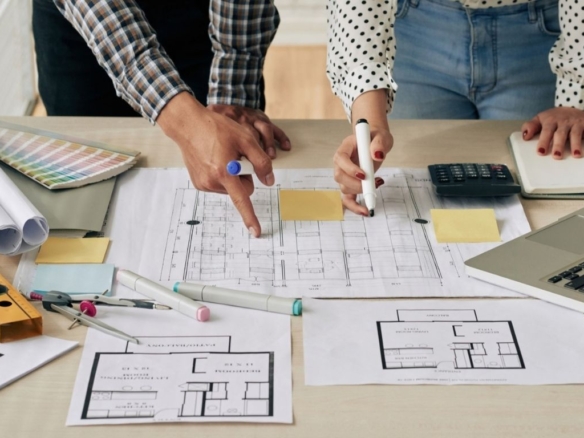
Understanding the phases of a residential project helps you brief it well, budget it realistically, and know what you are approving at each stage. Most of the costly mistakes in luxury interiors come from rushing or skipping a phase early on.
A well-run Noble Design Asia project moves through a clear sequence:
- Brief and discovery. Understanding how you live, who shares the home, what matters to you, and the specific constraints of the residence including any health, sustainability or material preferences.
- Concept design. The spatial story: the look, the feel, the initial layout and the design principles that will guide every decision. Agreed before detail is committed.
- Design development. The concept was resolved into detailed drawings, with MEP coordination, and the selection of furniture, finishes, joinery, lighting and materials. Every decision is made here, because changes after this point cost time and money.
- Documentation and approvals. Construction-ready drawings, building-management approvals and any required permits the package the build is delivered against.
- Construction and fit-out. The physical build, with site supervision to hold quality, coordinated within the construction-hours rules of occupied buildings.
- Handover and styling. Snagging, final finishes, the placement of art and loose furniture, and a home that is ready to live in on the day you move.
The case for an integrated design-and-build approach
An integrated design-and-build arrangement where one partner handles both the design and the construction gives you a single point of accountability, tighter coordination between design intent and what is actually built, earlier cost certainty, and a far smoother project overall. Designing first and tendering the build to a separate contractor can offer competitive pricing and full design independence, but it splits accountability and creates real risk when the builder interprets the drawings differently from the designer. For most homeowners who want a predictable result without managing two separate relationships, the integrated path is lower risk.
What Luxury Interior Design Costs in Jakarta in 2026
Honest cost guidance is hard to give in a single number because the range is genuinely wide and depends on the size of the residence, the handover condition, the level of customisation, and the quality of materials and furniture chosen. As a 2026 planning range, you should always verify with current quotes for your specific home premium residential interiors in Jakarta commonly fall between roughly IDR 5 million and IDR 18 million or more per square metre.
| Tier | Est. Cost (sqm) | What It Includes | Best For |
| Refined | IDR 5–9 million | Quality standard finishes, considered material palette, layered lighting, selected custom joinery. Non-toxic material specification included. | Homeowners who want a calm, well-made home over statement luxury. |
| Premium / Bespoke | IDR 9–18 million | Bespoke joinery throughout, high-quality natural materials, designed lighting and acoustics, healthy furniture specification, integrated technology and tailored FF&E. | Most landmark-residence and premium-home projects. |
| Flagship | Above IDR 18 million | Rare materials, fully custom joinery and MEP, smart systems, art curation, and a level of non-toxic finish built to last decades. | Owners creating a signature residence. |
Treat these as planning bands to size a budget conversation, not as quotes. A bare-shell handover pushes every band higher because you are also paying for ceilings, flooring and air-conditioning distribution that a finished shell already includes.
The line items homeowners forget
- MEP are mechanical, electrical and plumbing works often underestimated, especially where lighting, kitchens and climate control are upgraded.
- The building fit-out deposit, contractor insurance, and any after-hours construction premium charged by building management.
- Furniture, loose items, soft furnishings and window treatments frequently treated as a separate budget and then forgotten until move-in.
- Smart-home systems: audio, security and connectivity, far cheaper to integrate during the build than to retrofit later.
- Art, styling and the final layer that makes a home feel finished rather than empty.
- Permits, drawing approvals and any required sign-offs.
- Contingency. Ten to fifteen percent is not pessimism, it is planning.
Before you approve a budget: Ask your contractor to confirm in writing what is excluded, not only what is included. The exclusions are where overruns live.
The Timeline Reality: Why It Takes Longer Than the Quote Suggests
A frequent source of frustration is the gap between the construction estimate and the real project duration. The build itself may be a couple of months for an apartment, but the build is only one phase. Design, approvals, procurement and building coordination all sit around it, and they are where time quietly disappears.
A realistic sequence for a premium Jakarta residence from decision to move-in:
- Weeks 1–3, brief and concept. Understanding how you live, a space audit of the residence, and a concept design aligned to the building and your household.
- Weeks 3–7, detailed design and costing. Technical drawings, MEP coordination, material and FF&E selection, and a firm budget with exclusions clearly noted. This is the stage to resolve every decision.
- Weeks 6–10, building approval and procurement. Submitting drawings to building management, securing the fit-out permit, and ordering long-lead items bespoke joinery, stone, certified and imported furniture which carry significant lead times.
- Weeks 10–20, construction. The physical build, often restricted to permitted hours in occupied buildings, with furniture and technology coordinated to land as construction completes.
- Final weeks, styling and handover. Snagging, the deep clean, placement of art and loose furniture, and a home that is ready on the day you move in.
The honest timeline rule: From the day you commit to the day you live comfortably in the home, plan for several months for a premium residence not the construction estimate alone.
The Mistakes That Cost the Most
These are the patterns that appear most consistently when a premium home disappoints. Almost all of them trace back to a decision made early and cheaply that became expensive later.
- Starting with the aesthetic instead of the brief, so the home looks impressive and lives badly.
- Treating lighting as a default ceiling grid rather than a designed, layered element.
- Specifying materials that fail in Jakarta’s humidity, or that look good on handover day and tired by year two.
- Choosing furniture without regard to off-gassing or chemical content is a decision that cannot be undone once the home is occupied.
- Forgetting the working kitchen, staff circulation or storage, so daily life happens against the design rather than with it.
- Under-budgeting the final layer furniture, styling and art and moving into a beautiful shell that feels unfinished.
- Rushing the design phases to start construction sooner, then paying for changes and rework once the build is underway.
How Noble Design Asia Works
Noble Design Asia is the Jakarta-based interior design and fit-out practice of Noble Asia. It designs and delivers premium homes built around how a household actually lives with a discipline that extends from spatial planning to the quality of the air and materials inside the home. The same team that understands the brief carries it through to the home you move into, so the design intent survives all the way to handover.
The practice operates on four principles that distinguish it from a standard design-and-build:
- Sustainable and responsible design. Materials are specified for durability, environmental honesty and long-term performance in Jakarta’s climate not only for how they look on day one.
- Healthy, non-toxic interiors. Furniture, joinery finishes, paints and adhesives are selected with the health of the people who live in the home as a baseline requirement, not an optional upgrade.
- Efficient project management. As both designer and contractor, Noble Design Asia carries a single point of accountability from first sketch to move-in, with cost certainty, fewer surprises, and a build that reflects the design as intended.
- Quality living as the outcome. The measure of a successful project is not the handover photograph, it is the home three years in: performing well, looking well, and built around the life of the household it was designed for.
A typical project includes discovery and brief, concept and space planning, detailed design and FF&E selection with non-toxic material specification, MEP coordination, construction and fit-out with site supervision, and styling and handover. From the first conversation to the day you walk in.
Planning a home that lives as well as it looks? Tell us about your residence, your household, and the way you want to live. We will design and deliver a home built around it.
📩 connect@nobleasia.id | 📞 WhatsApp: +62 813-1668-5505
FAQ: Luxury Interior Design in Jakarta
What is luxury interior design in Jakarta?
Luxury interior design in Jakarta is the practice of creating high-end, considered homes using quality materials, tailored layouts, bespoke joinery and layered lighting — designed for the way a household actually lives and built to last in a tropical climate. At its best, it also means choosing materials and furniture that are honest about what they contain: durable, environmentally responsible, and safe for the people who live there.
How much does luxury interior design cost in Jakarta?
As a 2026 planning range, premium residential interiors commonly fall between roughly IDR 5 million and IDR 18 million or more per square metre, depending on the size of the home, the handover condition, the level of customisation and the quality of materials chosen. Flagship homes go higher. Always confirm with a quote for your specific residence and budget a 10–15% contingency.
How long does a luxury interior project take in Jakarta?
For a premium residence, plan for several months from the first brief to a comfortable move-in. Design phases come first, followed by approvals, procurement of long-lead items such as bespoke joinery and certified furniture, and then construction. The build is only one part of the timeline.
What is the difference between an interior designer and a fit-out contractor?
An interior designer shapes how a home works and feels — the brief, the layout, the lighting, the materials and the overall experience. A fit-out contractor builds it. In an integrated design-and-build practice such as Noble Design Asia, both sit under one accountable team, so the design intent carries cleanly through to construction. When they are separate, you manage two relationships and accept the risk that the builder interprets the design differently from the designer.
What does non-toxic or healthy furniture mean in practice?
It means specifying furniture, joinery finishes, paints and adhesives that do not release harmful compounds into the air of the home over time. Practically, this involves avoiding composite boards with formaldehyde binders, choosing low-VOC paints and lacquers, selecting upholstery that avoids halogenated flame retardants, and using textiles certified under standards such as OEKO-TEX. In a well-sealed air-conditioned apartment, this is not a minor consideration — it directly affects the air quality in the space where a family sleeps, eats and recovers.
What does sustainable interior design mean in a Jakarta context?
It means making design decisions that hold up over time: materials specified for durability and performance in a tropical climate, local craftsmanship and supply chains that reduce environmental footprint, and spaces designed with flexibility so the home serves the household for decades rather than needing to be redone every few years. Noble Design Asia treats sustainability as a design discipline, not a checklist.
Do I need an interior designer for an apartment in Jakarta?
For a premium residence, a designer adds significant value by planning the space, framing the view, coordinating the fit-out, sourcing responsible materials, and avoiding costly mistakes. Apartments in landmark developments have fixed footprints and standout views — a designer ensures the home makes the most of both.
Can Noble Design Asia handle both design and construction?
Yes. Noble Design Asia operates as an integrated design-and-build practice, meaning the same team that conceives the design carries it through construction and handover. This gives homeowners a single point of accountability, earlier cost certainty, and a finished home that reflects the design as it was intended — without the gap that often appears when design and construction are managed separately.



Join The Discussion