A well-judged apartment renovation in Jakarta can transform how a home feels to live in, or turn a tired unit into one that rents and sells far above its neighbors. A poorly judged one drains the budget, breaks the building’s rules, and adds value no buyer or tenant will ever pay for. The difference is rarely talent or taste. It is understanding what the renovation is actually for — and spending where it counts.
This guide is written from the perspective of a team that designs and delivers renovations, and that also advises owners on the property and tenancy side. The design decisions and the financial ones are considered together, not in isolation. Whether you are renovating to live in the apartment yourself, to attract quality expat tenants, or to prepare a unit for sale, the strategy, the materials, and the finish level all need to be calibrated to that goal.
Why Renovating an Apartment Is Not the Same as Renovating a House
The first thing every owner and investor needs to absorb is that you do not have free rein over an apartment the way you might over a landed house. You own your unit, but you live inside a managed, shared building governed by rules, shared systems, and neighbors on every side. Those constraints shape what your renovation can be, how long it takes, and how smoothly it runs — and they are decided before a single design idea is drawn.
The building management rulebook you must read first
Almost every managed apartment building in Jakarta has a renovation policy, and ignoring it is expensive. It typically governs permitted working hours (often restricted to weekdays and daytime), service lift bookings, how materials and debris are moved, a renovation deposit held against damage to common areas, insurance requirements, and an approval process for your drawings and contractor. Some buildings require you to use contractors from an approved list.
Before you plan anything: Obtain the building’s renovation policy and read it in full. The permitted hours, the lift rules, the deposit, and the approval process all shape your timeline and budget, and they are far cheaper to plan around than to discover mid-project.
What you usually cannot change
Structural elements — columns, beams, load-bearing walls — are off limits. The building facade and windows cannot be altered. The location of wet areas such as bathrooms and kitchens is often fixed or heavily restricted, because moving plumbing risks leaks into the units below, which is one of the most common and expensive disputes in apartment living. Knowing these boundaries early prevents a design built around changes the building will never approve.
Why Apartment Renovation in Jakarta Needs a Clear Strategy
The single most expensive mistake in apartment renovation is spending without a clear purpose. The right specification for a home you will live in for a decade is completely different from the right specification for a unit you intend to rent to expat tenants or sell in the current market. Decide which you are doing before you decide anything else.
Renovating to live. You are designing for your own daily life over years. Personal taste, comfort, and the way you actually use the space are the priorities. The return is not financial — it is the quality of your daily experience, and that is a legitimate reason to invest in things that matter to you.
Renovating to rent. The goal is yield, durability, and broad appeal to your target tenant. Expat and corporate tenants in Jakarta expect a clean, modern, well-finished, usually furnished apartment. They will pay a premium for one — but they do not need bespoke luxury they will not value. Spend on what tenants notice and what wears well.
Renovating to sell. The discipline is return on investment. The renovation should lift the unit to, but not far beyond, the standard of its building and price bracket. A neutral, broadly appealing finish that lets buyers imagine themselves in the unit is worth more than expensive personalisation that most buyers will not value.
The investor rule: Renovate to the top of the unit’s realistic rental or sale bracket, not beyond it. Every rupiah spent above what the building and location can return is a rupiah you will not see again.
Renovating to Rent: What Expat Tenants Actually Look For
Because Noble Asia works with expatriates and corporate clients relocating to Jakarta every week, we have a practical understanding of what international tenants find appealing — and what quietly puts them off. When renovating an apartment specifically to attract expat or corporate tenants, two things matter more than almost anything else.
A calm, clean, neutral colour palette
Expat tenants, particularly those on multi-year corporate assignments with families, are not looking for a bold statement interior. They are looking for a home that feels calm, clean, bright, and easy to live in — a space they can settle into without the design fighting them.
The colour palette that works consistently well is built on earth tones, warm neutrals, and muted natural shades: off-white, soft beige, warm light grey, taupe, natural wood tones. These colours are easy to furnish against, feel generous in photographs, and age well across a tenancy. Heavy wallpaper, strongly themed rooms, very dark accent walls, or highly personalised colour choices may photograph interestingly but tend to narrow the appeal and make it harder for prospective tenants to imagine living there.
Think of the standard a well-managed serviced apartment sets — calm, professional, broadly welcoming — and use that as a reference point. That level of finish and restraint is exactly what the expat corporate market responds to.
Smart and generous storage — the element owners most often underestimate
Most Jakarta apartments have limited built-in storage relative to how much a relocating family or long-term assignee actually brings with them. This is one of the most common complaints Noble Asia hears from expat tenants after move-in, and it is almost entirely avoidable in the design stage.
A well-renovated rental apartment should be planned from the outset with sufficient storage across every room: full-height wardrobes in bedrooms, a linen or utility cabinet, well-organised kitchen cabinetry, a dedicated entry storage point for bags and shoes, laundry and cleaning storage, and built-in joinery wherever the layout allows. Hidden storage — drawers under platforms, cabinets built into architectural recesses, tall pantry units — uses space that would otherwise be wasted.
A beautiful apartment without enough storage may look excellent in the listing photographs. Within two weeks of move-in, the tenant is living around boxes they cannot put away, and the experience of the apartment deteriorates. Storage is not a design feature — it is a daily-life necessity, and it is one of the most direct ways a renovation creates tenant satisfaction or erodes it.
The Best Interior Styles for Rental Apartments in Jakarta
The interior styles that perform best in the Jakarta expat rental market are those that are clean, timeless, broadly appealing, and easy to maintain. The most consistently successful are:
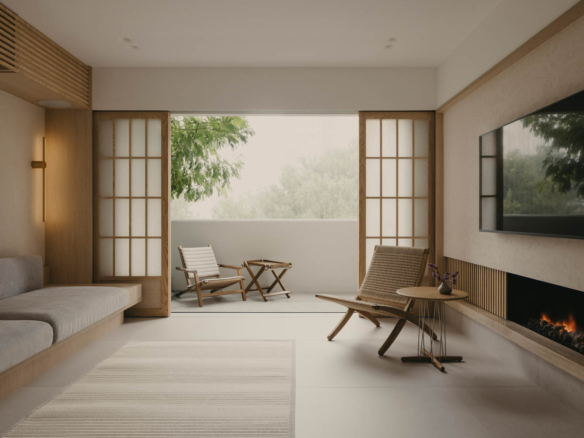
• Japandi. The combination of Japanese minimalism and Scandinavian warmth — natural materials, quiet colour, clean lines, functional beauty. Suits the Jakarta climate well because it is never fussy and always calm.
• Scandinavian. Light, warm, functional, and widely appealing. Works especially well in apartments where natural light is limited, because the palette and material choices amplify brightness.
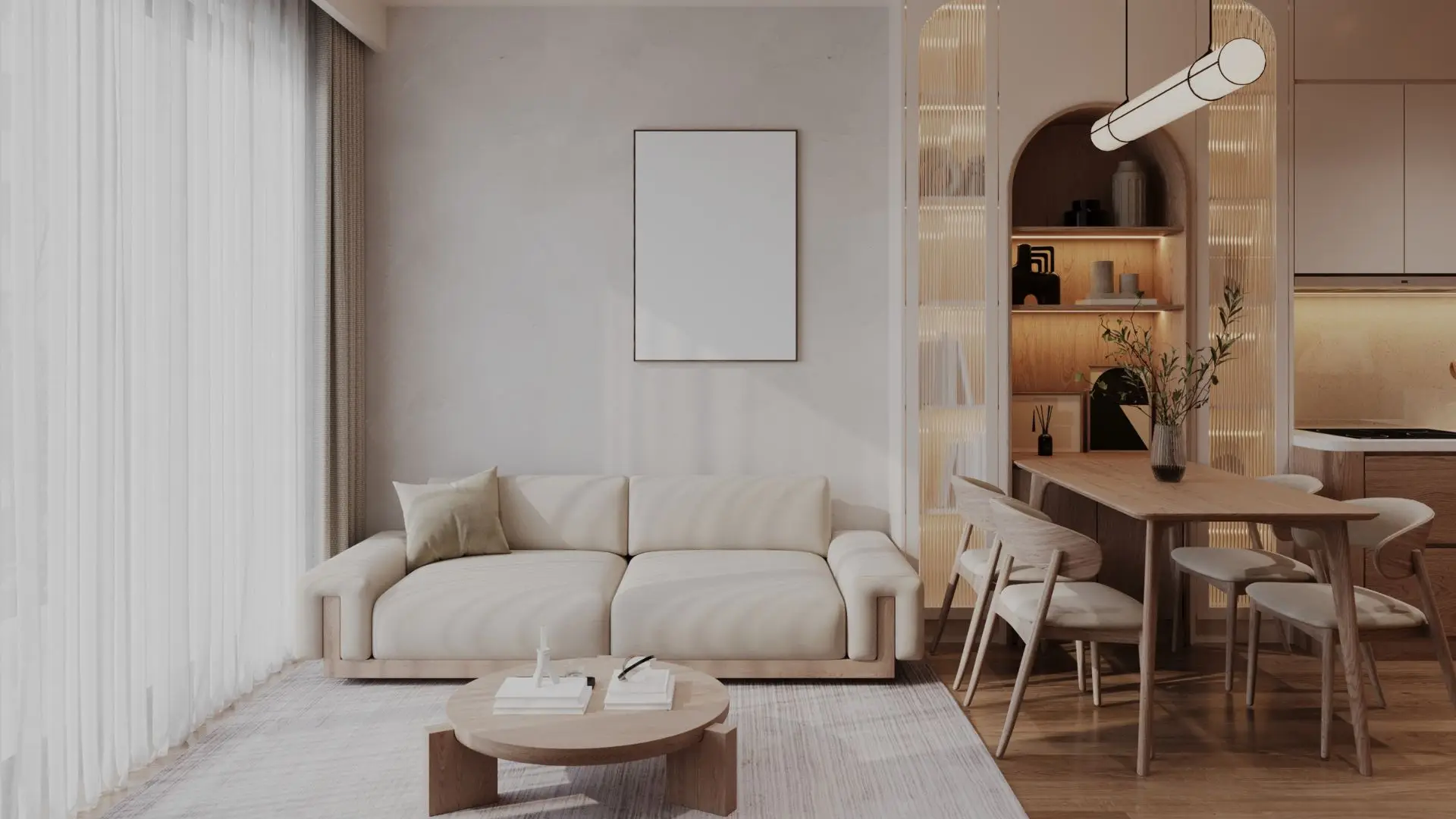
• Modern minimalist with warm accents. Simple forms, neutral finishes, warm wood elements, and considered lighting. One of the most versatile and durable approaches for a rental unit.
• Serviced-apartment-inspired. Deliberately professional and well-organised, with high-quality fixtures, consistent finishes, and generous storage. Requires a higher initial investment but commands the strongest premium from expat and corporate tenants when the building and location support the price.
In practical terms, what works best for a rental apartment renovation is:
• Simple, fresh wall finishes rather than heavy or theme-specific wallpaper
• Warm wood furniture and joinery in natural or lightly stained tones
• Neutral floor and ceiling finishes that read as calm and clean
• Tasteful wall panelling or architectural detail where the budget allows
• Built-in storage that is functional, well-made, and visually quiet
• Durable, easy-to-maintain flooring that handles humidity and daily use
• Layered lighting that makes the apartment feel warm rather than institutional
• Comfortable furniture that is selected for livability, not only for photographs
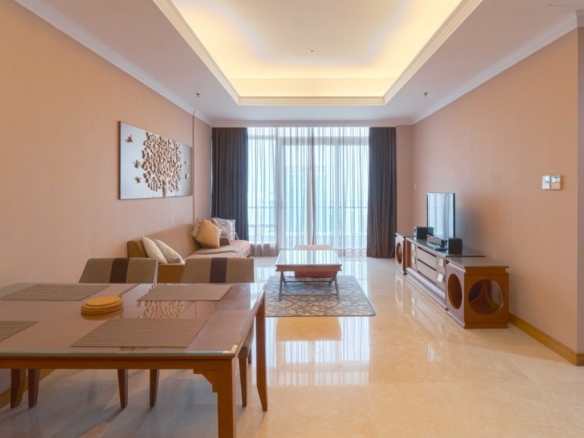
A serviced-apartment-level renovation is not necessary for every unit — it depends entirely on the building, the location, and the rental price the market supports. But for premium apartment buildings in SCBD, Senopati, Kemang, and Menteng, this level of finish is what distinguishes a unit that commands a strong monthly rent from one that sits vacant.
Renovating to Sell: Keep It Neutral, Flexible, and Buyer-Friendly
Renovating to sell requires a different strategy from renovating to rent. Where a rental renovation should feel like a well-appointed serviced apartment, a pre-sale renovation should feel like a blank canvas that a buyer can immediately imagine making their own.
The goal is not to create a fully customised, personalised home. It is to make the unit look fresh, well-maintained, attractive, and easy for a buyer to project their own life into. Specific design choices — bold colours, unusual material combinations, highly personal details — narrow the buyer pool. Neutral, clean, broadly likeable choices widen it.
Practical guidance for a pre-sale renovation:
• Keep the main finishes neutral — walls, flooring, joinery — and let buyers imagine the personalisation they would add themselves.
• Avoid expensive custom features that buyers may not value and that over-capitalise the unit beyond its realistic price bracket.
• Prioritise condition over transformation: a unit that looks clean, well-maintained, and move-in ready photographs better and sells faster than one that looks renovated but tired.
• Consider furniture staging rather than a full renovation — a well-staged apartment helps buyers understand the scale, the layout, and the potential of a unit without requiring the owner to fully refurnish.
• Staging for photographs and viewings can meaningfully lift the perceived quality of a unit at a fraction of the cost of a full renovation.
For a pre-sale renovation, the question to ask at every decision point is: will a broad range of buyers value this, or only a specific type? If the answer is specific, reconsider.
Designing for Jakarta’s Tropical Climate
Jakarta’s heat, humidity, and the daily cycle between tropical air and air-conditioned interiors is harder on materials than most owners realise — until they see the results of a poorly specified renovation two years after completion.
Good design for Jakarta’s climate is not only about choosing materials that survive humidity. It is about creating a home that feels breathable, durable, and comfortable to live in year-round. The considerations that matter:
• Material durability. Untreated or poorly specified timber warps. Low-quality veneers delaminate. Composite boards with inadequate sealing absorb moisture and swell. Engineered, properly treated, and certified materials are specified for performance, not only appearance.
• Ventilation in wet and enclosed spaces. Kitchens, bathrooms, wardrobes, and enclosed storage areas need ventilation designed into them — not as an afterthought. Poor ventilation in these spaces leads to mould, damaged finishes, and odour, all of which are expensive and difficult to correct after fit-out.
• Mould prevention. A design that considers air circulation, humidity-resistant materials, and proper sealing around wet areas prevents one of the most common and damaging problems in Jakarta apartments.
• Easy maintenance. Surfaces that require specialist cleaning, re-sealing, or careful treatment add ongoing cost and complexity. For rental apartments in particular, easy-to-maintain materials reduce tenant complaints and landlord maintenance costs over the lease term.
• Natural light. Jakarta apartments often have fixed window positions. A design that maximises the sense of natural light — through palette, reflective surfaces, and careful furniture placement — makes a unit feel more generous and more comfortable than its floor area alone suggests.
Noble Design Asia’s approach brings together tropical living knowledge and a German-influenced design mindset: climate-aware material specification, ventilation designed into the built elements, and finishes chosen for long-term performance rather than just first impressions.
Why Cheap Renovation Can Cost More in the Long Run
Many apartment owners want the renovation to be as inexpensive as possible, provided it looks good on handover day. This is an understandable position, and it produces some very good-looking apartments — for about eighteen months.
The materials and workmanship choices made to reduce upfront cost typically begin to show their limits in year two or year three of use in Jakarta’s climate. The failure modes are familiar: peeling paint and laminate finishes, warped joinery and boards that have absorbed moisture, loose hinges and cabinet hardware, delaminated surfaces in kitchens and bathrooms, storage that no longer functions properly, and furniture that looks tired well before its expected life. Each failure is individually small. Together they accumulate into a unit that looks neglected, attracts worse tenants or lower rental bids, and eventually requires another renovation.
Noble Design Asia’s approach to this is explicit: the goal is a renovation that remains functional, good-looking, and genuinely usable for around eight years with only minor maintenance, depending on use and conditions. That requires a different specification from one designed purely for handover day.
The right question is not ‘what is the cheapest way to make this look good now?’ It is ‘what is the most cost-effective way to create something that holds its value for the length of the investment?’ Those two questions have different answers.
When the total cost of a cheap renovation is calculated — including the repairs, replacements, and lost rental income from a unit that looks tired — it frequently exceeds the cost of a properly specified renovation done once. This is particularly true for investment units, where every year of extended life is another year of rental income without a disruptive, expensive redo.
Noble Design Asia’s Approach: German Design Discipline, Local Craftsmanship, and Long-Term Value
Noble Design Asia operates under German creative leadership, and that shapes how we think about renovation. German design has an international reputation not because it favours one aesthetic over another, but because it is disciplined: every decision is earned, function and aesthetics are held in balance, and the result is built to perform over time rather than merely to impress at the point of delivery.
For apartment renovation in Jakarta, this translates into several specific commitments:
• Precision in technical drawings and material specification. Renovation drawings that are buildable, exact, and fully coordinated, so the contractor builds what was designed rather than interpreting loosely.
• Materials chosen for long-term performance. Specifications that account for Jakarta’s humidity, the daily demands of a lived-in or rented space, and the kind of maintenance standard a typical owner or tenant can realistically maintain.
• Local craftsmanship as a design asset. Jakarta has skilled craftspeople in joinery and woodwork whose quality is high and whose pricing is competitive. Noble Design Asia works with trusted local artisans to deliver custom joinery, furniture, and built-in storage that is both beautiful and durable.
• Locally sourced wood where appropriate. Many of the timber products used in Noble Design Asia projects are sourced from Central Java, where quality hardwoods and engineered timbers offer a warmer, more durable result than low-grade imported alternatives. Proper finishing and treatment is applied throughout, because good wood poorly finished does not last.
The result is not a cold or purely functional space. German precision applied to a residential interior produces apartments that are calm, ordered, warm, and genuinely pleasant to live in — because the discipline serves the occupant, not the designer.
How a Better Renovation Improves Rental and Resale Potential
For owners renting out the unit
• A well-designed, well-specified apartment attracts better tenants — corporate assignees, senior expats, and professional families who pay well and treat the property well.
• Durable materials and proper storage reduce maintenance calls and tenant complaints over the lease term.
• A timeless, neutral design reduces the need for frequent renovation between tenancies.
• A unit that looks genuinely premium in photographs rents faster, which reduces vacancy cost.
• Building management’s approval process runs more smoothly with a professional design-and-build team that knows the rules.
For owners selling the unit
• A clean, well-presented unit photographs better and attracts more qualified buyers from the outset.
• Neutral finishes widen the buyer pool rather than narrowing it to buyers with matching taste.
• A move-in-ready appearance reduces the negotiating leverage buyers use to argue down the price.
• Staging — even without a full renovation — can help buyers understand the layout and the potential of the unit.
• A renovation that avoids over-capitalisation recovers its cost more fully at the point of sale.
What Apartment Renovation Costs in Jakarta in 2026
Renovation cost depends heavily on the level of finish, the condition of the unit, and the scope of work. These are indicative 2026 planning ranges only — always obtain itemised quotes for your specific apartment and allow a 10 to 15 percent contingency.
| Renovation level | What it typically includes | Indicative cost (IDR/m²) |
| Cosmetic refresh | Repainting, minor repairs, fixture swaps, deep clean, light styling | IDR 1,500,000 – 3,000,000 |
| Standard renovation | New flooring, full repaint, basic kitchen and bathroom updates, lighting, some joinery | IDR 3,000,000 – 6,000,000 |
| Premium renovation | New kitchen and bathrooms, built-in joinery, ceilings, upgraded finishes, electrical works | IDR 6,000,000 – 12,000,000 |
| Luxury / bespoke | High-end materials, custom joinery and design, smart systems, full reconfiguration | IDR 12,000,000 – 20,000,000+ |
To put that in context: a standard renovation of an 80m² apartment sits roughly between IDR 240 million and IDR 480 million on these ranges. A premium renovation of the same unit could run from IDR 480 million to close to IDR 1 billion. The level of finish is the single biggest driver.
Indicative costs for common line items
| Work item | Indicative cost range |
| Repainting | IDR 50,000 – 120,000 / m² |
| Vinyl or laminate flooring | IDR 200,000 – 500,000 / m² |
| Engineered wood or quality tile flooring | IDR 500,000 – 1,500,000 / m² |
| Gypsum ceiling with lighting | IDR 250,000 – 500,000 / m² |
| Custom kitchen set | IDR 3,000,000 – 8,000,000+ / running metre |
| Built-in wardrobe / storage joinery | IDR 2,500,000 – 6,000,000+ / running metre |
| Full bathroom renovation | IDR 20,000,000 – 60,000,000+ per bathroom |
| Electrical and lighting works | Varies by scope |
From Brief to Handover: How a Renovation Project Runs
Understanding the sequence helps you plan realistically and avoid the delays that come from skipping a stage.
• Brief and budget. Define the purpose (live, rent, or sell), the scope, the budget, and the must-haves. Confirm the building’s renovation rules before designing anything.
• Design. Concept and then detailed drawings — layout, finishes, joinery, electrical and lighting plans — resolved before any work starts. Changes after construction begins cost time and money.
• Building approval. Submit drawings and contractor details to building management, pay the renovation deposit, and secure approval. This step cannot be skipped or rushed.
• Procurement and construction. Order materials, particularly long-lead custom joinery and certified timber, then carry out the works within the building’s permitted hours with supervision to hold quality.
• Handover and snagging. Complete the punch list, deep clean, recover the renovation deposit, and finish with furnishing, styling, or staging as appropriate for the unit’s purpose.
On timelines: A standard apartment renovation runs several weeks to a few months depending on scope. Restricted building working hours extend this. Build design, approval, and procurement time into your plan — construction is only one phase.
How Noble Design Asia Can Help
Noble Design Asia is Jakarta’s integrated interior design and design-and-build practice, part of the Noble Asia group. We design and deliver apartment renovations for owners, investors, and landlords — from the first brief to the day the unit is ready to live in, rent, or list.
Because Noble Asia works with expatriates and corporate clients on the relocation and tenancy side of the business, our design team has direct insight into what international tenants actually value in a rental apartment — not theoretical preferences, but the real feedback from the people who rent these units. That knowledge flows directly into how we design renovation projects for investment units.
Our support for apartment renovation projects typically includes:
• Interior design concept and space planning, calibrated to the renovation’s purpose
• Built-in storage design — wardrobes, kitchen cabinetry, hidden storage, and joinery built for daily use
• Material selection, including locally sourced timber where appropriate, specified for Jakarta’s climate and the unit’s rental or sale bracket
• Custom furniture and joinery, produced by trusted local craftspeople
• Kitchen and bathroom design with durable, easy-to-maintain finishes
• Lighting plan — layered, warm, and properly considered
• Budget planning and realistic cost guidance before any commitment is made
• Building management coordination — approvals, deposits, permit process, and renovation rules
• Construction supervision within the building’s permitted hours
• Handover, snagging, and styling or furniture staging support for rent and sale presentation
If you intend to rent the apartment after renovation, Noble Asia can help place quality expat and corporate tenants, negotiate the lease, and manage the tenancy — so a freshly renovated unit does not sit empty once the work is done.
Ready to Renovate Your Apartment in Jakarta?
If you are renovating an apartment in Jakarta to rent, sell, or improve its long-term value, Noble Design Asia can help you design and build a space that is beautiful, practical, durable, and aligned with what expat tenants and buyers actually look for.
Tell us about your unit, your goal, and your budget. We will help you design and deliver a renovation that makes the investment work — and if you want to rent it afterward, Noble Asia can help with that side too.
📩 connect@nobleasia.id | 📞 WhatsApp: +62 813 1668 5505
Frequently Asked Questions About Apartment Renovation in Jakarta
How much does apartment renovation cost in Jakarta?
As an indicative 2026 planning range: a cosmetic refresh runs roughly IDR 1,500,000 to 3,000,000 per m²; a standard renovation IDR 3,000,000 to 6,000,000; a premium renovation IDR 6,000,000 to 12,000,000; and a luxury bespoke renovation IDR 12,000,000 to 20,000,000 or more. For an 80m² apartment, a standard renovation typically falls between IDR 240 million and IDR 480 million. Always obtain itemised quotes for your specific unit and allow a 10 to 15 percent contingency.
Is it worth renovating an apartment before renting it out?
Usually yes, provided you renovate to the right standard and do not over-capitalise. A clean, modern, well-furnished unit commands a meaningful premium in the expat and corporate rental market, rents faster, and attracts tenants who pay well and look after the property. The key is to calibrate the renovation to what the building and location can realistically return.
What interior style do expat tenants prefer in Jakarta apartments?
The styles that perform best in the Jakarta expat rental market are Japandi, Scandinavian, modern minimalist with warm accents, and serviced-apartment-inspired design. Common to all of them: calm neutral palette, warm wood tones, clean finishes, generous storage, and good lighting. Bold or highly personal design choices narrow the appeal.
What should I renovate first in a rental apartment?
Storage, flooring, and the kitchen and bathrooms deliver the most visible impact and the strongest return. After that: lighting, fresh paint in a neutral palette, and any built-in joinery that maximises the use of space. Avoid expensive decorative elements that wear poorly or look dated quickly.
How important is storage in an apartment renovation?
Extremely. Most Jakarta apartments are under-stored relative to the needs of relocating families or long-term assignees. A rental unit without sufficient storage is one of the most common sources of tenant dissatisfaction — and it is entirely avoidable in the design stage. Plan storage across every room from the outset: wardrobes, kitchen cabinetry, linen storage, entry storage, and built-in joinery wherever the layout allows.
Should I renovate differently if I want to sell the apartment?
Yes. For selling, the priority is a neutral, broadly appealing finish that lets buyers imagine their own life in the unit. Avoid expensive personalisation or over-investment beyond what the building’s price bracket can recover. Consider staging rather than a full renovation — a well-staged unit photographs and presents well without the full cost of refurnishing.
Why should I avoid very cheap apartment renovation?
Low-cost materials and workmanship in Jakarta’s climate typically start to fail by year two or three. Peeling finishes, warped joinery, loose hardware, and delaminated surfaces accumulate into a unit that looks neglected, attracts worse tenants, and eventually requires another renovation. The total cost of a cheap renovation — including repairs, replacements, and lost rental income — frequently exceeds the cost of a properly specified renovation done once.
Can Noble Design Asia help with design and build?
Yes. Noble Design Asia operates as an integrated interior design and design-and-build practice. The same team handles concept, detailed drawings, material specification, building management approval, construction supervision, and handover — giving owners a single point of accountability from brief to completed unit.
Can Noble Asia help rent out the apartment after renovation?
Yes. Noble Asia works with expats, corporate clients, and relocation partners, which means a renovated investment unit can be paired directly with tenant placement, lease negotiation, and tenancy management. Contact us to discuss how the renovation and the rental side of the project can be coordinated.