Ask any expat what their biggest frustration was during the first week in Indonesia, and a solid number will say the same thing: waiting for the internet to be set up. Getting a SIM card takes 15 minutes. Getting home fiber can take anywhere from three days to three weeks depending on your building, your provider, and your luck.
This guide breaks down the four main providers, what each one is like to live with, and how to get connected faster when you move in.
Why Home Internet Can Be Challenging in Indonesia
Indonesia’s fiber internet has expanded rapidly, with fiber now making up nearly 89% of fixed broadband subscriptions according to Opensignal. But availability still varies significantly by location. Your building may only support one or two providers, fiber lines may not yet reach your villa, and apartment buildings often have existing ISP partnerships that limit your options.
For expats, checking internet availability before signing a lease prevents a lot of frustration. Ask your landlord not just “is there internet?” but “which providers are here and what speeds do residents actually get?”
Overview of the Major Internet Providers
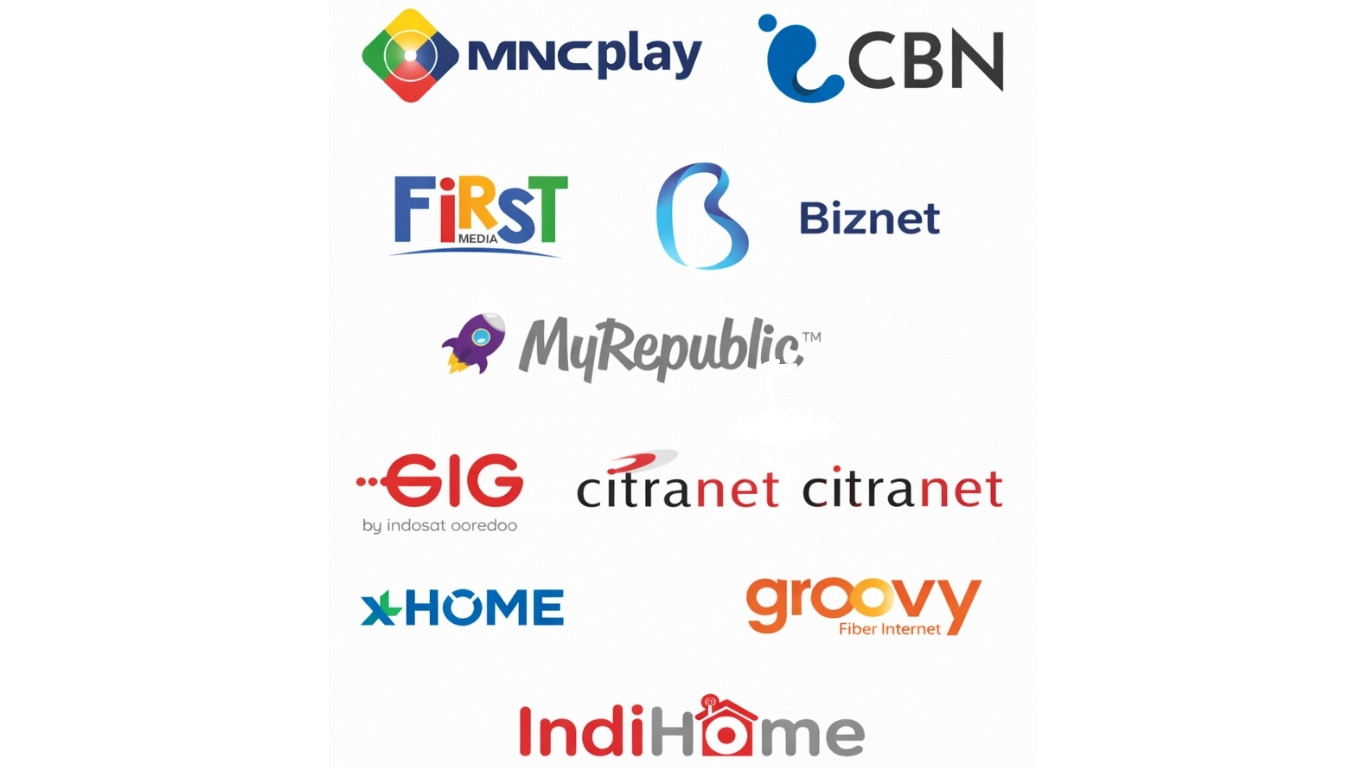
IndiHome
IndiHome, now operating under the Telkomsel brand, is Indonesia’s fixed broadband market leader with a 67% market share. Its scale gives it unmatched geographic reach across Jakarta, Bali, and hundreds of smaller cities where other providers have no presence.
Packages in 2026 start from IDR 230,000 per month for 50 Mbps, scaling to IDR 325,000 for 150 Mbps. Higher-tier plans bundle TV with 116 channels and OTT platforms including Catchplay+, Prime Video, and Netflix Basic.
Best for: Expats in areas where Biznet or MyRepublic are unavailable, or those wanting bundled TV and internet.
Watch out for: Real-world speeds can fall short of advertised rates. In Bali, some Canggu users report getting only a fraction of their subscribed speed during peak hours.
Biznet
Biznet consistently delivers around 100 Mbps in real-world conditions even during peak hours, earning the highest download speed award among Indonesian ISPs according to Opensignal. This reliability makes it the preferred choice for remote workers and digital professionals in urban areas.
Pricing in 2026: IDR 175,000/month for 60 Mbps, IDR 375,000 for 200 Mbps, IDR 575,000 for 325 Mbps, and IDR 700,000 for a gamer-specific 400 Mbps package. All plans are unlimited with no Fair Usage Policy.
Best for: Remote workers, streamers, and anyone needing consistent performance for video calls and cloud-based work.
Watch out for: Coverage is concentrated in urban areas across Java and Bali. If you live outside Biznet’s zones, it simply will not be available.
MyRepublic
MyRepublic originated in Singapore and is available across Jabodetabek, Surabaya, Malang, Semarang, and Palembang. Its standout feature is symmetrical upload and download speeds (1:1 ratio), which makes a real difference for video calls and cloud collaboration. Entry-level plans start around IDR 260,000 per month for 30 to 50 Mbps.
Best for: Remote workers who need reliable upload speeds, and gamers who prioritize low latency.
Watch out for: Availability depends heavily on neighborhood infrastructure. Always check coverage before committing.
CBN Fiber
CBN has operated since 1995 and is known for stable, business-grade connections. It is well-represented in premium Jakarta apartment buildings where management often has CBN infrastructure pre-installed. Plans start from IDR 299,000 per month for 30 Mbps up to 200 Mbps. Users generally report a stable connection with rare interruptions.
Best for: Expats in premium Jakarta apartments and business users who need reliable uptime.
Watch out for: Less widespread coverage than IndiHome or Biznet.
Internet Speed and Pricing Comparison
Here is how the four main providers stack up at a glance in 2026:
| Provider | Entry Price | Entry Speed | Top Speed | FUP |
| IndiHome | IDR 230,000/mo | 50 Mbps | 200 Mbps | No FUP on most plans |
| Biznet | IDR 175,000/mo | 60 Mbps | 400 Mbps | No FUP |
| MyRepublic | IDR 260,000/mo | 30 Mbps | 300+ Mbps | No FUP |
| CBN Fiber | IDR 299,000/mo | 30 Mbps | 200 Mbps | Varies by plan |
For remote work, a 100 Mbps plan is generally the sweet spot. For households with multiple users streaming and working simultaneously, 200 Mbps and above is worth the investment.
Coverage by Neighborhood
Central Jakarta (Sudirman, SCBD, Thamrin)
Business district apartments in Central Jakarta generally have the widest provider selection. Most high-rise buildings in Sudirman, SCBD, and Thamrin support Biznet, MyRepublic, and CBN alongside IndiHome. Residents here can often choose between multiple fiber providers, which is the best situation to be in.
South Jakarta (Kemang, Pondok Indah, Cilandak)
South Jakarta’s expat-popular residential neighborhoods are well-served by Biznet and IndiHome, with MyRepublic available in some newer developments. Kemang in particular has good fiber penetration given its large expat population and international schools. Coverage varies street by street, so it is worth asking neighbors or checking provider coverage maps before committing.
West Jakarta and BSD
BSD (Bumi Serpong Damai) and West Jakarta have seen rapid infrastructure growth with newer housing complexes. Biznet, MyRepublic, and IndiHome all have strong footprints here. Newer landed house developments in BSD often have fiber infrastructure already built in.
Bali (Canggu, Seminyak, Ubud)
In Bali, Canggu, Seminyak, and Ubud generally deliver the best home internet, driven by high expat demand and a strong coworking culture. Biznet and IndiHome are the most commonly available fiber providers in these areas.
That said, Bali’s internet situation is more nuanced than Jakarta’s. Villa locations vary significantly, and a property just a few streets away from a fiber-connected road may require a much longer installation wait. Biznet coverage is not available everywhere in Bali, and installation depends on infrastructure in the area. WiFi quality inside large villas can also affect performance if routers are poorly placed.
For remote workers in areas where fiber is not yet available, Telkomsel Orbit (a prepaid 4G/5G home broadband modem with no fixed installation) is a practical backup option that can be set up within a day.
Installation Process: What Expats Should Expect
Expats can register using a passport or KITAS residency permit. The process involves registering online or through a local agent, scheduling an appointment, and having a technician install the fiber cable and router. Standard installation takes 3 to 7 business days in Jakarta and can extend to 10 or more days in Bali if fiber cables need to be extended to your property. Delays are common around public holidays.
Tips to Get Connected Faster
These are the practical shortcuts experienced expats use to reduce downtime:
Check building infrastructure first. If fiber is already installed by a specific provider, activation is much faster than a new installation. Ask your landlord or building manager directly.
Work with a local sales agent. Neighborhood-level sales agents can often prioritize scheduling faster than online registration. Ask your building manager or neighbors for contacts.
Arrange installation before your move-in date. Book the appointment while finalizing your lease so the service is active on day one.
Have a backup connection ready. A Telkomsel Orbit 4G modem or a large-data SIM card keeps you connected during the waiting period.
Test your speed after activation. If real-world speeds fall well short of your subscribed plan, report it early while the installation team can still adjust.
Which Provider Is Best for Remote Work?
For remote professionals, stability matters more than raw speed. Based on real-world performance data in 2026: Biznet is the best overall pick for urban workers; MyRepublic excels for symmetrical upload and download speeds; CBN suits premium Jakarta apartment dwellers; and IndiHome is the reliable fallback when the others are not available.
Noble Asia’s team can help identify apartments and villas in Jakarta and Bali that already have strong fiber infrastructure, saving you one more post-move headache.
Tips for Choosing Internet When Renting
Before signing any rental agreement, confirm: which providers are available at this address, whether there is an existing active connection that can be transferred, and how long installation typically takes in this building. These questions can be the difference between being connected on day one and spending your first two weeks tethering from your phone.
How Noble Asia Helps Expats Set Up Homes in Indonesia
For expats relocating to Jakarta or Bali, settling in smoothly involves more than just finding accommodation. Noble Asia works with international clients on the full process, from property search and advisory in Jakarta’s central districts to villa management and relocation support across Bali. Services include expat relocation assistance, apartment and villa rentals, property advisory, and ongoing property management.
Moving to Indonesia or looking for housing in Jakarta or Bali? Noble Asia helps international clients with expat relocation services, property search and advisory, luxury apartment and villa rentals, and property management. Contact us here:
📩 connect@nobleasia.id
📞 WhatsApp: +62 813 1668 5505
FAQ: Home Internet in Indonesia for Expats (2026)
What is the best home internet provider in Indonesia?
Biznet is the preferred choice in urban areas for consistent speeds and no-FUP plans. IndiHome has the widest national coverage. The right answer depends on which providers are available at your specific address.
Is the internet fast enough for remote work in Jakarta?
Yes. Most apartments in Sudirman, SCBD, and Kemang support fiber plans of 100 Mbps and above, more than sufficient for video calls, cloud work, and streaming.
Is fiber internet available in Bali?
Yes, particularly in Canggu, Seminyak, and Ubud. Biznet and IndiHome are the main providers. Coverage and timelines vary by villa location, and some properties still rely on 4G home broadband.
How long does internet installation take in Indonesia?
Between 3 and 10 business days in most urban areas. Timelines extend when fiber cables need to be laid from the street to your property.
Can expats register for home internet without an Indonesian ID?
Yes. A passport or KITAS residency permit is accepted by all major providers.
How much does home internet cost in Indonesia?
Plans range from IDR 175,000 to IDR 700,000 per month depending on provider, speed, and whether TV or OTT services are bundled.